
Science
South Island Researcher Advances Cancer Diagnosis with Innovative Device

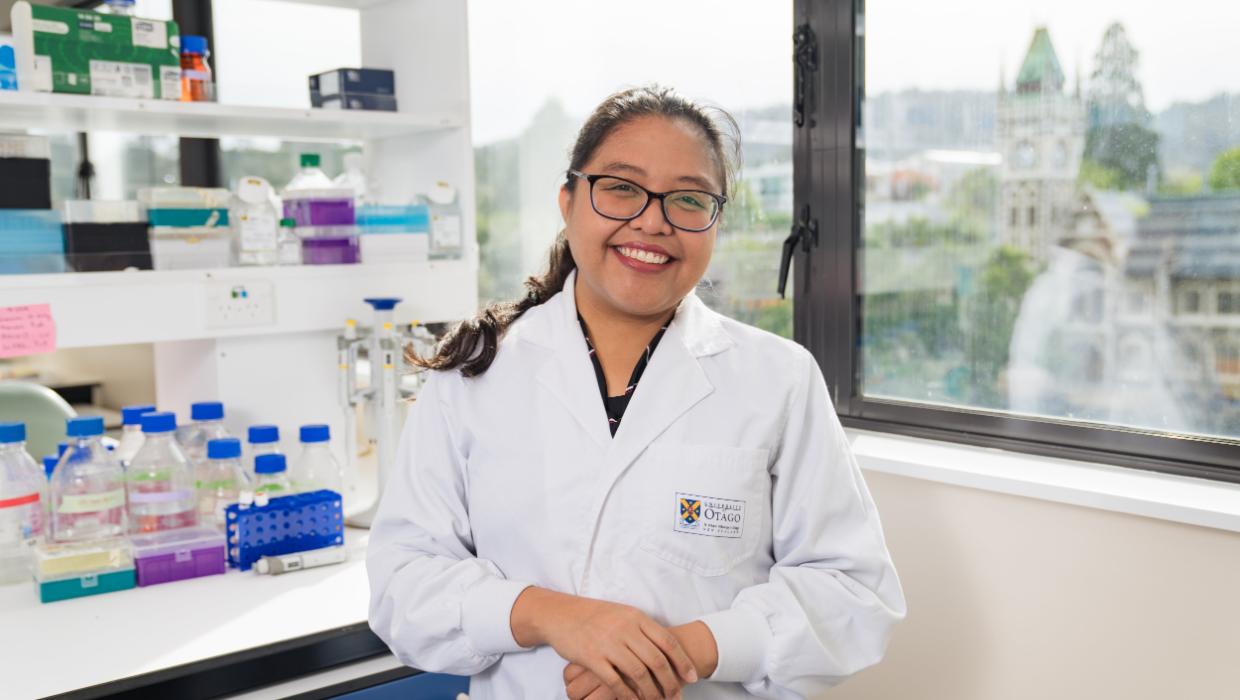
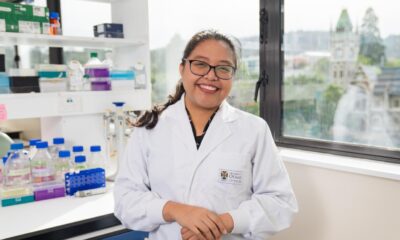
A childhood friend’s battle with cancer has inspired a South Island researcher to innovate in the realm of cancer diagnostics. Dr. Judy Ann Cocadiz, affiliated with the University of Otago, has been awarded a three-year, $300,000 post-doctoral fellowship from the Cancer Society as part of its 2025 National Research Grant Round. This funding will support her groundbreaking work aimed at enhancing the accuracy of early-stage cancer diagnoses.
Dr. Cocadiz’s research focuses on circulating tumor DNA (ctDNA), which consists of DNA fragments released into the bloodstream by cancer cells. As cancer advances, the concentration of ctDNA typically increases. To harness this, Cocadiz is developing a novel device designed to be inserted into a blood vessel, functioning as a “sieve” to capture ctDNA for short periods. This innovation could enable doctors to detect cancers at earlier stages and monitor for recurrence following treatment.
Currently, the analysis of ctDNA requires drawing about 8-10 ml of blood from patients. Cocadiz explains the challenge: “In early-stage cancer, there is not a lot of ctDNA in 10 ml of blood. It is like looking for a needle in a haystack.” To address this, her device aims to collect ctDNA without requiring larger blood samples, which can be invasive and uncomfortable, particularly for children or vulnerable individuals.
“This device will provide a more patient-friendly option,” Cocadiz notes. “Instead of taking more blood, it will collect ctDNA for a few minutes and then be safely removed.” This approach could lead to less discomfort for patients while significantly improving cancer diagnostic accuracy.
Although still in the proof-of-concept phase, the device is envisioned to operate similarly to an intravenous (IV) line. It would be inserted into a blood vessel in the same manner as a needle. While the timeline for clinical application remains uncertain, Cocadiz expresses optimism about her research’s future. “I am really grateful for this grant from the Cancer Society. They are not just funding this research but also supporting the early stages of my career,” she stated.
Dr. Cocadiz completed her PhD in biochemistry in 2022 and has been driven by a long-standing desire to help alleviate the suffering of cancer patients. Her interest in cancer research was sparked during her childhood in the Philippines. At just five years old, she noticed that her best friend frequently had large bruises from minor accidents. After discussing her concerns with her parents, they took her friend to the doctor, leading to an early diagnosis of leukaemia and prompt treatment.
Earlier this year, Cocadiz experienced joy upon reuniting with her friend, who is now healthy and thriving. Reflecting on her journey, she remarked, “I realized I did not want to be a doctor, but I still wanted to contribute to the fight against cancer. Everything just kind of fell into place, and I am really glad I ended up in cancer research.”
With her innovative approach to cancer diagnostics, Dr. Cocadiz is poised to make significant strides in the medical field, potentially changing the way early-stage cancers are diagnosed and monitored.








Urgent Health Alert: New Measles Exposure Sites in New Zealand

Qantas Expands International Network with New Flights to Perth and Johannesburg

Prince Harry Reflects on Royal Life, Compares It to ‘Downton Abbey’

McInnes Wins Qatar Off-Road Championship as Season Concludes

Challenge Your Vocabulary with the Latest Hard Word Quiz

Ngira Simmonds Challenges Leadership at Te Pāti Māori AGM

South Island Researcher Aims to Revolutionize Cancer Diagnosis

Rebekah Stott’s Late Goal Ends Phoenix Women’s Unbeaten Run

Urgent Surgery Imminent for Conjoined Twins from Papua New Guinea

Private Funeral Held for Dean Field and His Three Children

Funeral Planned for Field Siblings After Tragic House Fire

Netball New Zealand Stands Down Dame Noeline Taurua for Series

Tributes Pour In for Lachlan Rofe, Reality Star, Dead at 47

New ‘Maverick’ Chaser Joins Beat the Chasers Season Finale

Silver Ferns Legend Laura Langman Criticizes Team’s Attitude

Eli Katoa Rushed to Hospital After Sideline Incident During Match

Investigation Underway in Tragic Sanson House Fire Involving Family

Netball NZ Calls for Respect Amid Dame Taurua’s Standoff
-
 World2 weeks ago
Private Funeral Held for Dean Field and His Three Children
-
 Top Stories2 weeks ago
Funeral Planned for Field Siblings After Tragic House Fire
-
 Sports3 months ago
Netball New Zealand Stands Down Dame Noeline Taurua for Series
-
 Entertainment3 months ago
Tributes Pour In for Lachlan Rofe, Reality Star, Dead at 47
-
 Entertainment2 months ago
New ‘Maverick’ Chaser Joins Beat the Chasers Season Finale
-
 Sports3 months ago
Silver Ferns Legend Laura Langman Criticizes Team’s Attitude
-
 Sports1 month ago
Eli Katoa Rushed to Hospital After Sideline Incident During Match
-
 World3 weeks ago
Investigation Underway in Tragic Sanson House Fire Involving Family
-
 Politics2 months ago
Netball NZ Calls for Respect Amid Dame Taurua’s Standoff
-
 Top Stories2 weeks ago
Shock and Grief Follow Tragic Family Deaths in New Zealand
-

 Entertainment3 months ago
Khloe Kardashian Embraces Innovative Stem Cell Therapy in Mexico
-
 World4 months ago
Police Arrest Multiple Individuals During Funeral for Zain Taikato-Fox