
Science
South Island Researcher Develops Tool for Early Cancer Detection

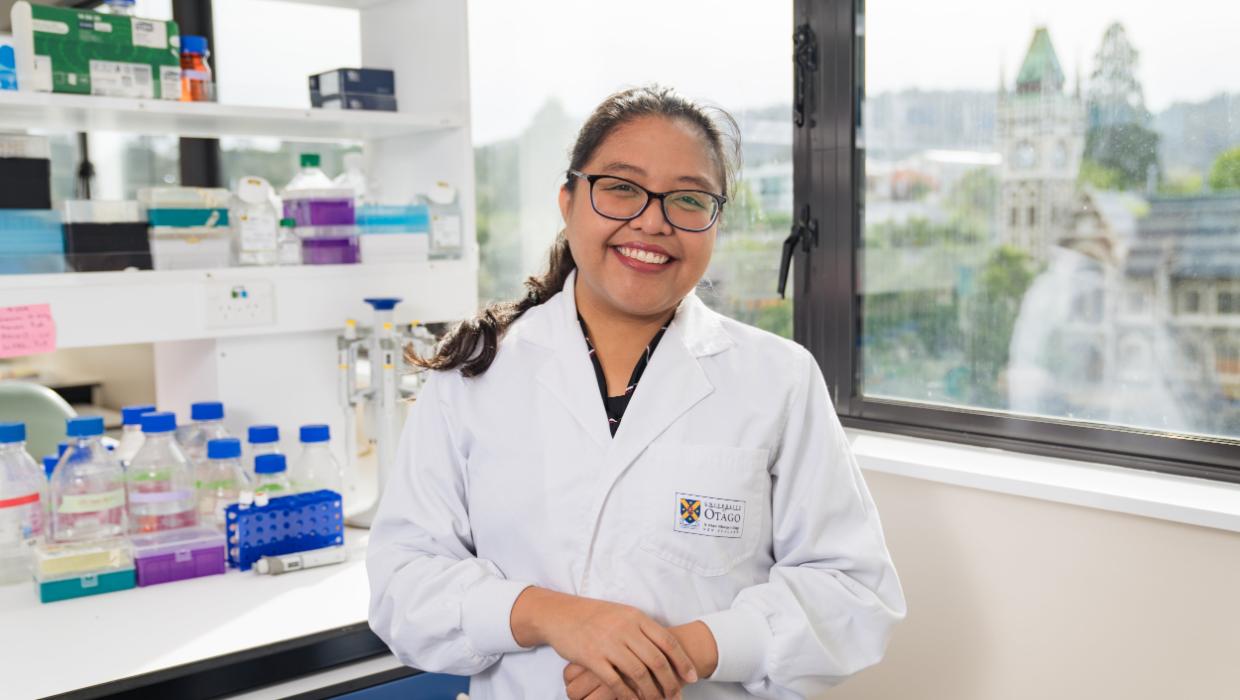
A childhood friend’s battle with cancer has inspired a South Island researcher to pursue groundbreaking work in cancer diagnosis. Dr. Judy Ann Cocadiz, affiliated with the University of Otago, has been awarded a three-year, $300,000 post-doctoral fellowship through the Cancer Society’s 2025 National Research Grant Round. Her innovative research aims to enhance the accuracy of early-stage cancer detection.
Dr. Cocadiz’s focus is on circulating tumour DNA (ctDNA), which consists of DNA fragments released into the bloodstream by cancer cells. The concentration of ctDNA typically increases with cancer progression, making it a crucial indicator for diagnosis. Cocadiz is developing a compact device designed to be inserted into a blood vessel, functioning as a “sieve” to capture ctDNA over a brief period. This advancement holds the potential to facilitate the detection of cancers in their early stages and assist in monitoring for reoccurrences after treatment.
Currently, ctDNA is obtained through blood samples, generally requiring about 8-10 milliliters of blood. Cocadiz emphasized the challenge in early-stage cancers, noting, “There is not a lot of ctDNA in 10 milliliters of blood. It is like looking for a needle in a haystack.” She pointed out that drawing larger volumes of blood would not be ethically justifiable, especially for vulnerable populations such as children or those in frail health.
The envisioned device would be inserted similarly to an intravenous (IV) line, allowing for a quick collection of ctDNA without the need for extensive blood draws. This method promises to reduce discomfort for patients while improving the chances of early, accurate cancer diagnosis.
While Cocadiz’s research is still in the proof-of-concept phase, she expresses optimism about its future. “Getting this device into clinical use would be years away,” she acknowledged, but she remains hopeful about the direction of her work. “I am so grateful for this grant from the Cancer Society, because they are not just helping fund this research, but essentially the early stages of my career as well.”
Cocadiz’s interest in cancer research stems from a formative experience in her childhood in the Philippines. At just five years old, she observed her preschool friend suffering from frequent bruises. Concerned, she alerted her parents, who subsequently took the child to a doctor. This early intervention led to a diagnosis of early-stage leukaemia, allowing the friend to receive timely treatment.
Years later, Cocadiz was delighted to reconnect with her childhood companion, pleased to find him healthy and thriving. Despite initially considering a career in medicine, she decided to pursue cancer research, believing it a more fitting way to contribute to the fight against cancer. “Everything just kind of fell into place, and I am really glad I ended up in cancer research,” she reflected.
Dr. Cocadiz’s work represents a promising advancement in the quest for more effective cancer diagnostics, potentially transforming how early-stage cancers are detected and monitored, ultimately benefiting countless patients worldwide.









New Zealand’s Happiness Boost Linked to Community Meals and Support

Alice Robinson Secures Back-to-Back Giant Slalom Wins in Canada

Former Police Chief Claims Minister Briefed on McSkimming Allegations

South Island Researcher Develops Tool for Early Cancer Detection

Alice Robinson Secures Back-to-Back World Cup Wins in Canada

Speeding Audi RS3 Flips and Catches Fire During Auckland Race

New Zealand’s Happiness Boosted by Meal Sharing and Altruism

Interior Designer Matt Reid Shares Insights on All-White Interiors

Former Police Commissioner Resigns Amid Allegations of Misconduct

Private Funeral Held for Dean Field and His Three Children

Funeral Planned for Field Siblings After Tragic House Fire

Netball New Zealand Stands Down Dame Noeline Taurua for Series

Tributes Pour In for Lachlan Rofe, Reality Star, Dead at 47

New ‘Maverick’ Chaser Joins Beat the Chasers Season Finale

Silver Ferns Legend Laura Langman Criticizes Team’s Attitude

Eli Katoa Rushed to Hospital After Sideline Incident During Match

Investigation Underway in Tragic Sanson House Fire Involving Family

Netball NZ Calls for Respect Amid Dame Taurua’s Standoff
-
 World2 weeks ago
Private Funeral Held for Dean Field and His Three Children
-
 Top Stories2 weeks ago
Funeral Planned for Field Siblings After Tragic House Fire
-
 Sports3 months ago
Netball New Zealand Stands Down Dame Noeline Taurua for Series
-
 Entertainment3 months ago
Tributes Pour In for Lachlan Rofe, Reality Star, Dead at 47
-
 Entertainment2 months ago
New ‘Maverick’ Chaser Joins Beat the Chasers Season Finale
-
 Sports3 months ago
Silver Ferns Legend Laura Langman Criticizes Team’s Attitude
-
 Sports1 month ago
Eli Katoa Rushed to Hospital After Sideline Incident During Match
-
 World3 weeks ago
Investigation Underway in Tragic Sanson House Fire Involving Family
-
 Politics2 months ago
Netball NZ Calls for Respect Amid Dame Taurua’s Standoff
-
 Top Stories2 weeks ago
Shock and Grief Follow Tragic Family Deaths in New Zealand
-

 Entertainment3 months ago
Khloe Kardashian Embraces Innovative Stem Cell Therapy in Mexico
-
 World4 months ago
Police Arrest Multiple Individuals During Funeral for Zain Taikato-Fox