
Sports
Black Caps Face Bowling Crisis Ahead of Second Test Against West Indies

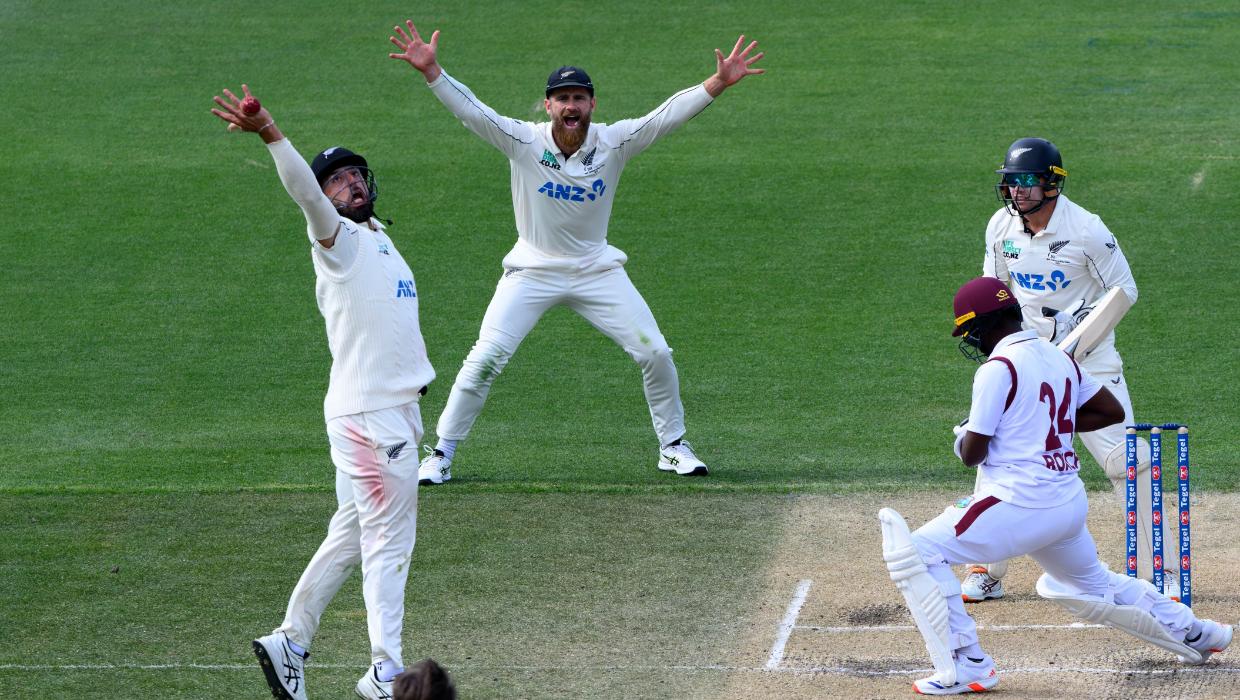
The New Zealand cricket team, known as the Black Caps, enters the second Test against the West Indies facing a significant challenge with their pace attack. Scheduled to begin on March 15, 2024, at the Basin Reserve in Wellington, the team is grappling with injuries that could severely diminish their bowling options after a hard-fought first Test in Christchurch.
During the first Test, which ended in a draw, the West Indies, led by standout performances from Shai Hope and Kemar Roach, managed to frustrate the Black Caps, who were unable to secure a victory despite a strong showing. Hope scored an impressive unbeaten 202 runs, while Roach contributed with a resilient 58 not out, helping the visitors to a challenging total. This performance highlighted the increasing pressure on the Black Caps’ bowling lineup, which is now notably thin.
The team’s bowling spearhead, Matt Henry, along with Nathan Smith, both sustained injuries during the first Test, raising concerns about their availability for the upcoming match. Henry is dealing with a calf injury, while Smith has a side strain. New Zealand’s coach, Rob Walter, and captain, Tom Latham, are set to announce the final squad after assessing the medical reports on their key bowlers.
New Zealand has called up uncapped Canterbury seamer Michael Rae as a potential replacement. Rae boasts an impressive first-class record with 208 wickets at an average of 33 from 70 matches. He leads a list of possible additions that includes Auckland’s left-arm bowler Ben Lister and right-armer Simon Keene. Should both Henry and Smith be ruled out, the Black Caps would be without their top five red-ball quicks, a scenario that would pose significant challenges as they seek to bounce back.
Blair Tickner, already part of the squad, is expected to take on a larger role, marking his fourth Test appearance and his first since March 2023 against Sri Lanka. In the first Test, Jacob Duffy faced an exhausting workload, bowling 43 overs in the West Indies’ second innings. Fellow newcomer Zak Foulkes also contributed significantly, with 33 overs, making their potential roles in the next match even more demanding.
On a positive note, New Zealand welcomes back two regular batters, Daryl Mitchell and Glenn Phillips, who have recovered from their respective injuries. Mitchell is expected to slot back into his familiar No. 5 position. With Tom Blundell sidelined due to a hamstring issue, Mitch Hay will make his debut as wicketkeeper. Any plans to shift Latham to the wicketkeeping role have been abandoned, especially after he managed the gloves for 163.3 overs over the final two days of the previous Test.
In light of these developments, the team may also reconsider their bowling strategy. Offspinning batter Michael Bracewell, who played a larger role than anticipated in the first Test with 55 overs bowled, might be replaced by Mitchell Santner, should he be cleared to play. Walter and Latham could opt for a two-spinner approach, a rarity in Wellington, which would allow them to manage the workload of Duffy, Foulkes, and Tickner more effectively. Phillips has previously excelled at the Basin, notably taking 5-45 against Australia in 2024.
As the Black Caps prepare for the second Test, the pressure is mounting. Following a resilient performance from the West Indies, who defied expectations with their batting depth, the New Zealand team must regroup. The first Test highlighted not only their bowling vulnerabilities but also the potential for missed opportunities, leaving lingering questions about their strategy moving forward.
With the Black Caps needing to overcome a challenging situation, the upcoming match promises to be a pivotal moment in the three-Test series. As they take to the field, the focus will be on resilience and adaptation in the face of adversity.













South African Entrepreneur Celebrates Dream Opening in Kaiwaka

New Zealand Couple Faces $7,500 Miami Bar Bill After Overcharge

South African Entrepreneur Opens Tasty Temptations in Kaiwaka

Point Wells Homes Tour Raises $80,000 for Local Hospice

Vote for Your Favourite Christmas Lights in Rangiora and Kaiapoi

Israel Prepares for Next Phase of Gaza Ceasefire Plan

Aspiring Writers Invited to Join Intergenerational Workshops in Warkworth

Parakiore Sports Facility Opens After Decade of Delays

Netflix Set to Acquire Warner Bros Studios in $125 Billion Deal

Private Funeral Held for Dean Field and His Three Children

Funeral Planned for Field Siblings After Tragic House Fire

Netball New Zealand Stands Down Dame Noeline Taurua for Series

Tributes Pour In for Lachlan Rofe, Reality Star, Dead at 47

New ‘Maverick’ Chaser Joins Beat the Chasers Season Finale

Silver Ferns Legend Laura Langman Criticizes Team’s Attitude

Eli Katoa Rushed to Hospital After Sideline Incident During Match

Investigation Underway in Tragic Sanson House Fire Involving Family

Netball NZ Calls for Respect Amid Dame Taurua’s Standoff
-
 World2 weeks ago
Private Funeral Held for Dean Field and His Three Children
-
 Top Stories2 weeks ago
Funeral Planned for Field Siblings After Tragic House Fire
-
 Sports3 months ago
Netball New Zealand Stands Down Dame Noeline Taurua for Series
-
 Entertainment3 months ago
Tributes Pour In for Lachlan Rofe, Reality Star, Dead at 47
-
 Entertainment2 months ago
New ‘Maverick’ Chaser Joins Beat the Chasers Season Finale
-
 Sports3 months ago
Silver Ferns Legend Laura Langman Criticizes Team’s Attitude
-
 Sports1 month ago
Eli Katoa Rushed to Hospital After Sideline Incident During Match
-
 World3 weeks ago
Investigation Underway in Tragic Sanson House Fire Involving Family
-
 Politics2 months ago
Netball NZ Calls for Respect Amid Dame Taurua’s Standoff
-
 Top Stories2 weeks ago
Shock and Grief Follow Tragic Family Deaths in New Zealand
-

 Entertainment3 months ago
Khloe Kardashian Embraces Innovative Stem Cell Therapy in Mexico
-
 World4 months ago
Police Arrest Multiple Individuals During Funeral for Zain Taikato-Fox