
Politics
Trump’s National Security Strategy Targets Europe and Asserts Power

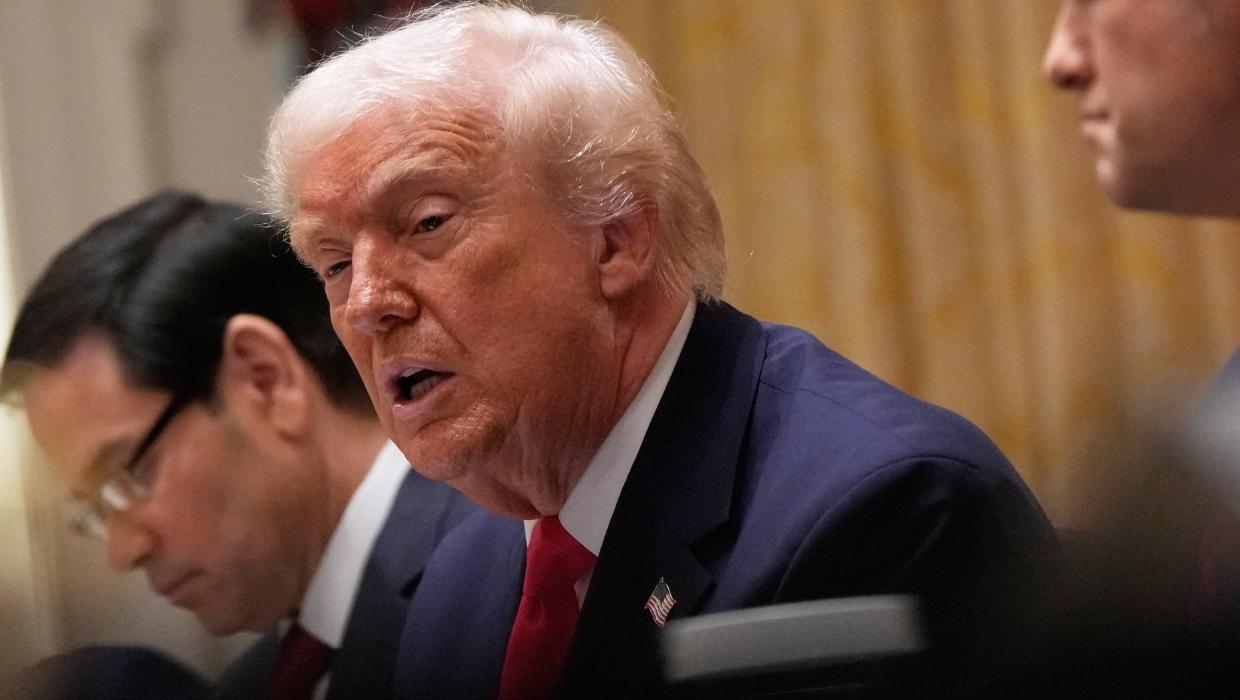
Former President Donald Trump has issued a stark warning regarding Europe’s future in a newly released national security strategy. The document, unveiled by his administration, suggests that European nations could face “civilisational erasure” if they do not strengthen their defense capabilities and consider their reliance on the United States. This statement comes as Trump seeks to assert American dominance, particularly in the Western Hemisphere, while also addressing long-standing alliances.
The national security strategy, published in October 2023, outlines a vision for how the United States will navigate global challenges. It emphasizes a shift in focus from traditional alliances, such as NATO, to a more assertive posture in defending American interests. Trump’s framing of Europe as potentially vulnerable raises concerns among allies who may feel pressured to increase military expenditures.
In particular, Trump points to the growing geopolitical tensions involving Russia and China as critical elements that necessitate a reevaluation of defense strategies across Europe. The document urges European nations to step up their contributions to collective security, suggesting that failure to do so could lead to significant consequences.
Impact on Transatlantic Relations
The implications of this strategy for transatlantic relations are profound. European leaders have historically relied on the United States for military support and strategic guidance. However, Trump’s rhetoric may signal a shift towards a more transactional approach to alliances. This viewpoint could lead to increased friction within NATO as member states grapple with the expectations set forth by Washington.
Critics of Trump’s approach argue that it undermines the collaborative spirit that has characterized US-European relations since World War II. They express concern that such statements could alienate allies and embolden adversaries. As European nations assess their defense needs, the potential for increasing military budgets to meet US expectations could reshape national priorities.
According to analysts, the timing of this strategy is particularly significant. With the G7 summit approaching later this year, European leaders may find themselves in a difficult position, balancing national interests with the demands of their largest ally. The pressure to align with US military and economic policies may lead to shifts in domestic agendas across Europe.
Future Considerations
As the global landscape continues to evolve, the ramifications of Trump’s national security strategy will likely unfold in the coming months. The balance of power in Europe, along with its relationship with the United States, is at a crossroads.
Key issues such as energy independence, military readiness, and economic stability are expected to dominate discussions among European leaders as they respond to this new directive. The strategy may also prompt a reconsideration of defense spending commitments, with some nations potentially looking to increase their military capabilities in response to perceived threats.
In conclusion, Trump’s national security strategy raises critical questions about the future of US-European relations. The assertion that Europe could face “civilisational erasure” underscores a growing urgency for European nations to reassess their defense strategies. As the world watches, the response from Europe will be pivotal in shaping the future of transatlantic ties.








Finnish Innovator Transforms Stargazing with Smart Technology

Australia Dominates England in Second Test, Bowling Plan Backfires

Cyclist Killed in Belmont Crash: Truck Driver Exonerated

Heatwave Conditions Heighten Bushfire Risk Across Australia

Netflix to Acquire Warner Bros Discovery in $125 Billion Deal

Netflix Acquires Warner Bros. Discovery in $72 Billion Deal

Morocco and Oman Battle to Goalless Draw in Arab Cup Clash

Transform Your Home: Harnessing Colour Psychology for Mood

Trump’s National Security Strategy Targets Europe and Asserts Power

Private Funeral Held for Dean Field and His Three Children

Funeral Planned for Field Siblings After Tragic House Fire

Netball New Zealand Stands Down Dame Noeline Taurua for Series

Tributes Pour In for Lachlan Rofe, Reality Star, Dead at 47

New ‘Maverick’ Chaser Joins Beat the Chasers Season Finale

Silver Ferns Legend Laura Langman Criticizes Team’s Attitude

Eli Katoa Rushed to Hospital After Sideline Incident During Match

Investigation Underway in Tragic Sanson House Fire Involving Family

Netball NZ Calls for Respect Amid Dame Taurua’s Standoff
-
 World2 weeks ago
Private Funeral Held for Dean Field and His Three Children
-
 Top Stories2 weeks ago
Funeral Planned for Field Siblings After Tragic House Fire
-
 Sports3 months ago
Netball New Zealand Stands Down Dame Noeline Taurua for Series
-
 Entertainment3 months ago
Tributes Pour In for Lachlan Rofe, Reality Star, Dead at 47
-
 Entertainment2 months ago
New ‘Maverick’ Chaser Joins Beat the Chasers Season Finale
-
 Sports3 months ago
Silver Ferns Legend Laura Langman Criticizes Team’s Attitude
-
 Sports1 month ago
Eli Katoa Rushed to Hospital After Sideline Incident During Match
-
 World3 weeks ago
Investigation Underway in Tragic Sanson House Fire Involving Family
-
 Politics2 months ago
Netball NZ Calls for Respect Amid Dame Taurua’s Standoff
-

 Top Stories2 weeks ago
Shock and Grief Follow Tragic Family Deaths in New Zealand
-

 Entertainment3 months ago
Khloe Kardashian Embraces Innovative Stem Cell Therapy in Mexico
-

 World4 months ago
Police Arrest Multiple Individuals During Funeral for Zain Taikato-Fox