
Science
New Zealand Student Sophie Ineson to Shine at US Science Fair

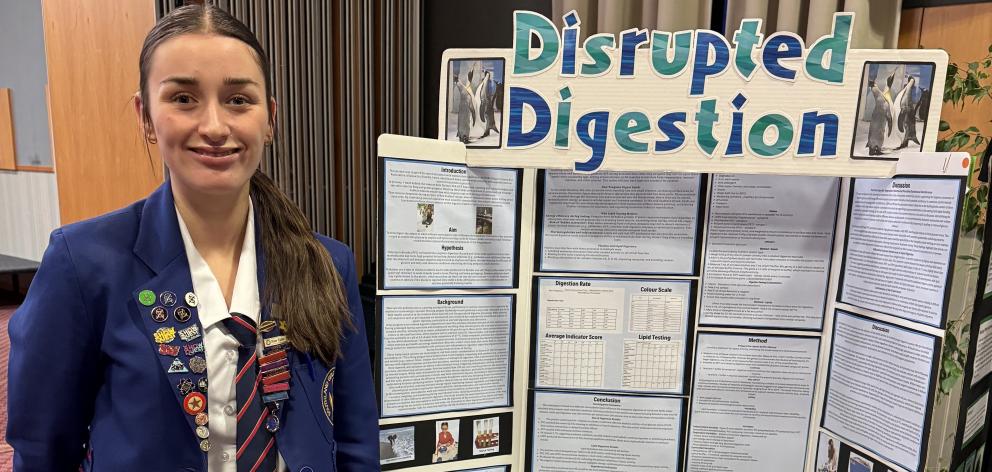
Seventeen-year-old Sophie Ineson has been selected to represent New Zealand at the prestigious International Science and Engineering Fair (ISEF) in the United States in May 2024. Her project, titled Disrupted Digestion, was one of only two chosen by judges from the Royal Society Te Apārangi, following a competitive selection process involving seven projects from students in years 11, 12, and 13 across regional science fairs.
Sophie recently garnered attention after winning the $50,000 Prime Minister’s Space Prize for Student Endeavour for a separate project focused on healing wounds in space. Reflecting on her journey, she described her initial project about penguins, which was part of the requirements for the Duke of Edinburgh’s Hillary Award gold award, as “phenomenal.” The recognition she received for her work on penguins has opened doors for her participation in an international science fair, an opportunity she finds both hard to believe and immensely rewarding.
Research Highlights Impact of Plastic on Penguins
Sophie’s research was inspired by witnessing a sick penguin at a sanctuary several years ago. “Penguins are my favourite animal, so that really hit hard for me, looking at this poor little penguin who could hardly even walk, just because of eating a little tiny bit of plastic,” she explained. Her observations were further reinforced during a sailing trip in the Hauraki Gulf, where she noted the significant presence of plastic in the water.
In her project, Sophie investigated how different types of plastic affect the digestion of king penguins. She focused on enzymes, specifically lipase and amylase, which were accessible and safe for her to use. Through her experiments, she discovered that plastics do interfere with digestion, with the degree of impact varying based on factors such as the size, density, and chemical composition of the plastic.
Sophie will receive mentorship from a member of the Royal Society’s scientific review committee to prepare her project for the international fair. This guidance is expected to enhance her research and presentation skills.
Encouraging Young Scientists
Dame Jane Harding, president of the Royal Society Te Apārangi, expressed her belief in the importance of science fairs for students. “Science and technology fairs offer students valuable opportunities to apply scientific investigation to real-world problems while strengthening their critical thinking, creativity, and communication skills,” she stated.
Sophie’s achievements highlight the potential of young scientists to address pressing environmental issues. As she prepares for the ISEF, her work not only raises awareness about the impact of plastic on wildlife but also serves as an inspiration for future generations of researchers.








Residents Raise Alarm Over Plastic Plant Guards in Ashburton Waterways

$30 Million Luxury Department Store to Transform Queen St, Auckland

News Fix: Key Updates Across News, Politics, and Sports

Health Warning Issued as Toxic Algal Bloom Hits Tukituki River

King’s High School Celebrates Academic Excellence with 2025 Awards

Countess Spencer Cleared of Liability in Health Leak Case

Wellington’s Heritage Properties Sold at Tender Amid Strong Interest

BNZ Highlights Alarming Cyber Security Gaps in SMEs

Dan Wootton and Piers Morgan Clash in Heated Online Debate

Private Funeral Held for Dean Field and His Three Children

Funeral Planned for Field Siblings After Tragic House Fire

Netball New Zealand Stands Down Dame Noeline Taurua for Series

Tributes Pour In for Lachlan Rofe, Reality Star, Dead at 47

New ‘Maverick’ Chaser Joins Beat the Chasers Season Finale

Silver Ferns Legend Laura Langman Criticizes Team’s Attitude

Eli Katoa Rushed to Hospital After Sideline Incident During Match

Investigation Underway in Tragic Sanson House Fire Involving Family

Netball NZ Calls for Respect Amid Dame Taurua’s Standoff
-
 World2 weeks ago
Private Funeral Held for Dean Field and His Three Children
-
 Top Stories3 weeks ago
Funeral Planned for Field Siblings After Tragic House Fire
-
 Sports3 months ago
Netball New Zealand Stands Down Dame Noeline Taurua for Series
-
 Entertainment3 months ago
Tributes Pour In for Lachlan Rofe, Reality Star, Dead at 47
-
 Entertainment2 months ago
New ‘Maverick’ Chaser Joins Beat the Chasers Season Finale
-
 Sports3 months ago
Silver Ferns Legend Laura Langman Criticizes Team’s Attitude
-
 Sports1 month ago
Eli Katoa Rushed to Hospital After Sideline Incident During Match
-
 World3 weeks ago
Investigation Underway in Tragic Sanson House Fire Involving Family
-
 Politics2 months ago
Netball NZ Calls for Respect Amid Dame Taurua’s Standoff
-

 Top Stories3 weeks ago
Shock and Grief Follow Tragic Family Deaths in New Zealand
-

 Entertainment3 months ago
Khloe Kardashian Embraces Innovative Stem Cell Therapy in Mexico
-

 World4 months ago
Police Arrest Multiple Individuals During Funeral for Zain Taikato-Fox