
Science
Researcher Develops Innovative Tool for Early Cancer Detection

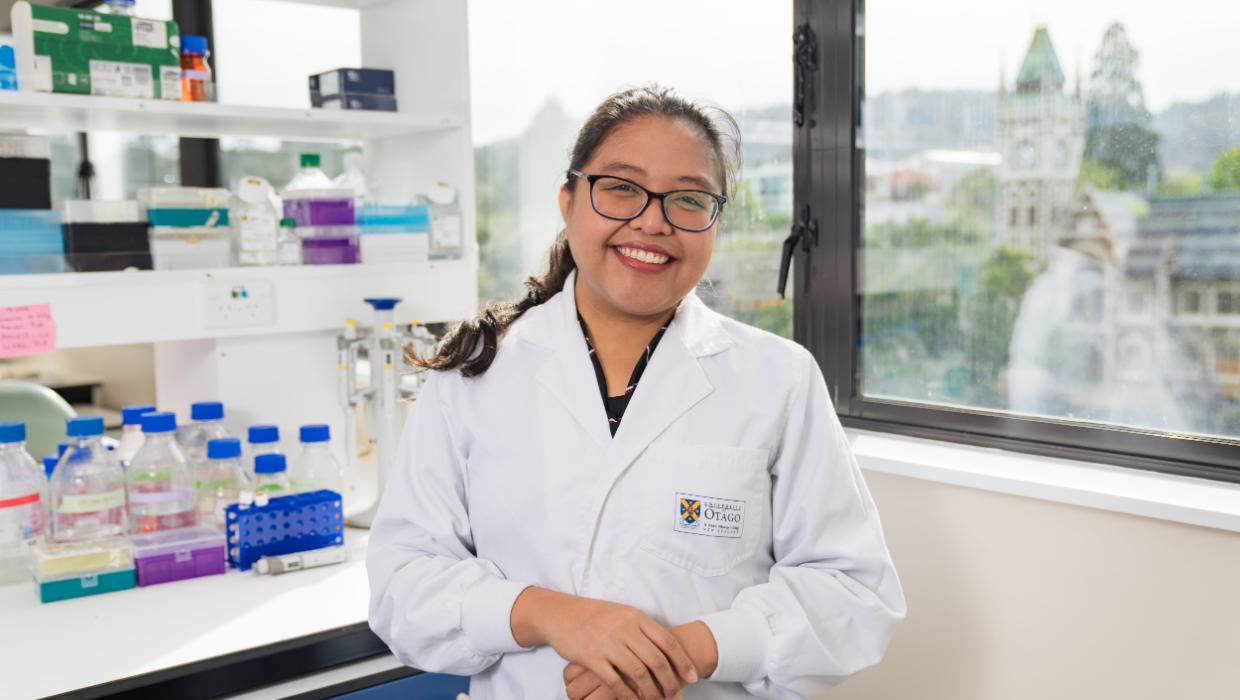
A childhood experience with a friend’s illness has inspired Dr. Judy Ann Cocadiz, a researcher from the University of Otago, to pursue groundbreaking cancer research. With the support of a three-year, $300,000 post-doctoral fellowship from the Cancer Society’s 2025 National Research Grant Round, she aims to develop a tool that could revolutionise early-stage cancer diagnosis.
Cocadiz’s research focuses on circulating tumour DNA (ctDNA), which consists of DNA fragments released into the bloodstream by cancer cells. The concentration of ctDNA typically increases with the advancement of cancer, making it a promising biomarker for diagnosis. Currently, ctDNA is identified through blood samples, but the process has limitations, particularly for early-stage cancers where ctDNA levels are minimal.
Innovative Device Aims to Improve Detection
Cocadiz is working on a novel device designed to be inserted into a blood vessel, functioning as a “sieve” to capture ctDNA efficiently. This method allows for a short collection period, potentially enabling doctors to identify cancer at earlier stages and monitor for recurrence post-treatment. “Typically, we draw about 8-10 ml of blood to analyse ctDNA,” Cocadiz explained. “The challenge is that in early-stage cancer, the ctDNA concentration is so low, it’s akin to searching for a needle in a haystack.”
To mitigate the discomfort associated with conventional blood draws, particularly in vulnerable populations such as children and the elderly, Cocadiz’s device aims to collect ctDNA without the need for larger blood samples. “Instead of needing to take more blood, our device can be inserted, collect ctDNA for a few minutes, and then be removed,” she noted. This innovation not only promises to enhance diagnostic accuracy but also to reduce patient discomfort.
Though still in the proof-of-concept stage, Cocadiz envisions the device operating similarly to an intravenous (IV) line, inserted into a patient’s vein in a manner akin to that of a standard needle. While bringing this technology to clinical use will take time, Cocadiz expressed optimism about the direction of her research.
A Personal Journey into Cancer Research
Cocadiz’s passion for cancer research was ignited during her childhood in the Philippines. At just five years old, she noticed that her best friend frequently had large bruises from minor accidents. Concerned, she informed her parents, who sought medical attention for her friend. This led to the diagnosis of early-stage leukaemia, allowing him to receive timely treatment. Reuniting with her friend this year, she was thrilled to find him healthy and thriving.
After completing her PhD in biochemistry last year, Cocadiz realised that while she did not want to become a doctor, she still desired to contribute to the fight against cancer. “Everything just kind of fell into place, and I am really glad I ended up in cancer research,” she reflected.
Cocadiz is grateful for the grant from the Cancer Society, recognising its significance not only for her current research but also for her budding career in the field. As she continues her work, the potential impact of her innovative device on early cancer detection could change the landscape of cancer diagnostics, offering hope for more effective treatments in the future.













Nick Ascroft’s Poignant New Collection Explores Life and Death

Swedish Central Bank Governor’s Impact Surpasses Ikea’s Iconic Meatballs

Nick Ascroft’s New Poem Challenges Funeral Traditions with Humor

Long Covid Alters Life for Young People as School Year Ends

Interior Designer Matt Reid on Transforming Spaces with Style

Activists Raise Morning Star Flag, Demand Independence for West Papua

Researcher Develops Innovative Tool for Early Cancer Detection

Kiwi Boxer David Nyika Faces Personal Battles Before Fight Night

Powerball Jackpot Hits $12 Million; Winning Numbers Announced

Private Funeral Held for Dean Field and His Three Children

Funeral Planned for Field Siblings After Tragic House Fire

Netball New Zealand Stands Down Dame Noeline Taurua for Series

Tributes Pour In for Lachlan Rofe, Reality Star, Dead at 47

New ‘Maverick’ Chaser Joins Beat the Chasers Season Finale

Silver Ferns Legend Laura Langman Criticizes Team’s Attitude

Eli Katoa Rushed to Hospital After Sideline Incident During Match

Investigation Underway in Tragic Sanson House Fire Involving Family

Netball NZ Calls for Respect Amid Dame Taurua’s Standoff
-
 World2 weeks ago
Private Funeral Held for Dean Field and His Three Children
-
 Top Stories2 weeks ago
Funeral Planned for Field Siblings After Tragic House Fire
-
 Sports3 months ago
Netball New Zealand Stands Down Dame Noeline Taurua for Series
-
 Entertainment3 months ago
Tributes Pour In for Lachlan Rofe, Reality Star, Dead at 47
-
 Entertainment2 months ago
New ‘Maverick’ Chaser Joins Beat the Chasers Season Finale
-
 Sports3 months ago
Silver Ferns Legend Laura Langman Criticizes Team’s Attitude
-
 Sports1 month ago
Eli Katoa Rushed to Hospital After Sideline Incident During Match
-
 World3 weeks ago
Investigation Underway in Tragic Sanson House Fire Involving Family
-
 Politics2 months ago
Netball NZ Calls for Respect Amid Dame Taurua’s Standoff
-
 Top Stories2 weeks ago
Shock and Grief Follow Tragic Family Deaths in New Zealand
-

 Entertainment3 months ago
Khloe Kardashian Embraces Innovative Stem Cell Therapy in Mexico
-

 World4 months ago
Police Arrest Multiple Individuals During Funeral for Zain Taikato-Fox