
Lifestyle
Rare Fresco of Jesus as ‘Good Shepherd’ Discovered in Türkiye


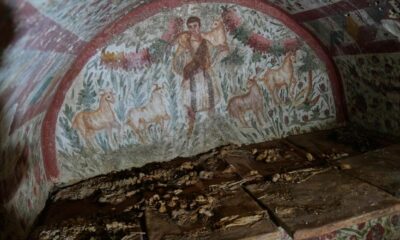
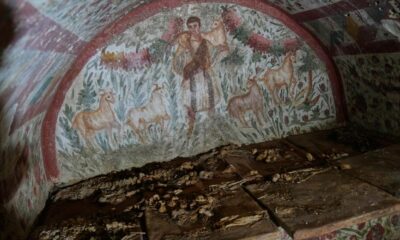
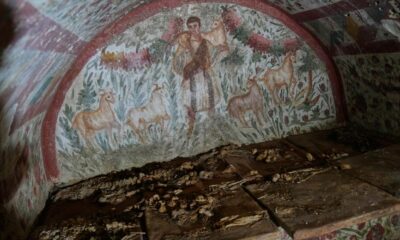
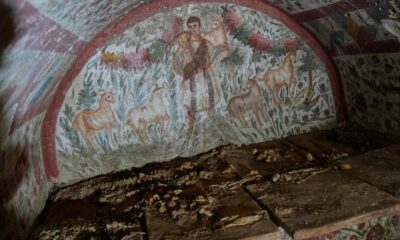
A rare fresco depicting Jesus as the “Good Shepherd” has been uncovered at an archaeological site in Türkiye, drawing the attention of art historians and religious scholars alike. This significant find features a youthful, clean-shaven Jesus adorned in a toga, carrying a goat across his shoulders, a symbol of his role as a protector and guide.
The fresco was discovered during an excavation at a site believed to date back to the Byzantine period. According to the lead archaeologist, Dr. Ahmet Yilmaz, this artwork not only showcases the artistry of the time but also provides insight into early Christian iconography. Dr. Yilmaz emphasized the importance of the fresco, stating, “This is a remarkable representation of Jesus that highlights his pastoral role as a caretaker of the faithful.”
Significance of the Discovery
The “Good Shepherd” fresco is particularly noteworthy for its artistic style and historical context. The depiction of Jesus in a youthful form, dressed in a toga, contrasts with more commonly known representations of him in later artworks. Art experts believe that this fresco could influence the understanding of religious art in the early Byzantine era.
Furthermore, the site where the fresco was found has yielded other artifacts, including pottery and inscriptions, which suggest it was a place of worship. These findings are expected to enhance knowledge of the region’s religious practices during the time. Dr. Yilmaz remarked, “Each piece we uncover helps us to build a clearer picture of the spiritual life of this community.”
Future Research and Preservation Efforts
Following the discovery, plans are underway to conserve the fresco and the surrounding site. The Turkish Ministry of Culture and Tourism has expressed its commitment to preserving this crucial piece of heritage. A team of conservators will work to ensure that the fresco is protected from environmental factors that could cause deterioration.
In addition to preservation efforts, further research will take place to study the broader implications of the fresco within Byzantine art. Researchers from various universities have shown interest in collaborating on this project, aiming to delve deeper into the religious and cultural significance of such artworks.
As excavations continue, the archaeological team hopes to uncover more artifacts that could provide further context for this remarkable period in history. The discovery of the “Good Shepherd” fresco not only highlights Türkiye’s rich archaeological landscape but also contributes to the ongoing dialogue about the evolution of Christian art and its impact on society.








Al-Ajami and Abdulla Shine in Thrilling Hathab Equestrian Rounds

Rare Fresco of Jesus as ‘Good Shepherd’ Discovered in Türkiye

Veteran Taxpayer Advocates for Mobility Taxi Service Retention

David Nyika Triumphs in Gatton, Dedicates Win to Fiancée Battling Cancer

Homicide Investigation Launched After Two Found Dead in Ruatiti

Al-Ajami and Abdulla Shine at Longines Hathab Qatar Equestrian Tour

Rare ‘Good Shepherd’ Fresco of Jesus Discovered in Türkiye

Veteran Taxpayer Advocates for Mobility Taxi Service Retention

Kiwi Boxer David Nyika Wins for Fiancée Battling Cancer

Private Funeral Held for Dean Field and His Three Children

Funeral Planned for Field Siblings After Tragic House Fire

Netball New Zealand Stands Down Dame Noeline Taurua for Series

Tributes Pour In for Lachlan Rofe, Reality Star, Dead at 47

New ‘Maverick’ Chaser Joins Beat the Chasers Season Finale

Silver Ferns Legend Laura Langman Criticizes Team’s Attitude

Eli Katoa Rushed to Hospital After Sideline Incident During Match

Netball NZ Calls for Respect Amid Dame Taurua’s Standoff

Investigation Underway in Tragic Sanson House Fire Involving Family
-
 World3 weeks ago
Private Funeral Held for Dean Field and His Three Children
-
 Top Stories3 weeks ago
Funeral Planned for Field Siblings After Tragic House Fire
-
 Sports3 months ago
Netball New Zealand Stands Down Dame Noeline Taurua for Series
-
 Entertainment3 months ago
Tributes Pour In for Lachlan Rofe, Reality Star, Dead at 47
-
 Entertainment2 months ago
New ‘Maverick’ Chaser Joins Beat the Chasers Season Finale
-
 Sports3 months ago
Silver Ferns Legend Laura Langman Criticizes Team’s Attitude
-
 Sports1 month ago
Eli Katoa Rushed to Hospital After Sideline Incident During Match
-
 Politics2 months ago
Netball NZ Calls for Respect Amid Dame Taurua’s Standoff
-
 World4 weeks ago
Investigation Underway in Tragic Sanson House Fire Involving Family
-

 Entertainment1 week ago
Jacinda Ardern Discusses Popularity Decline on Graham Norton Show
-

 Sports2 weeks ago
Eli Katoa Shares Positive Recovery Update After Brain Surgery
-

 Top Stories3 weeks ago
Shock and Grief Follow Tragic Family Deaths in New Zealand