
Business
Future of Aviation: Direct Flights and Cleaner Jets by 2050

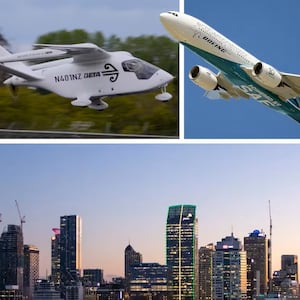
The aviation industry is set for transformative changes by 2050, with projections indicating the possibility of direct flights between major global cities, such as Auckland and London, using advanced hybrid airliners. These developments are anticipated to enhance passenger comfort and reduce environmental impact significantly.
According to the International Air Transport Association (IATA), the future of air travel will feature ultra-long-haul routes, where aircraft will be capable of flying great distances without the need for stopovers. This shift is part of a broader strategy to improve efficiency and sustainability in air travel.
Innovative Technologies on the Horizon
The introduction of hybrid airliners, which combine traditional jet engines with electric propulsion systems, is expected to revolutionize long-distance travel. These aircraft are designed to consume less fuel and produce fewer carbon emissions compared to conventional models. This innovation aligns with global efforts to combat climate change and is being pursued by leading manufacturers such as Airbus and Boeing.
In addition to cleaner jets, the industry is exploring the integration of robotic technologies in various operational aspects. Robots are being tested for roles in aircraft maintenance and passenger services, promising to enhance safety and efficiency. This technological advancement could lead to faster turnaround times at airports and improved customer experiences.
Environmental Goals and Industry Response
The aviation sector faces increasing pressure to meet stringent environmental targets. By 2050, the industry aims to reduce carbon emissions by 50% compared to 2005 levels. Achieving this goal will require significant investments in sustainable aviation fuels and innovative aircraft designs.
Industry experts emphasize the importance of collaboration among stakeholders, including governments, manufacturers, and airlines, to facilitate these advancements. The IATA has highlighted the need for supportive policies and investment in research and development to accelerate the transition to greener aviation.
As the aviation industry prepares for these significant changes, the future of flying looks promising. The prospect of direct flights across vast distances, combined with cleaner technologies and advanced automation, could transform the way people travel, making it more efficient and environmentally friendly. The advancements expected by 2050 will not only reshape the industry but could also redefine global connectivity.













Celebrated Scientist Gordon McKenzie Remembered for Pioneering Work

Top Players Vie for Glory at Men’s ASB Classic 2024

High Temperatures Persist Across New Zealand’s North Island

Uber Launches Robotaxi Service with Lucid Motors and Nuro

Stock Market Insights: Top Performers of 2025 Unveiled

Winston Peters Emerges as Key Political Player in New Zealand

Celebrated Scientist Gordon Lauder Remembered for Pioneering Work

Jenny Armstrong Champions Women’s Sailing as Yachting NZ’s Coach

North Island Endures High Temperatures Ahead of Weekend Showers

Private Funeral Held for Dean Field and His Three Children

Funeral Planned for Field Siblings After Tragic House Fire

Netball New Zealand Stands Down Dame Noeline Taurua for Series

Tributes Pour In for Lachlan Rofe, Reality Star, Dead at 47

New ‘Maverick’ Chaser Joins Beat the Chasers Season Finale

Silver Ferns Legend Laura Langman Criticizes Team’s Attitude

Eli Katoa Rushed to Hospital After Sideline Incident During Match

Netball NZ Calls for Respect Amid Dame Taurua’s Standoff

Investigation Underway in Tragic Sanson House Fire Involving Family
-
 World2 months ago
Private Funeral Held for Dean Field and His Three Children
-
 Top Stories2 months ago
Funeral Planned for Field Siblings After Tragic House Fire
-
 Sports4 months ago
Netball New Zealand Stands Down Dame Noeline Taurua for Series
-
 Entertainment4 months ago
Tributes Pour In for Lachlan Rofe, Reality Star, Dead at 47
-
 Entertainment3 months ago
New ‘Maverick’ Chaser Joins Beat the Chasers Season Finale
-
 Sports4 months ago
Silver Ferns Legend Laura Langman Criticizes Team’s Attitude
-
 Sports2 months ago
Eli Katoa Rushed to Hospital After Sideline Incident During Match
-
 Politics3 months ago
Netball NZ Calls for Respect Amid Dame Taurua’s Standoff
-
 World2 months ago
Investigation Underway in Tragic Sanson House Fire Involving Family
-

 Sports4 weeks ago
Nathan Williamson’s Condition Improves Following Race Fall
-

 Entertainment1 month ago
Jacinda Ardern Discusses Popularity Decline on Graham Norton Show
-

 World3 weeks ago
Investigation Launched Following Boat Fire at Lake Taupō