
Lifestyle
Unveiling Prehistoric Sites: Similarities Between Stonehenge and Pömmelte

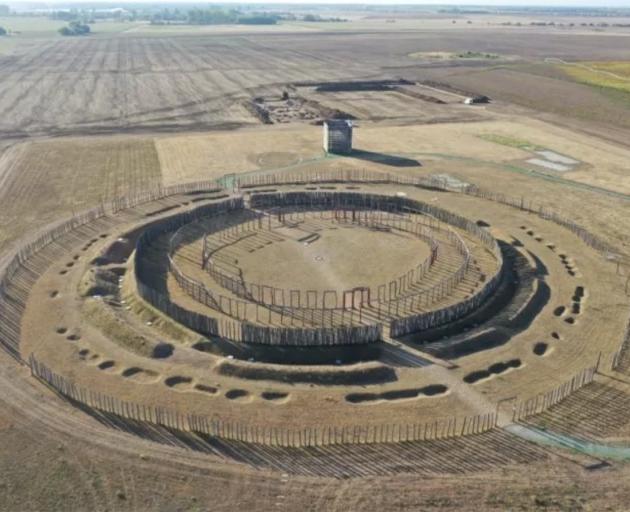
Recent archaeological findings suggest striking similarities between the ancient sites of Stonehenge in England and Pömmelte in Germany. Both locations, dating back approximately 4500 years, serve as important centers for prehistoric rituals, particularly those related to solar observations.
Stonehenge, famously associated with the tragic character Tess of the d’Urbervilles from Thomas Hardy’s novel, has long captivated visitors with its monumental Sarsen stones. Although access to the stones is now limited for safety reasons, their historical significance remains undiminished. This iconic site likely served as a gathering place, reflecting the prehistoric community’s fascination with the sun’s annual movements.
Excavations at Pömmelte have revealed a circular ditch enclosing two rings of small circles. Initially thought to be mere outlines, these circles were discovered to contain holes for massive oak posts, suggesting a similar purpose to that of Stonehenge. What sets Pömmelte apart is that its oak posts were likely transported via the nearby Elbe River, contrasting with the stones of Stonehenge, which were transported from distant quarries.
Comparative Significance of Ancient Sites
Both Stonehenge and Pömmelte were constructed around the same period and share architectural similarities. Stonehenge is part of a larger ritual complex that includes the renowned Silbury Hill, a 40-meter-high structure comparable in volume to the Egyptian pyramids. The purpose of Silbury Hill remains a mystery, leading to speculation about the potential burial of a significant prehistoric figure within its confines.
In contrast, Pömmelte features an extensive settlement of approximately 140 long houses, each capable of housing multiple generations, highlighting a more complex societal structure than what is observed at Stonehenge. This suggests that Pömmelte was not only a ceremonial site but also a vibrant community hub.
Visitor Engagement and Cultural Insights
Today, Pömmelte attracts around 40,000 visitors annually, drawn by its reconstructed site and the allure of ancient history. Visitors depart with a deeper understanding of a widespread prehistoric cult that celebrated the sun, akin to the grand medieval cathedrals of Europe.
Both sites illustrate the interconnectedness of ancient cultures across Europe, revealing a shared reverence for solar phenomena. As researchers continue to explore these significant historical landmarks, the narrative of human development and ritual practices during the prehistoric era becomes increasingly rich and complex.













Tai Webster Rejoins Breakers for Crucial NBL Second Half

Auckland Police Hunt for Wanted Man Robin Dion Leslie Martin

New Tracking Technology Targets Hornets in New Zealand’s Eradication Effort

Auckland Mayor Wayne Brown Challenges Government’s Rate Cap Proposal

Simon Helberg Surprises Diners with Visit to Te Awamutu Restaurant

Community Pharmacies Evolve to Meet Health Needs in 2023

King Charles Revokes Prince Andrew’s Final Royal Titles

Naval Point Club Takes Stand Against Harassment and Gossip

Suzuki International Series Ignites Motorcycle Racing in Taupō

Private Funeral Held for Dean Field and His Three Children

Funeral Planned for Field Siblings After Tragic House Fire

Netball New Zealand Stands Down Dame Noeline Taurua for Series

Tributes Pour In for Lachlan Rofe, Reality Star, Dead at 47

New ‘Maverick’ Chaser Joins Beat the Chasers Season Finale

Silver Ferns Legend Laura Langman Criticizes Team’s Attitude

Eli Katoa Rushed to Hospital After Sideline Incident During Match

Investigation Underway in Tragic Sanson House Fire Involving Family

Netball NZ Calls for Respect Amid Dame Taurua’s Standoff
-
 World1 week ago
Private Funeral Held for Dean Field and His Three Children
-
 Top Stories2 weeks ago
Funeral Planned for Field Siblings After Tragic House Fire
-
 Sports3 months ago
Netball New Zealand Stands Down Dame Noeline Taurua for Series
-
 Entertainment3 months ago
Tributes Pour In for Lachlan Rofe, Reality Star, Dead at 47
-
 Entertainment2 months ago
New ‘Maverick’ Chaser Joins Beat the Chasers Season Finale
-
 Sports3 months ago
Silver Ferns Legend Laura Langman Criticizes Team’s Attitude
-
 Sports4 weeks ago
Eli Katoa Rushed to Hospital After Sideline Incident During Match
-
 World2 weeks ago
Investigation Underway in Tragic Sanson House Fire Involving Family
-
 Politics2 months ago
Netball NZ Calls for Respect Amid Dame Taurua’s Standoff
-

 Top Stories2 weeks ago
Shock and Grief Follow Tragic Family Deaths in New Zealand
-

 Entertainment3 months ago
Khloe Kardashian Embraces Innovative Stem Cell Therapy in Mexico
-

 World4 months ago
Police Arrest Multiple Individuals During Funeral for Zain Taikato-Fox