
Politics
Leadership Poll Shows Hana-Rawhiti Maipi-Clarke Surpassing Party Elders

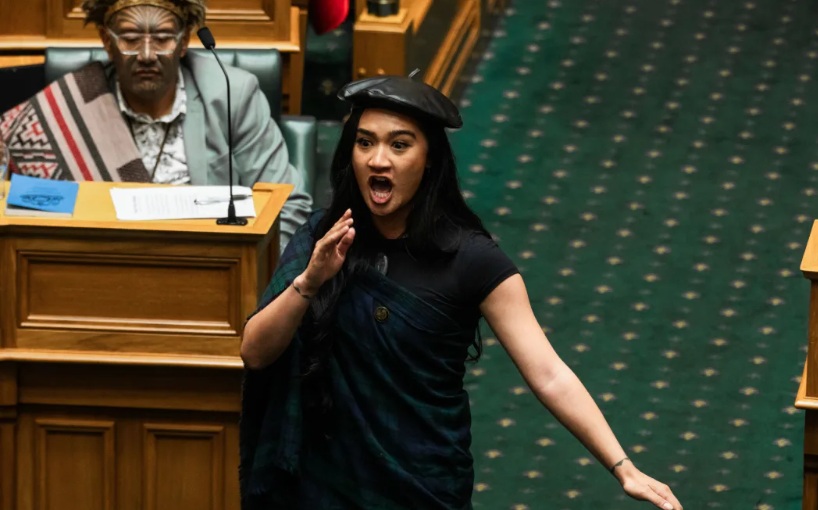
A recent poll indicates that nearly half of Māori voters lack trust in the leadership of Te Pāti Māori, with many expressing a preference for Hana-Rawhiti Maipi-Clarke as a potential leader. Conducted by Mata-Horizon Research between December 4 and December 12, the survey reveals significant dissatisfaction with the party’s direction and internal conflicts.
The polling results show that approximately 47 percent of respondents believe the party is heading in the wrong direction. Additionally, over 65 percent of those surveyed indicated that recent controversies would influence their voting decisions. Despite these challenges, a considerable portion of voters still desires the party’s presence in Parliament.
Internal Turmoil and Leadership Crisis
Te Pāti Māori has faced substantial internal strife since June, marked by allegations and counter-allegations among its members and leadership. This turmoil culminated in the expulsion of Mariameno Kapa-Kingi and Tākura Ferris from the party. Following a High Court interim order, Kapa-Kingi’s membership was reinstated pending a full hearing next year.
Former party insiders have voiced concerns about the current leadership, emphasizing a need to return to the foundational principles established when the party was founded in 2004. Amokura Panoho, a founding member, argues that the changes made to the party’s constitution in 2023 shifted authority away from the membership towards the executive, undermining the party’s original values.
Jack Tautokai McDonald, a former policy director, remarked on the party’s past successes but expressed concern that recent events threaten to undermine those achievements. “I feel like that is now all at risk because of the debacle over the last few months,” he stated.
Mata Reports invited party president John Tamihere for an interview regarding the poll results, but he declined the opportunity.
Polling Insights and Voter Sentiment
The Mata-Horizon Research poll, which included 328 Māori participants, has a margin of error of ±5.4 percent. A significant finding revealed that 47 percent of respondents expressed little to no trust in the current leadership team. In contrast, only 18 percent reported having a lot of trust.
When asked about their preferred leader, Maipi-Clarke led with 19 percent support. This recognition follows her recent acknowledgment by Time magazine as one of the world’s most influential rising stars. Co-leader Rawiri Waititi received 12 percent, closely followed by Ferris at 11 percent.
The party, which won six out of seven Māori electorate seats in the last election, initially enjoyed strong support this year due to the backing of the Toitū Te Tiriti movement. However, infighting has substantially damaged the party’s image as the next election approaches.
When voters were asked about the significance of recent problems on their voting choices, 67 percent indicated that these issues were “very” or “somewhat” important. Only 6 percent responded with uncertainty.
Despite the challenges, 71 percent of respondents who voted for a Te Pāti Māori candidate in 2023 indicated they would likely vote for the party again if an election were held tomorrow. Support for the party’s overall standing appears to be stable, with both Labour and Te Pāti Māori receiving 28 percent support in the poll, slightly higher than their respective results in the last election.
Political scientist Lara Greaves from Victoria University commented on the party’s uncertain path to regaining stability. She noted that the party’s split with the Toitū Te Tiriti movement could alienate younger voters, stating, “It’s hard to motivate people to come out to vote when you see all of this drama.”
Despite the ongoing challenges, Panoho remains hopeful for the party’s future. “The Māori Party was born through courage,” she asserted. “If we return to honesty, integrity, and collective leadership, our movement will recover its mana.” She emphasized the importance of guiding the party’s direction to ensure its long-term viability and appeal to younger generations of Māori leaders.
This analysis highlights the current situation within Te Pāti Māori and the vital implications for its future as it navigates through leadership challenges and strives to maintain voter confidence.













PSG Celebrates Historic Sixth Trophy with Intercontinental Cup Win

Discover Jo Cribb’s Top Wine Picks for 2025 and Beyond

Grandmother Identified as Final Victim of Bondi Terror Attack

Scientists Decode Genetic Secrets Behind Holstein Cow Spots

Auckland FC Clashes with Western Sydney Wanderers in A-League Showdown

David Seymour’s Car Damaged by Tree in Epsom Parking Incident

Police Urge Public for Tips on $1 Million Invercargill Arson

Government Approves Waihi North Mining Project, Sparking Debate

Six Heartwarming Kiwi Videos to Brighten Your Week

Private Funeral Held for Dean Field and His Three Children

Funeral Planned for Field Siblings After Tragic House Fire

Netball New Zealand Stands Down Dame Noeline Taurua for Series

Tributes Pour In for Lachlan Rofe, Reality Star, Dead at 47

New ‘Maverick’ Chaser Joins Beat the Chasers Season Finale

Silver Ferns Legend Laura Langman Criticizes Team’s Attitude

Eli Katoa Rushed to Hospital After Sideline Incident During Match

Netball NZ Calls for Respect Amid Dame Taurua’s Standoff

Investigation Underway in Tragic Sanson House Fire Involving Family
-
 World4 weeks ago
Private Funeral Held for Dean Field and His Three Children
-
 Top Stories4 weeks ago
Funeral Planned for Field Siblings After Tragic House Fire
-
 Sports3 months ago
Netball New Zealand Stands Down Dame Noeline Taurua for Series
-
 Entertainment3 months ago
Tributes Pour In for Lachlan Rofe, Reality Star, Dead at 47
-
 Entertainment2 months ago
New ‘Maverick’ Chaser Joins Beat the Chasers Season Finale
-
 Sports3 months ago
Silver Ferns Legend Laura Langman Criticizes Team’s Attitude
-
 Sports2 months ago
Eli Katoa Rushed to Hospital After Sideline Incident During Match
-
 Politics3 months ago
Netball NZ Calls for Respect Amid Dame Taurua’s Standoff
-
 World1 month ago
Investigation Underway in Tragic Sanson House Fire Involving Family
-

 Entertainment2 weeks ago
Jacinda Ardern Discusses Popularity Decline on Graham Norton Show
-

 Sports7 days ago
Pressure Mounts on All Blacks Coaches Amid Internal Strife
-

 Sports3 weeks ago
Eli Katoa Shares Positive Recovery Update After Brain Surgery