
Politics
Trump Announces Venezuelan Airspace Closure Amid Rising Tensions

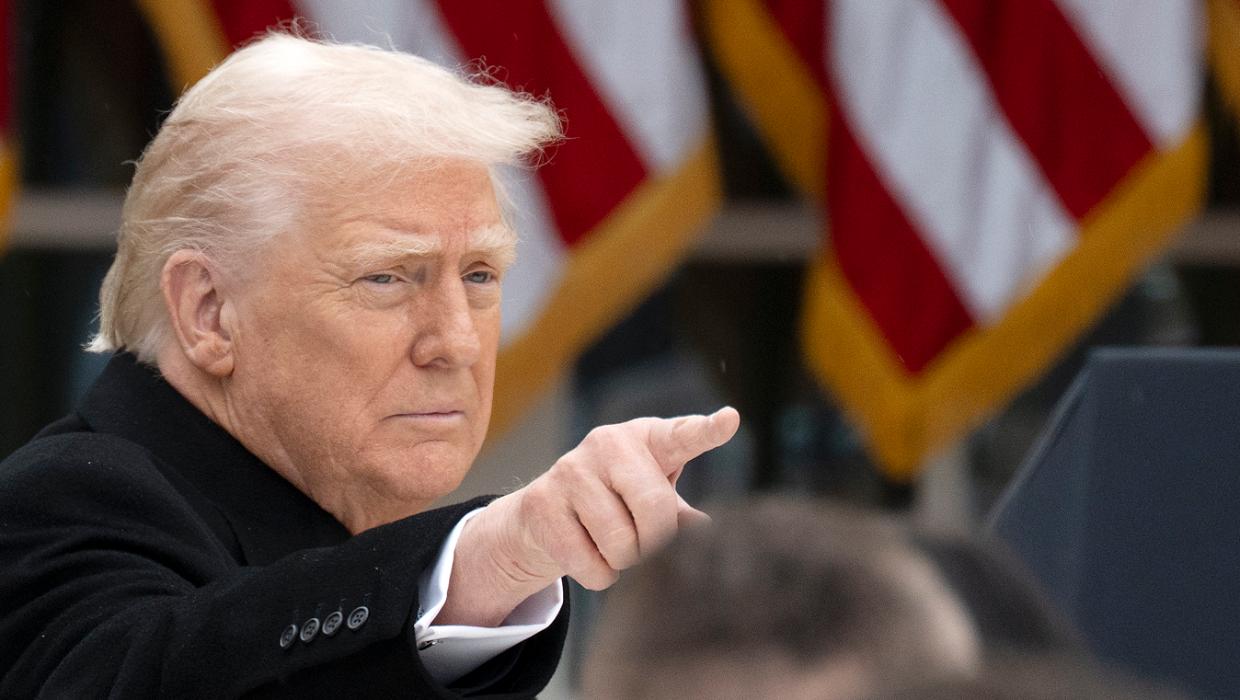
On August 23, 2023, U.S. President Donald Trump declared that Venezuelan airspace is closed, a statement that has raised significant concerns regarding potential military action by the United States. Although the U.S. president lacks the legal authority to unilaterally close airspace over another nation, such declarations often precede further military engagement.
This announcement comes at a time when tensions between the U.S. and Venezuela have escalated. Trump’s remarks were made during a press conference where he emphasized the need for stringent measures against the Venezuelan government, citing issues related to human rights and regional stability. The Venezuelan government, led by President Nicolás Maduro, has been under international scrutiny, facing accusations of authoritarianism and human rights violations.
Legal Implications and International Response
The legal ramifications of closing another country’s airspace are complex and often contentious. Under international law, airspace is considered sovereign territory. Therefore, unilateral actions by one nation can lead to severe diplomatic repercussions. Critics argue that Trump’s announcement could be interpreted as a precursor to military strikes, a move that many nations would view as aggression.
Officials from various countries have responded with caution. The United Nations and several regional organizations have called for dialogue rather than military intervention. A spokesperson from the UN emphasized the importance of respecting national sovereignty and urged all parties to seek peaceful resolutions.
In Venezuela, the government reacted strongly to Trump’s statement. Officials condemned the declaration as an act of provocation and reaffirmed their commitment to defending the nation’s sovereignty. Venezuelan Foreign Minister Yván Gil described the announcement as a dangerous escalation and insisted that the country would respond to any threats to its airspace.
Context of U.S.-Venezuela Relations
The U.S. has had a strained relationship with Venezuela for several years, particularly since the onset of economic turmoil in the country. Sanctions imposed by the U.S. aimed at curbing the Maduro government’s influence have led to significant economic hardship for the Venezuelan populace. The humanitarian crisis in Venezuela has prompted numerous international organizations to call for intervention, complicating the diplomatic landscape.
Trump’s recent comments reflect a continuation of hardline policies towards Venezuela, with a focus on restoring democracy in the region. These policies have garnered support from certain factions within the U.S. government, who argue that strong action is necessary to counteract what they perceive as threats to regional stability.
The potential for military action remains a contentious subject among U.S. lawmakers. Some express concern that such actions could lead to unintended consequences, including loss of life and further destabilization of the region. A bipartisan group of senators has urged the administration to prioritize diplomatic solutions over military options.
As the situation unfolds, the international community watches closely. The implications of Trump’s statement extend beyond Venezuela’s borders, affecting relations with other nations in the region and potentially altering the geopolitical landscape in Latin America.
In conclusion, while Trump’s declaration of a closure on Venezuelan airspace signals a heightened level of tension, the legal and diplomatic consequences of such a move could have far-reaching effects. The coming weeks will be critical in determining how this situation develops and whether diplomatic efforts can prevail over military posturing.










New Recall Expands for Asbestos-Contaminated Play Sand Products

NZTA Proposes $3.8 Billion Wellington Mega-Project for Tunnels

News Fix Highlights Key Events Across News, Politics, and Sports

Ōrewa Businesses Demand Enhanced Safety Measures Amid Rising Crime

Long-lost Rubens Painting Fetches €2.94 Million at Auction

David Dimbleby Critiques Monarchy’s Relevance and Wealth

Kiwi Athletes Shine in US College Sports: A New Era Unfolds

Pet Refuge Urges Donations Amid Rising Domestic Violence Cases

Southeast Asia Storm Claims Over 600 Lives as Devastation Mounts

Private Funeral Held for Dean Field and His Three Children

Funeral Planned for Field Siblings After Tragic House Fire

Netball New Zealand Stands Down Dame Noeline Taurua for Series

Tributes Pour In for Lachlan Rofe, Reality Star, Dead at 47

New ‘Maverick’ Chaser Joins Beat the Chasers Season Finale

Silver Ferns Legend Laura Langman Criticizes Team’s Attitude

Eli Katoa Rushed to Hospital After Sideline Incident During Match

Netball NZ Calls for Respect Amid Dame Taurua’s Standoff

Investigation Underway in Tragic Sanson House Fire Involving Family
-
 World6 days ago
Private Funeral Held for Dean Field and His Three Children
-
 Top Stories1 week ago
Funeral Planned for Field Siblings After Tragic House Fire
-
 Sports3 months ago
Netball New Zealand Stands Down Dame Noeline Taurua for Series
-
 Entertainment3 months ago
Tributes Pour In for Lachlan Rofe, Reality Star, Dead at 47
-
 Entertainment2 months ago
New ‘Maverick’ Chaser Joins Beat the Chasers Season Finale
-
 Sports3 months ago
Silver Ferns Legend Laura Langman Criticizes Team’s Attitude
-
 Sports4 weeks ago
Eli Katoa Rushed to Hospital After Sideline Incident During Match
-
 Politics2 months ago
Netball NZ Calls for Respect Amid Dame Taurua’s Standoff
-
 World2 weeks ago
Investigation Underway in Tragic Sanson House Fire Involving Family
-

 Entertainment3 months ago
Khloe Kardashian Embraces Innovative Stem Cell Therapy in Mexico
-

 Sports4 weeks ago
Jamie Melham Triumphs Over Husband Ben in Melbourne Cup Victory
-

 World4 months ago
Police Arrest Multiple Individuals During Funeral for Zain Taikato-Fox