
Science
Nobel Prize in Physics Honors Pioneers in Quantum Technology

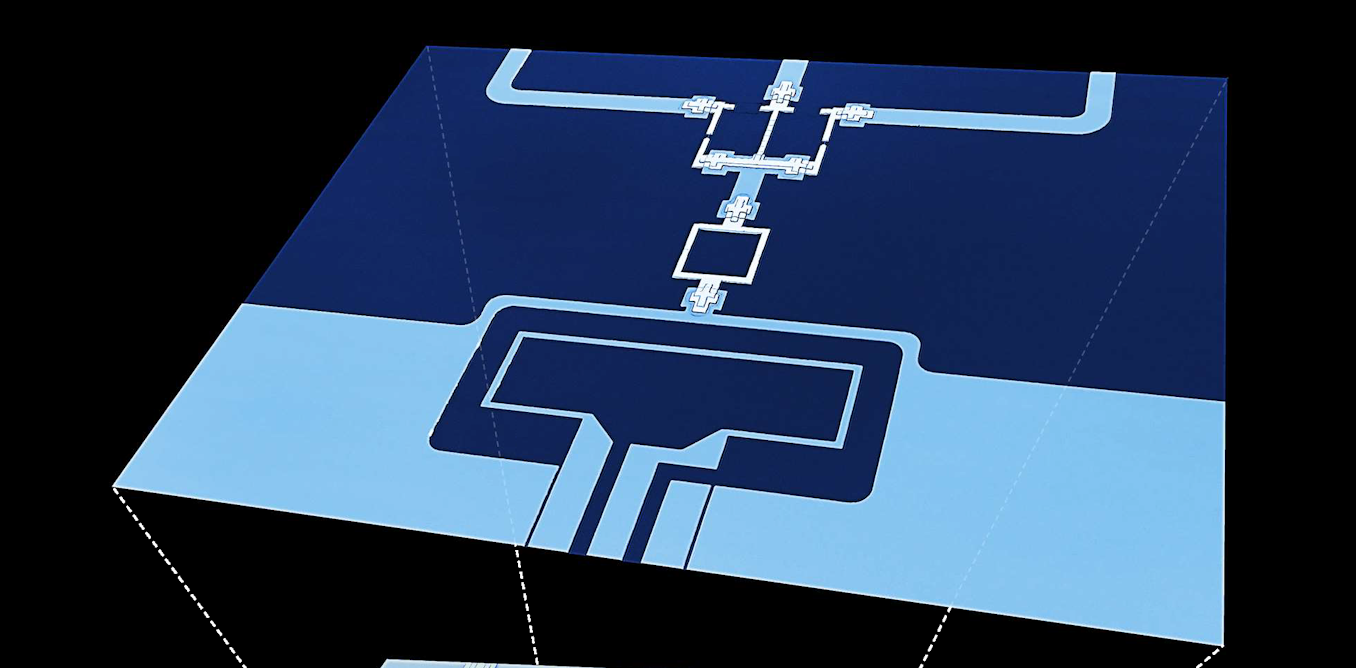
The 2025 Nobel Prize in Physics has been awarded to three scientists for their groundbreaking work in ultracold electronics, significantly advancing the field of quantum technology. John Martinis, Michel Devoret, and John Clarke have demonstrated that quantum effects can persist even in large electrical circuits, paving the way for the development of practical quantum technologies that promise to revolutionize fields such as chemistry and cryptography.
Quantum mechanics, the foundation of this research, describes the unique behaviors of microscopic particles. By leveraging quantum systems for computation, researchers are now able to tackle complex problems that traditional non-quantum computers cannot efficiently solve. The Nobel laureates’ work specifically focused on superconducting circuits, which were once thought to be incapable of exhibiting quantum behavior. Their research has shown otherwise, establishing these circuits as a significant technology for quantum computing.
Key Discoveries in Superconductivity
In their seminal research conducted in 1984 and 1985, Martinis, Devoret, and Clarke utilized circuits made from niobium and lead. When cooled to just above absolute zero, these materials become superconductors, allowing them to conduct electricity without resistance. Their findings revealed that voltages and currents in superconductors are governed by quantum mechanics, resulting in quantized energy levels and the ability for these circuits to exist in superpositions of multiple states.
This revolutionary understanding means that superconducting circuits can be treated as single quantum particles, a simplification that enhances their utility in various applications. Today, these circuits are pivotal in studying fundamental quantum physics, simulating physical systems, and developing protocols for ultraprecise sensing technologies. For example, a recent advancement by Devoret’s group involved creating a near-ideal microwave amplifier based on superconducting circuits, a crucial component in communications and scientific instruments.
Superconducting Quantum Computers: A New Era
The application of superconducting circuits extends prominently to quantum computing. In this realm, multiple quantum systems can interact and become entangled, functioning as a unified system. This entanglement, along with the principles of quantization and superposition, grants quantum computers their unparalleled computational power.
Researchers employ quantum bits, or qubits, which can exist in two states. For effective quantum computing, qubits must be coherent, controllable, and scalable. Superconducting qubits strike an optimal balance, allowing researchers to modify circuit designs to achieve desired qubit behaviors while ensuring reliability. This flexibility makes superconducting circuits a leading choice among competing technologies, such as trapped atoms and ions, which often face challenges in coherence or scalability.
Academic institutions and private companies are actively working to enhance superconducting qubit performance and explore new configurations. These efforts aim to create large-scale quantum processors capable of practical applications.
The Nobel laureates not only made significant contributions in the 1980s but continue to influence the field. Martinis has led quantum processor initiatives at Google, while Devoret remains involved with the company. Clarke, although retired, has dedicated much of his later career to advancing quantum circuits. Their mentorship has profoundly impacted the careers of many researchers in the field, including the author of this article, who acknowledges the lasting influence of their work.
Eli Levenson-Falk, a physicist studying superconducting circuits, emphasizes the importance of this research in shaping the future of quantum technology. The ongoing efforts by Martinis, Devoret, and Clarke, along with emerging researchers, represent a promising trajectory for advancements in quantum computing and related fields.
As these scientists are recognized for their pioneering contributions, the next generation of researchers aims to build on their legacy to further explore the potential of quantum technologies.








Jordan Faces UAE in Arab Cup Opener with High Hopes

Rising Demand for Support Services Strains Gore Community Resources

Andrew Coster’s Departure Marks a Shift in New Zealand Policing

Dr. William Happer Debunks Climate Emergency in Leighton Smith Podcast

Duffy Dominates with Five Wickets as New Zealand Thrives

Car Fire in Christchurch Triggers Explosions, Fire Crews Respond

Measles Surge: Five New Cases Confirmed in New Zealand

Demand for Support Services Rises as Food Insecurity Grows

Gore Farmer Fined $35,000 for Nait Violations After Warnings

Private Funeral Held for Dean Field and His Three Children

Funeral Planned for Field Siblings After Tragic House Fire

Netball New Zealand Stands Down Dame Noeline Taurua for Series

Tributes Pour In for Lachlan Rofe, Reality Star, Dead at 47

New ‘Maverick’ Chaser Joins Beat the Chasers Season Finale

Silver Ferns Legend Laura Langman Criticizes Team’s Attitude

Eli Katoa Rushed to Hospital After Sideline Incident During Match

Investigation Underway in Tragic Sanson House Fire Involving Family

Netball NZ Calls for Respect Amid Dame Taurua’s Standoff
-
 World1 week ago
Private Funeral Held for Dean Field and His Three Children
-
 Top Stories2 weeks ago
Funeral Planned for Field Siblings After Tragic House Fire
-
 Sports3 months ago
Netball New Zealand Stands Down Dame Noeline Taurua for Series
-
 Entertainment3 months ago
Tributes Pour In for Lachlan Rofe, Reality Star, Dead at 47
-
 Entertainment2 months ago
New ‘Maverick’ Chaser Joins Beat the Chasers Season Finale
-
 Sports3 months ago
Silver Ferns Legend Laura Langman Criticizes Team’s Attitude
-
 Sports1 month ago
Eli Katoa Rushed to Hospital After Sideline Incident During Match
-
 World2 weeks ago
Investigation Underway in Tragic Sanson House Fire Involving Family
-
 Politics2 months ago
Netball NZ Calls for Respect Amid Dame Taurua’s Standoff
-

 Top Stories2 weeks ago
Shock and Grief Follow Tragic Family Deaths in New Zealand
-

 Entertainment3 months ago
Khloe Kardashian Embraces Innovative Stem Cell Therapy in Mexico
-

 World4 months ago
Police Arrest Multiple Individuals During Funeral for Zain Taikato-Fox