
Science
Renowned Scientist Gordon Lauder Remembered for Global Contributions

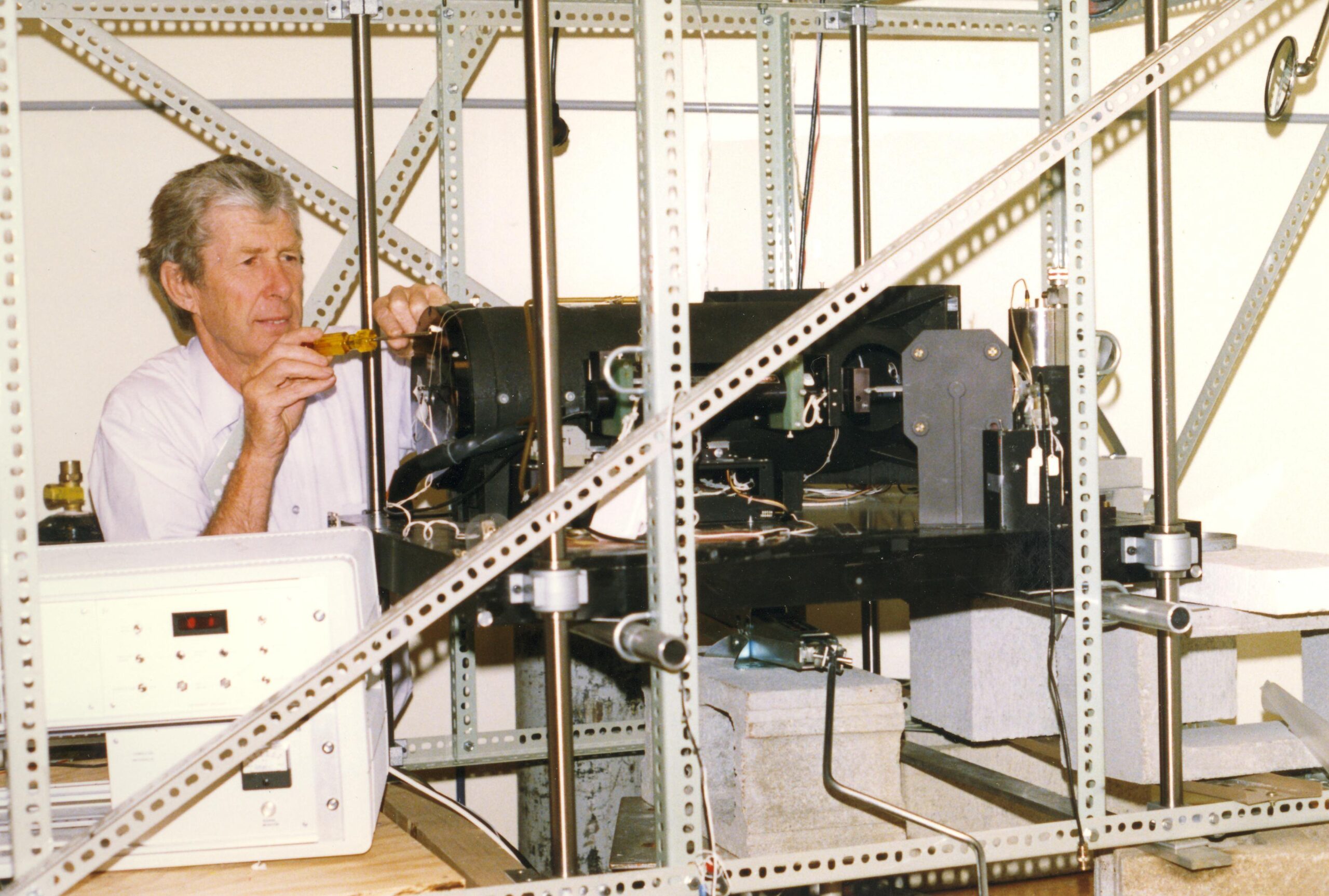
Gordon Lauder, a distinguished scientist known for his extensive contributions to atmospheric research, passed away on November 6, 2025, just shy of his 95th birthday. His pioneering career spanned the globe, taking him from the Arctic to the Antarctic, where he investigated various aspects of the Earth’s crust and atmosphere.
Impactful Scientific Career
Lauder began his academic journey at Mt Albert Grammar and the University of Auckland, after which he embarked on a remarkable career that included diverse scientific endeavors. His work involved mineral prospecting, utilizing anomalies in radioactivity, gravity fields, and the Earth’s magnetic field. He also conducted crucial measurements of the upper atmosphere, exploring how solar activity and nuclear testing influence the ionosphere and magnetic fields.
His early career mainly focused on tropical regions, including locations such as Brisbane, Darwin, Rarotonga, and Samoa. It was during his time in Rarotonga that he met Rima, who would be his wife for 65 years. Together, they had three children: John, Christina, and Geoffrey.
In 1963, Lauder joined the DSIR Auroral Station at Lauder, which initially consisted of a collection of wooden huts. He began a long association with Antarctic research in 1967, focusing on the interactions between solar radiation and the atmosphere. His early research laid the groundwork for understanding the causes of the Antarctic ozone hole, a significant environmental issue that emerged decades later.
Recognition and Legacy
Lauder’s contributions to science earned him widespread recognition. In 1994, he was invited to summarize New Zealand’s atmospheric research contributions during a meeting with Prince Charles at the Antarctic Centre in Christchurch. The Royal Society of New Zealand awarded him the Science and Technology Silver Medal in 1995, and in 2001, the New Zealand Geographical Board honored him by naming Keys Hill, near Scott Base, in his honor.
He served as president of the New Zealand Institute of Physics in the mid-1980s and received a Master of Science in Physics with distinction from the University of Otago in 1993. Following the dissolution of DSIR, Lauder continued his work at Niwa (now known as Earth Sciences New Zealand) until his retirement in 1999, after more than 35 years of dedicated service.
Lauder authored approximately 60 scientific publications and shared his personal adventures in the book Stranded in Paradise, published in 2016. This work recounts his experience salvaging propeller blades from the wreck of the RMS Maitai, which sank near Avarua Harbour nearly a century earlier. He and Rima also built their home in Rarotonga, where they hosted numerous visitors, escaping the harsh winters of Central Otago.
Beyond his scientific achievements, Lauder was a talented musician and actively participated in community affairs. While at Lauder, he directed performances for the Omakau Musical Society and engaged with the local Art Society and Rotary Club of Alexandra, where he served as president for 30 years. His passion for sports, particularly tennis, lasted into his 90s, and he played a key role in establishing a recreational facility in 2011.
Gordon Lauder is remembered not only for his scientific contributions but also for his vibrant personality and community involvement. He is survived by his children, Geoffrey and Christina Parker, along with grandchildren John and Camille, and great-grandson Roimata. His wife Rima, who predeceased him three years ago, and their eldest son John, who died in his early 20s, will also be fondly remembered.




Kiwi Wellbeing Coach Offers Strategies for a Meaningful January Reset

Annual Sikh Parade in Tauranga Interrupted by Haka Performance

Brendon McCullum Faces Backlash After Harry Brook Incident

Celebrated Scientist Gordon Lauder Leaves Lasting Legacy

Yachting NZ’s Jenny Armstrong Champions Women’s Sailing Participation

High Temperatures Persist Across New Zealand’s North Island

Reset Your Mindset: A Wellbeing Coach’s Guide for January

Haka Performed Against Sikh Parade Highlights Tensions in Tauranga

Brendon McCullum Faces Backlash Over Harry Brook Controversy

Private Funeral Held for Dean Field and His Three Children

Funeral Planned for Field Siblings After Tragic House Fire

Netball New Zealand Stands Down Dame Noeline Taurua for Series

Tributes Pour In for Lachlan Rofe, Reality Star, Dead at 47

New ‘Maverick’ Chaser Joins Beat the Chasers Season Finale

Silver Ferns Legend Laura Langman Criticizes Team’s Attitude

Eli Katoa Rushed to Hospital After Sideline Incident During Match

Netball NZ Calls for Respect Amid Dame Taurua’s Standoff

Investigation Underway in Tragic Sanson House Fire Involving Family
-
 World2 months ago
Private Funeral Held for Dean Field and His Three Children
-
 Top Stories2 months ago
Funeral Planned for Field Siblings After Tragic House Fire
-
 Sports4 months ago
Netball New Zealand Stands Down Dame Noeline Taurua for Series
-
 Entertainment4 months ago
Tributes Pour In for Lachlan Rofe, Reality Star, Dead at 47
-
 Entertainment3 months ago
New ‘Maverick’ Chaser Joins Beat the Chasers Season Finale
-
 Sports4 months ago
Silver Ferns Legend Laura Langman Criticizes Team’s Attitude
-
 Sports2 months ago
Eli Katoa Rushed to Hospital After Sideline Incident During Match
-
 Politics3 months ago
Netball NZ Calls for Respect Amid Dame Taurua’s Standoff
-
 World2 months ago
Investigation Underway in Tragic Sanson House Fire Involving Family
-

 Sports4 weeks ago
Nathan Williamson’s Condition Improves Following Race Fall
-

 Entertainment1 month ago
Jacinda Ardern Discusses Popularity Decline on Graham Norton Show
-
 World3 weeks ago
Investigation Launched Following Boat Fire at Lake Taupō