
Politics
Israel Prepares for Next Phase of Gaza Ceasefire Plan

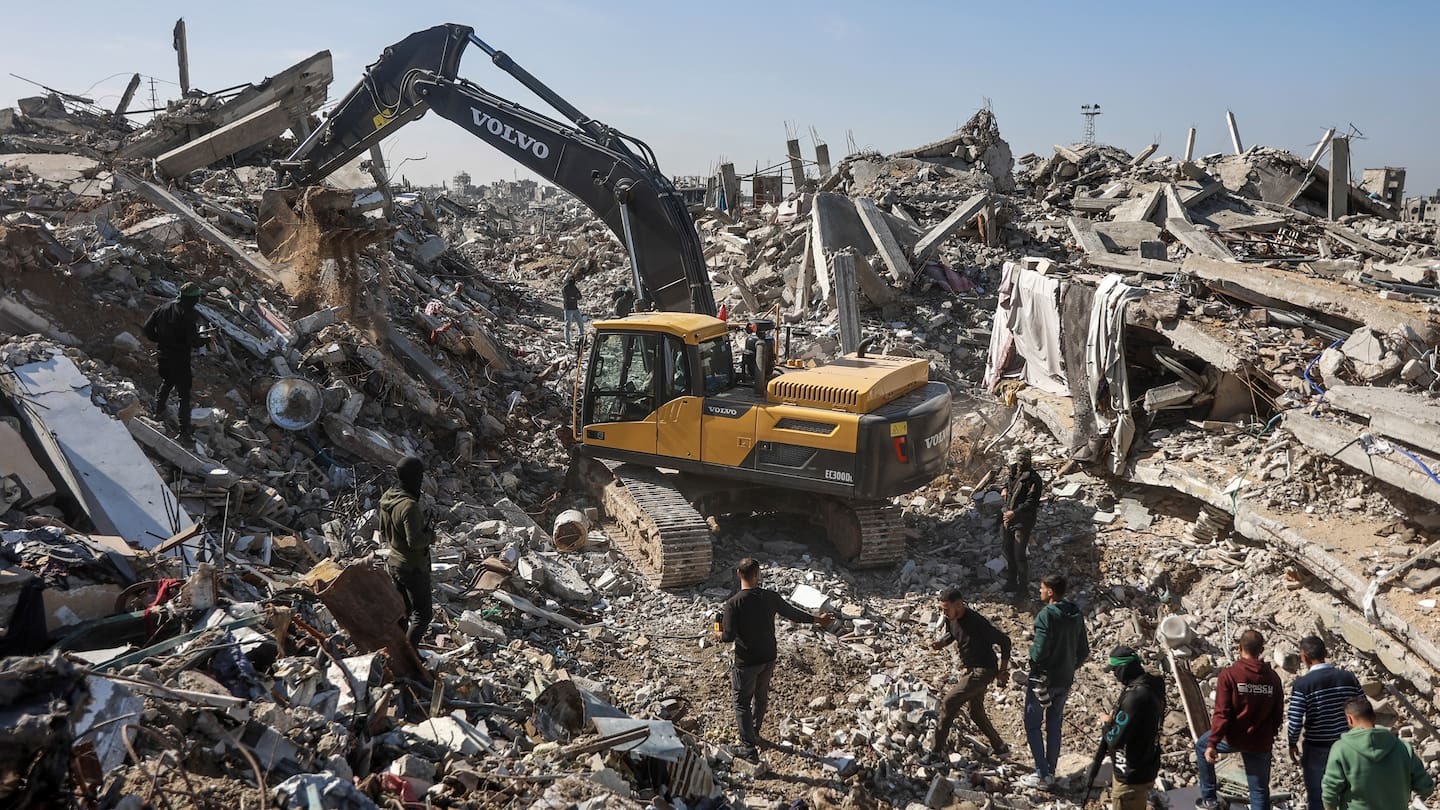
Israeli Prime Minister Benjamin Netanyahu announced today that the second phase of the United States-sponsored ceasefire plan for Gaza is anticipated to commence soon. This statement comes as the truce, which has been in effect since October 10, 2023, aims to stabilize the region following Hamas’s deadly attack on Israel on October 7, 2023. The ceasefire has halted hostilities, yet tensions remain high as both Israel and Hamas accuse each other of violations.
The ceasefire agreement mandates that Palestinian militants release all remaining captives taken during the October 7 attack, a commitment that has seen the release of all but one individual, the body of an Israeli police officer. Following a meeting with German Chancellor Friedrich Merz in Jerusalem, Netanyahu stated, “We very shortly expect to move into the second phase, which is more difficult.”
Military Developments and New Border Line
The initial phase of the ceasefire has resulted in Israeli troops withdrawing to positions behind a designated “Yellow Line” in Gaza. Despite this, Israel maintains control over more than half of the territory. Lieutenant-General Eyal Zamir, the chief of the Israeli Army, referred to this demarcation as a “new border line.” He explained to reserve soldiers, “We have operational control over extensive parts of the Gaza Strip and we will remain on those defense lines. The Yellow Line is a new border line – serving as a forward defensive line for our communities and a line of operational activity.”
The second phase of the Gaza ceasefire plan will focus on disarming Hamas, further withdrawal of Israeli forces, and the establishment of a transitional authority. An international stabilization force may also be deployed as part of this effort, with the ultimate goal of a phased withdrawal of Israeli troops from Gaza contingent upon certain conditions being met. Netanyahu emphasized the challenges ahead, stating, “We have a second phase, no less daunting, and that is to achieve the disarmament of Hamas and the demilitarisation of Gaza.”
Regional Diplomatic Efforts and Humanitarian Concerns
In a display of growing international involvement, Qatar and Egypt, which played key roles in facilitating the ceasefire, have called for the next steps, including the withdrawal of Israeli troops. On the same day, Hamas expressed its willingness to transfer its weapons to a Palestinian authority, contingent upon an end to the Israeli military presence in the region.
Netanyahu is scheduled to meet with Donald Trump later this month in Washington to discuss “opportunities for peace” in the region. This invitation followed a recent phone call between the two leaders. During his visit to Israel, Chancellor Merz reiterated Germany’s commitment to Israel, emphasizing the need for humanitarian aid to flow into Gaza while also addressing the Israeli military’s impact in the region.
The ongoing conflict has led to significant casualties, with the Hamas-run health ministry reporting tens of thousands of Palestinian fatalities since the outbreak of hostilities. The October attack resulted in the deaths of at least 1,221 people in Israel, most of whom were civilians, according to an AFP tally based on official Israeli figures.
Despite the ceasefire, local health authorities indicate that over 360 Palestinians have lost their lives since its implementation, alongside three Israeli soldiers. Merz, who has openly criticized Israel’s military actions, acknowledged Germany’s “enduring historical responsibility” regarding the Holocaust while affirming Berlin’s support for Israel’s existence and security. He stated, “Germany must stand up for the existence and security of Israel,” underscoring the necessity of a balanced approach to criticism of Israeli policies.
While Merz’s remarks highlighted Germany’s support for a two-state solution, he did not discuss the potential for Netanyahu’s visit to Germany, especially in light of the arrest warrant issued by the International Criminal Court (ICC) for alleged war crimes related to the Gaza conflict. Netanyahu remarked, “I am not going there because of an ICC decision,” addressing concerns surrounding his travel plans.
As diplomatic efforts continue, the situation in Gaza remains precarious, with calls for both humanitarian support and the advancement of peace initiatives becoming increasingly urgent.













South African Entrepreneur Celebrates Dream Opening in Kaiwaka

New Zealand Couple Faces $7,500 Miami Bar Bill After Overcharge

South African Entrepreneur Opens Tasty Temptations in Kaiwaka

Point Wells Homes Tour Raises $80,000 for Local Hospice

Vote for Your Favourite Christmas Lights in Rangiora and Kaiapoi

Israel Prepares for Next Phase of Gaza Ceasefire Plan

Aspiring Writers Invited to Join Intergenerational Workshops in Warkworth

Parakiore Sports Facility Opens After Decade of Delays

Netflix Set to Acquire Warner Bros Studios in $125 Billion Deal

Private Funeral Held for Dean Field and His Three Children

Funeral Planned for Field Siblings After Tragic House Fire

Netball New Zealand Stands Down Dame Noeline Taurua for Series

Tributes Pour In for Lachlan Rofe, Reality Star, Dead at 47

New ‘Maverick’ Chaser Joins Beat the Chasers Season Finale

Silver Ferns Legend Laura Langman Criticizes Team’s Attitude

Eli Katoa Rushed to Hospital After Sideline Incident During Match

Investigation Underway in Tragic Sanson House Fire Involving Family

Netball NZ Calls for Respect Amid Dame Taurua’s Standoff
-
 World2 weeks ago
Private Funeral Held for Dean Field and His Three Children
-
 Top Stories2 weeks ago
Funeral Planned for Field Siblings After Tragic House Fire
-
 Sports3 months ago
Netball New Zealand Stands Down Dame Noeline Taurua for Series
-
 Entertainment3 months ago
Tributes Pour In for Lachlan Rofe, Reality Star, Dead at 47
-
 Entertainment2 months ago
New ‘Maverick’ Chaser Joins Beat the Chasers Season Finale
-
 Sports3 months ago
Silver Ferns Legend Laura Langman Criticizes Team’s Attitude
-
 Sports1 month ago
Eli Katoa Rushed to Hospital After Sideline Incident During Match
-
 World3 weeks ago
Investigation Underway in Tragic Sanson House Fire Involving Family
-
 Politics2 months ago
Netball NZ Calls for Respect Amid Dame Taurua’s Standoff
-

 Top Stories2 weeks ago
Shock and Grief Follow Tragic Family Deaths in New Zealand
-

 Entertainment3 months ago
Khloe Kardashian Embraces Innovative Stem Cell Therapy in Mexico
-

 World4 months ago
Police Arrest Multiple Individuals During Funeral for Zain Taikato-Fox