
Top Stories
Uber Launches Robotaxi Service with Lucid Motors and Nuro

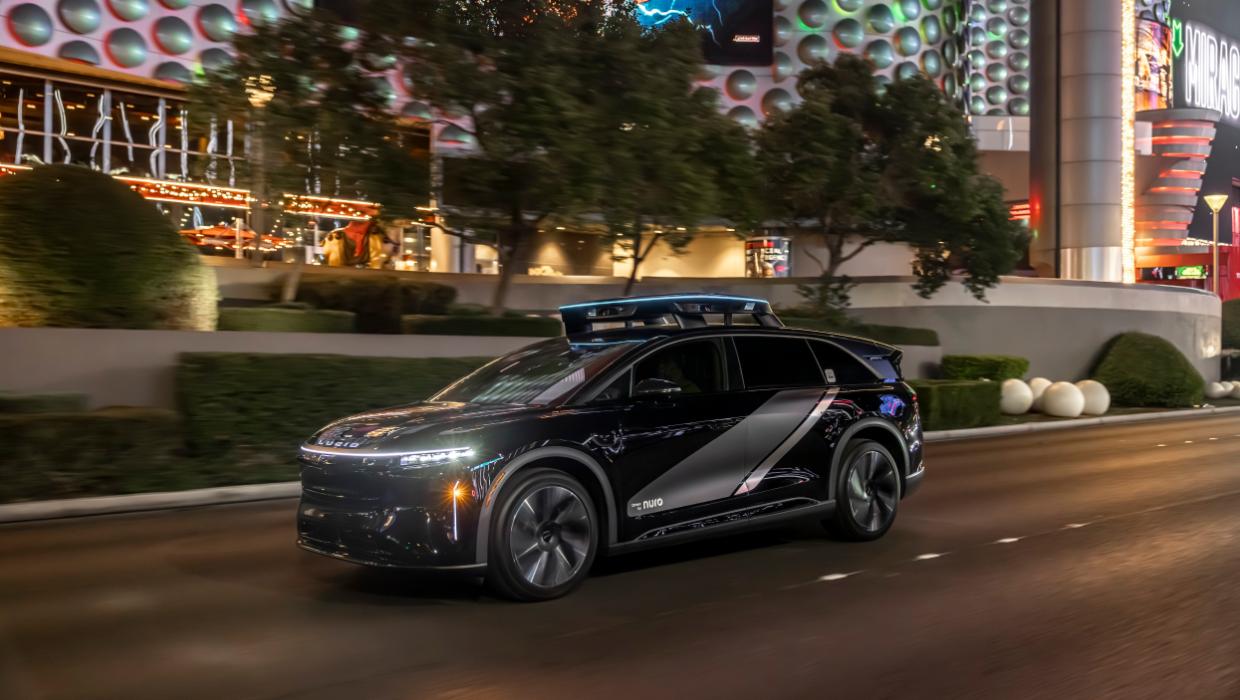
Uber has announced plans to launch its own self-driving taxi service, featuring a new robotaxi developed in collaboration with luxury electric vehicle manufacturer Lucid Motors and autonomous driving firm Nuro. The unveiling took place at the Consumer Electronics Show in Las Vegas last week. The robotaxi, based on Lucid’s Gravity three-row electric SUV, is designed to provide a fully autonomous ride-hailing experience.
The collaboration marks a significant step for Uber as it seeks to integrate advanced self-driving technology into its services. Nuro, a California-based company founded by New Zealander Dave Ferguson, has supplied the cameras, sensors, and self-driving technology that underpin the new vehicles. Uber’s robotaxis are expected to be available through the Uber app in the United States by the end of 2023, although no timeline has been provided for their introduction in other markets such as New Zealand.
Uber’s ambitions for a driverless taxi service are part of a broader strategy to transition to a zero-emissions platform by 2040. The company invested $518 million (USD) in Lucid last year, while Nuro secured $346 million (USD)Market Launch and Features
The initial market for the Nuro-driven Lucid Gravity robotaxis will be the San Francisco Bay Area, where on-road testing began in December 2022. Uber plans to deploy over 20,000 of these vehicles over the next six years, which it describes as the industry’s “most luxurious robotaxi.” Riders will enjoy customizable features, including playlist selection and cabin temperature adjustments, similar to those offered by Alphabet’s Waymo robotaxis operating in cities such as Phoenix and Los Angeles. Sarfraz Maredia, Uber’s Global Head of Autonomous Mobility and Delivery, emphasized the company’s commitment to making autonomous rides both affordable and scalable. He stated that the immediate focus is on rolling out robotaxis in the San Francisco Bay Area, with expectations that the service will not cost more than current rides, enabling riders to select a robotaxi after their fare has been confirmed. Production of the robotaxi is slated to commence at Lucid’s factory in Arizona later this year, pending successful testing outcomes. Ferguson remarked, “By bringing together Nuro’s proven level 4 autonomy, Lucid’s advanced vehicle architecture, and Uber’s global reach, we’re building a robotaxi service designed for real-world operations and long-term growth.” Dave Ferguson, who moved to the United States in 2002 for a PhD in robotics and computer science, has extensive experience in autonomous technology. He previously worked for major companies like Intel and Google and has been involved in developing algorithms for Mars rovers. Uber has completed over 68 billion rides since its inception in 2010, showcasing its extensive operational experience in the ridesharing sector. The introduction of robotaxis represents a pivotal moment in the evolution of transportation technology and Uber’s ongoing efforts to innovate within a competitive landscape. The company’s future plans include expanding the robotaxi service to additional markets, though exact timelines for these expansions remain unclear at this stage.Background and Future Outlook








Greyhound Tests Positive for Meth After Racing Triumph

Rare Superman Comic Fetches Record $26 Million at Auction

David Seymour Champions Coalition Stability as Election Approaches

Dylan Pledger Faces Year Out After ACL Injury During Training

Tragic Swimming Incident Claims Life at Lake Tikitapu

Greyhound’s Positive Meth Test Raises Questions After Victory

Princess Catherine Marks 44th Birthday with Personal Video Message

Jehovah’s Witness Convention Injects $20M into Auckland Economy

Pledger Out for Season with Ruptured ACL, Highlanders Adjust Plans

Private Funeral Held for Dean Field and His Three Children

Funeral Planned for Field Siblings After Tragic House Fire

Netball New Zealand Stands Down Dame Noeline Taurua for Series

Tributes Pour In for Lachlan Rofe, Reality Star, Dead at 47

New ‘Maverick’ Chaser Joins Beat the Chasers Season Finale

Silver Ferns Legend Laura Langman Criticizes Team’s Attitude

Eli Katoa Rushed to Hospital After Sideline Incident During Match

Netball NZ Calls for Respect Amid Dame Taurua’s Standoff

Investigation Underway in Tragic Sanson House Fire Involving Family
-
 World2 months ago
Private Funeral Held for Dean Field and His Three Children
-
 Top Stories2 months ago
Funeral Planned for Field Siblings After Tragic House Fire
-
 Sports4 months ago
Netball New Zealand Stands Down Dame Noeline Taurua for Series
-
 Entertainment4 months ago
Tributes Pour In for Lachlan Rofe, Reality Star, Dead at 47
-
 Entertainment3 months ago
New ‘Maverick’ Chaser Joins Beat the Chasers Season Finale
-
 Sports4 months ago
Silver Ferns Legend Laura Langman Criticizes Team’s Attitude
-
 Sports2 months ago
Eli Katoa Rushed to Hospital After Sideline Incident During Match
-
 Politics3 months ago
Netball NZ Calls for Respect Amid Dame Taurua’s Standoff
-
 World2 months ago
Investigation Underway in Tragic Sanson House Fire Involving Family
-
 Sports4 weeks ago
Nathan Williamson’s Condition Improves Following Race Fall
-

 Entertainment1 month ago
Jacinda Ardern Discusses Popularity Decline on Graham Norton Show
-
 World3 weeks ago
Investigation Launched Following Boat Fire at Lake Taupō