
Health
Greyhound Tests Positive for Meth After Racing Triumph

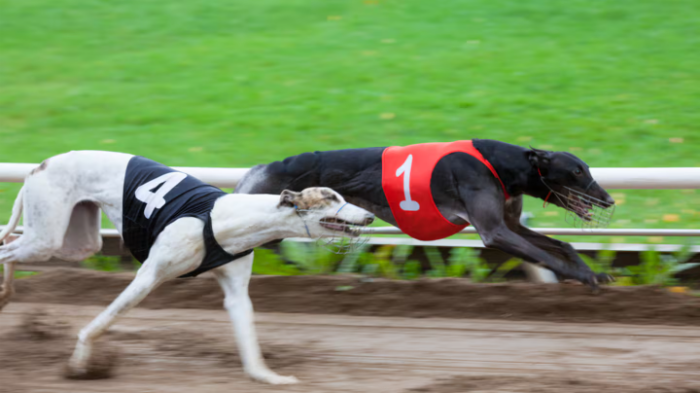
A greyhound named Hilton Hustler has tested positive for methamphetamine following a recent victory at the Addington Raceway, prompting confusion among its owner and racing officials regarding potential contamination. Trainer Craig Anderson, aged 68, expressed his disbelief at the outcome, firmly stating that he has never used the drug and is uncertain how it could have entered his dog’s system.
Investigators from the Racing Integrity Board conducted a thorough examination at Anderson’s property after the positive test result. They screened all six of his greyhounds, with only Hilton Hustler returning a positive result for the Class A substance. Forensic samples were collected from Anderson and his wife, the dogs’ kennel area, and Anderson’s vehicle, which is used for transporting the dogs. All samples returned negative results, raising further questions about the source of the methamphetamine.
Significantly, Hilton Hustler tested negative one week prior to the race and again two weeks afterward. Over the past year, Anderson has participated in hundreds of races, with his greyhounds undergoing drug testing 22 times collectively. In the previous year, the dogs were tested 18 times, and Anderson has not had any breaches regarding prohibited substances since he began racing in 2017.
During discussions with investigators, Anderson noted that apart from regular interactions with kennel staff and handlers at the races, no other individuals had contact with Hilton Hustler in the two to three days leading up to the positive test. Despite the inability to trace the source of the drug, a charge was laid against Anderson by the Racing Integrity Board.
In a hearing held in December 2023 at Addington Raceway, no penalty was sought against Anderson, largely due to the absence of evidence linking him to the drug. Investigators reported that the levels of methamphetamine detected in Hilton Hustler’s system were exceptionally low, measuring only 0.7 ng/mL of methamphetamine and 3 ng/mL of amphetamine. For context, the international cut-off concentration for a positive drug test in humans is 300 ng/mL.
The Racing Integrity Board acknowledged the circumstances surrounding the case, stating, “The Adjudicative Committee is satisfied that neither Mr. nor Mrs. Anderson was in any way responsible for the Prohibited Substances that were found in the out-of-competition urine sample that was taken from their greyhound.” They emphasized the low levels of drugs found and Anderson’s clean racing record.
Presenting a greyhound with prohibited substances in its system is classified as an offence of strict liability, meaning that an offence occurs even when negligence is not established. However, the board indicated that a lack of negligence could result in a reduced penalty, a minimal fine, or no penalty at all.
This incident raises important discussions about drug testing protocols in greyhound racing and the potential for contamination in the sport. As investigations continue, the focus remains on ensuring the integrity of racing and the welfare of the animals involved.

Greyhound Tests Positive for Meth After Racing Triumph

Rare Superman Comic Fetches Record $26 Million at Auction

David Seymour Champions Coalition Stability as Election Approaches

Dylan Pledger Faces Year Out After ACL Injury During Training

Tragic Swimming Incident Claims Life at Lake Tikitapu

Greyhound’s Positive Meth Test Raises Questions After Victory

Princess Catherine Marks 44th Birthday with Personal Video Message

Jehovah’s Witness Convention Injects $20M into Auckland Economy

Pledger Out for Season with Ruptured ACL, Highlanders Adjust Plans

Private Funeral Held for Dean Field and His Three Children

Funeral Planned for Field Siblings After Tragic House Fire

Netball New Zealand Stands Down Dame Noeline Taurua for Series

Tributes Pour In for Lachlan Rofe, Reality Star, Dead at 47

New ‘Maverick’ Chaser Joins Beat the Chasers Season Finale

Silver Ferns Legend Laura Langman Criticizes Team’s Attitude

Eli Katoa Rushed to Hospital After Sideline Incident During Match

Netball NZ Calls for Respect Amid Dame Taurua’s Standoff

Investigation Underway in Tragic Sanson House Fire Involving Family
-
 World2 months ago
Private Funeral Held for Dean Field and His Three Children
-
 Top Stories2 months ago
Funeral Planned for Field Siblings After Tragic House Fire
-
 Sports4 months ago
Netball New Zealand Stands Down Dame Noeline Taurua for Series
-
 Entertainment4 months ago
Tributes Pour In for Lachlan Rofe, Reality Star, Dead at 47
-
 Entertainment3 months ago
New ‘Maverick’ Chaser Joins Beat the Chasers Season Finale
-
 Sports4 months ago
Silver Ferns Legend Laura Langman Criticizes Team’s Attitude
-
 Sports2 months ago
Eli Katoa Rushed to Hospital After Sideline Incident During Match
-
 Politics3 months ago
Netball NZ Calls for Respect Amid Dame Taurua’s Standoff
-
 World2 months ago
Investigation Underway in Tragic Sanson House Fire Involving Family
-
 Sports4 weeks ago
Nathan Williamson’s Condition Improves Following Race Fall
-

 Entertainment1 month ago
Jacinda Ardern Discusses Popularity Decline on Graham Norton Show
-
 World3 weeks ago
Investigation Launched Following Boat Fire at Lake Taupō