
Science
Researcher Develops Innovative Device for Early Cancer Detection

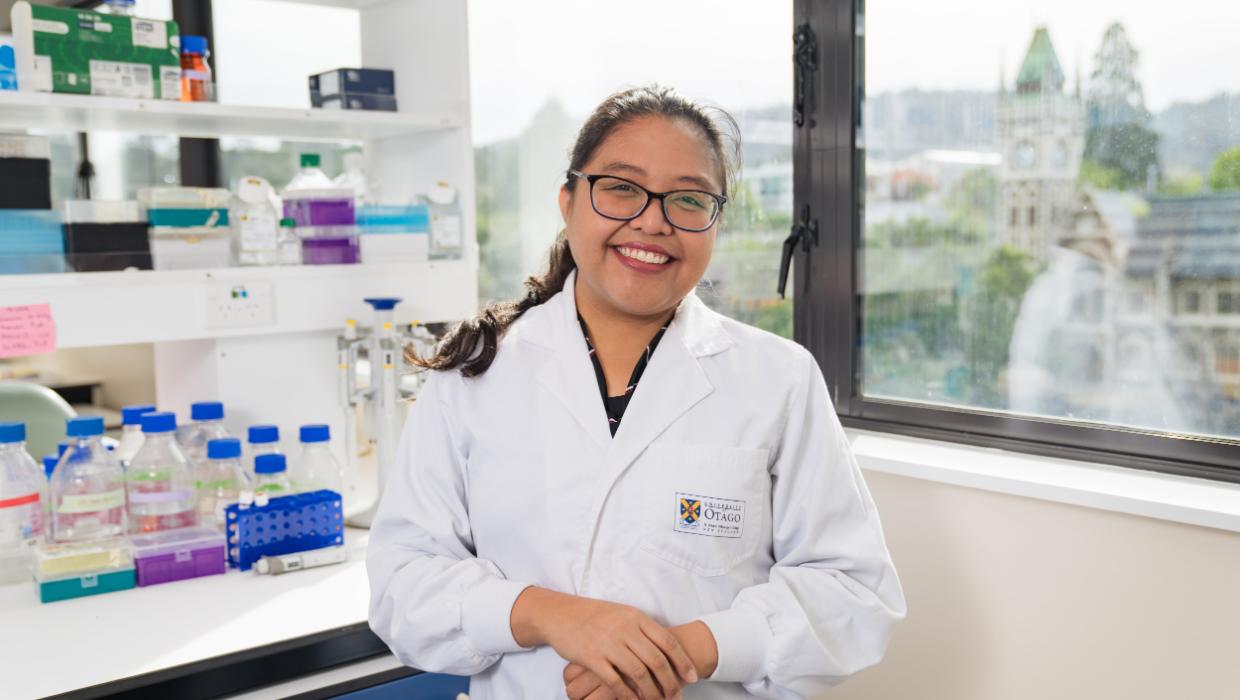
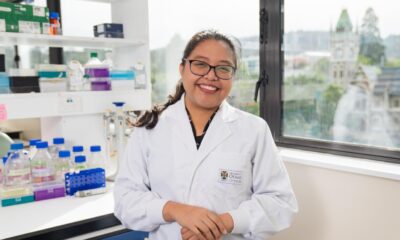
A childhood experience has driven Dr. Judy Ann Cocadiz to explore innovative methods for early cancer diagnosis. The researcher from the University of Otago has been awarded a three-year, $300,000 post-doctoral fellowship through the Cancer Society’s 2025 National Research Grant Round. Her project focuses on developing a device aimed at improving the accuracy of cancer diagnosis and monitoring.
Dr. Cocadiz’s research revolves around circulating tumour DNA (ctDNA), which consists of DNA fragments released by cancer cells into the bloodstream. Higher levels of ctDNA are typically found in patients with more advanced cancer. The goal of her work is to create a small device that can be inserted into a blood vessel, acting as a “sieve” to capture ctDNA for a limited timeframe. This innovation could enable doctors to detect cancers at earlier stages and monitor for residual or recurrent cancer post-treatment.
Currently, the process for examining ctDNA requires drawing blood from patients, usually around 8-10 ml. Dr. Cocadiz noted, “In early-stage cancer, there is not a lot of ctDNA in 10 ml of blood. It is like looking for a needle in a haystack.” She explained that taking larger blood samples would not be ethical, particularly for vulnerable populations such as children or frail individuals. Her device aims to minimize discomfort by capturing ctDNA without the need for extensive blood collection.
Still in the proof-of-concept phase, the device is intended to function similarly to an intravenous (IV) line, inserted into a patient’s blood vessel like a standard needle. Although clinical application is still years away, Dr. Cocadiz expressed optimism regarding the direction of her research, stating, “I am really optimistic about where my research is heading.”
Dr. Cocadiz completed her PhD in biochemistry in 2022. Her passion for cancer research was ignited during her early childhood in the Philippines, when she observed her childhood friend suffering from unexplained bruises. At just five years old, she encouraged her friend’s parents to seek medical advice, leading to a diagnosis of early-stage leukaemia. Thanks to timely intervention, her friend received immediate treatment and is now healthy.
Reflecting on her journey, Dr. Cocadiz remarked, “Everything just kind of fell into place, and I am really glad I ended up in cancer research.” She emphasized the importance of the grant from the Cancer Society, acknowledging that it not only supports her research but also her early career development in the field.
Dr. Cocadiz’s work aims to contribute significantly to the future of cancer diagnosis, potentially transforming how early-stage cancers are monitored and detected. Her personal experiences have fueled her commitment to this vital research, with the hope of making a meaningful impact in the lives of cancer patients.







Researcher Develops Innovative Device for Early Cancer Detection

NRL Proposes Two-Year Ban for Tongan Officials After Katoa Injury

Off-Duty Lifeguards Save Three Swimmers from Rip at Bethells Beach

Burwood Homeowner Rejects Insurance Sea Surge Assessment

Qatar Showcases Real Estate Potential at LPS Shanghai 2025

News Fix: Key Highlights from December 8, 2025

Exploring Intimacy: What It’s Like for Single Men in Their 60s

ACT MP Mark Cameron to Undergo Life-Saving Kidney Transplant

PM Dismisses Inquiry into McSkimming Scandal, Cites Oversight Measures

Private Funeral Held for Dean Field and His Three Children

Funeral Planned for Field Siblings After Tragic House Fire

Netball New Zealand Stands Down Dame Noeline Taurua for Series

Tributes Pour In for Lachlan Rofe, Reality Star, Dead at 47

New ‘Maverick’ Chaser Joins Beat the Chasers Season Finale

Silver Ferns Legend Laura Langman Criticizes Team’s Attitude

Eli Katoa Rushed to Hospital After Sideline Incident During Match

Investigation Underway in Tragic Sanson House Fire Involving Family

Netball NZ Calls for Respect Amid Dame Taurua’s Standoff
-
 World2 weeks ago
Private Funeral Held for Dean Field and His Three Children
-
 Top Stories2 weeks ago
Funeral Planned for Field Siblings After Tragic House Fire
-
 Sports3 months ago
Netball New Zealand Stands Down Dame Noeline Taurua for Series
-
 Entertainment3 months ago
Tributes Pour In for Lachlan Rofe, Reality Star, Dead at 47
-
 Entertainment2 months ago
New ‘Maverick’ Chaser Joins Beat the Chasers Season Finale
-
 Sports3 months ago
Silver Ferns Legend Laura Langman Criticizes Team’s Attitude
-
 Sports1 month ago
Eli Katoa Rushed to Hospital After Sideline Incident During Match
-
 World3 weeks ago
Investigation Underway in Tragic Sanson House Fire Involving Family
-
 Politics2 months ago
Netball NZ Calls for Respect Amid Dame Taurua’s Standoff
-
 Top Stories2 weeks ago
Shock and Grief Follow Tragic Family Deaths in New Zealand
-

 Entertainment3 months ago
Khloe Kardashian Embraces Innovative Stem Cell Therapy in Mexico
-
 World4 months ago
Police Arrest Multiple Individuals During Funeral for Zain Taikato-Fox