
Science
South Island Researcher Develops Innovative Cancer Detection Tool

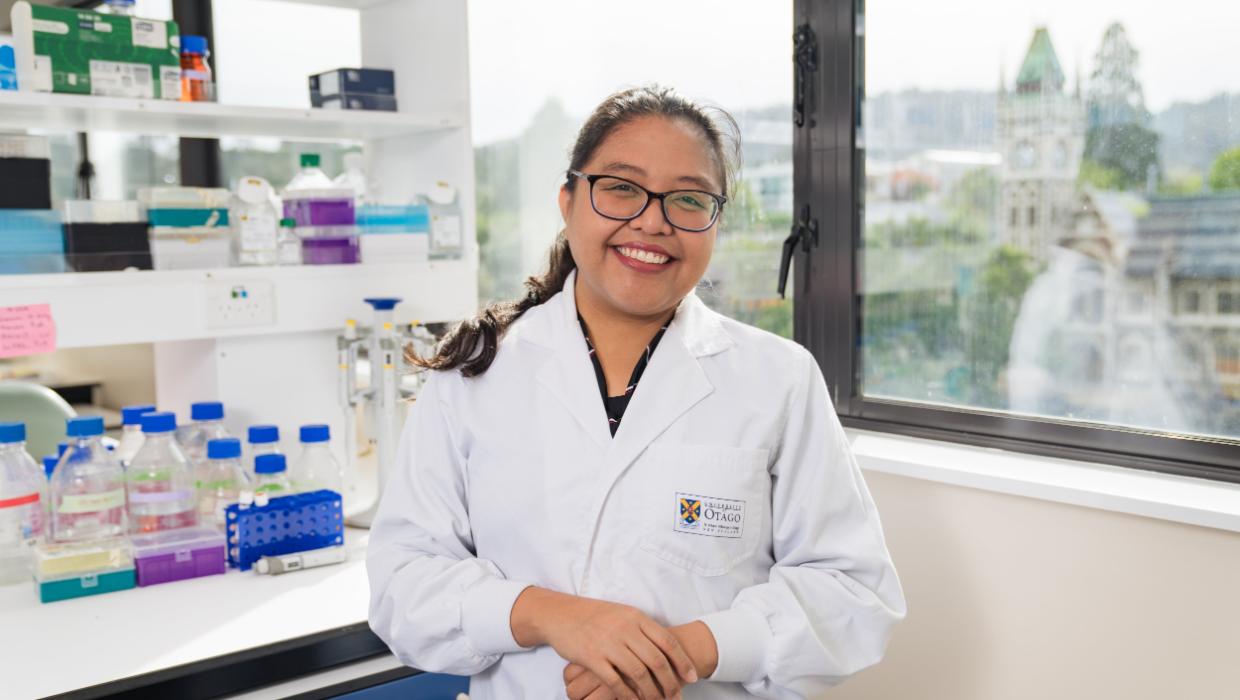
A childhood friend’s battle with cancer has inspired Dr. Judy Ann Cocadiz, a researcher at the University of Otago, to develop a groundbreaking tool aimed at improving the early diagnosis of cancer. Through a three-year, $300,000 post-doctoral fellowship awarded by the Cancer Society, Cocadiz is advancing her work focused on circulating tumour DNA (ctDNA)—fragments of DNA released by cancer cells into the bloodstream.
Cocadiz’s innovative approach involves creating a small device that can be inserted into a blood vessel, designed to capture ctDNA for a brief period. This method promises to enhance cancer detection, particularly in its early stages, allowing for timely intervention. “The more advanced the cancer, the higher the level of ctDNA in the bloodstream,” Cocadiz explained.
Currently, the process of examining ctDNA typically involves drawing a blood sample of about 8-10 milliliters. However, Cocadiz pointed out a significant challenge: “In early-stage cancer, there is not a lot of ctDNA in 10ml of blood. It is like looking for a needle in a haystack.” To address this, her device aims to minimize patient discomfort by collecting ctDNA without the need for larger blood draws, which can be particularly taxing for vulnerable populations, such as children or frail individuals.
The device is still in the proof-of-concept phase but is envisioned to function similarly to an intravenous (IV) line, making it straightforward for medical professionals to use. Although it may take years to bring this device to clinical use, Cocadiz remains optimistic about the potential impact of her research. “I am really grateful for this grant from the Cancer Society, because they are not just helping fund this research, but essentially the early stages of my career as well,” she stated.
Cocadiz’s journey into cancer research began in her childhood in the Philippines. At just five years old, she noticed that her best friend often had unexplained bruises. After alerting her parents, her friend was diagnosed with early-stage leukaemia and received immediate treatment. Reconnecting with him earlier this year, Cocadiz expressed her joy at seeing him healthy and thriving.
Despite initially considering a career in medicine, Cocadiz realized that her passion lay in research. “Everything just kind of fell into place, and I am really glad I ended up in cancer research,” she reflected. Her work has the potential to not only enhance diagnostic accuracy but also to provide hope for early intervention in cancer treatment, ultimately benefiting countless patients and their families.
As her research progresses, Cocadiz represents a new generation of scientists dedicated to making significant strides in the fight against cancer, driven by personal experiences and a commitment to improving patient outcomes.









New $25 Million Funding Boosts Hospital Capacity Ahead of Winter

Discover Sleep Space’s Affordable Bach Bed Packages Today

Jury Dismissed in Sexual Assault Trial Over Misguided Questions

Wellington’s New Gallery Unveils Community-Driven Art Exhibition

All Whites Face Challenges as Injuries Strike Before World Cup

Heroic Bystander Rescues Swimmers from Dangerous Surf in Napier

Nina Oyama Returns to Crime Comedy in Deadloch Season 2

China Southern Airlines Offers Reliable Journey from Auckland to Vietnam

Nina Oyama Returns to Deadloch for Anticipated Season 2

Community Mourns Teens Lost in Mount Maunganui Landslide

Tributes Pour In for Lachlan Rofe, Reality Star, Dead at 47

Private Funeral Held for Dean Field and His Three Children

Funeral Planned for Field Siblings After Tragic House Fire

Netball New Zealand Stands Down Dame Noeline Taurua for Series

Al Waha Motors Opens Flagship Jetour Showroom in Al Khor

Julian Dennison Ties the Knot with Christian Baledrokadroka in New Zealand

Auckland’s Average Rent Surpasses $700 for Three-Bedroom Homes

New Research Reveals Simple Path to Enhanced Happiness
-
 Top Stories7 months ago
Community Mourns Teens Lost in Mount Maunganui Landslide
-
 Entertainment11 months ago
Tributes Pour In for Lachlan Rofe, Reality Star, Dead at 47
-
 World9 months ago
Private Funeral Held for Dean Field and His Three Children
-
 Top Stories9 months ago
Funeral Planned for Field Siblings After Tragic House Fire
-
 Sports11 months ago
Netball New Zealand Stands Down Dame Noeline Taurua for Series
-
 Health7 months ago
Al Waha Motors Opens Flagship Jetour Showroom in Al Khor
-
 Entertainment7 months ago
Julian Dennison Ties the Knot with Christian Baledrokadroka in New Zealand
-
 Business8 months ago
Auckland’s Average Rent Surpasses $700 for Three-Bedroom Homes
-
 Science10 months ago
New Research Reveals Simple Path to Enhanced Happiness
-

 Entertainment10 months ago
New ‘Maverick’ Chaser Joins Beat the Chasers Season Finale
-

 Lifestyle11 months ago
Maia Wilson Faces Backlash Following Taurua’s Suspension
-

 Sports10 months ago
All Blacks Star Damian McKenzie and Partner Announce Baby News