
Science
South Island Researcher’s Cancer Tool Inspired by Childhood Friend

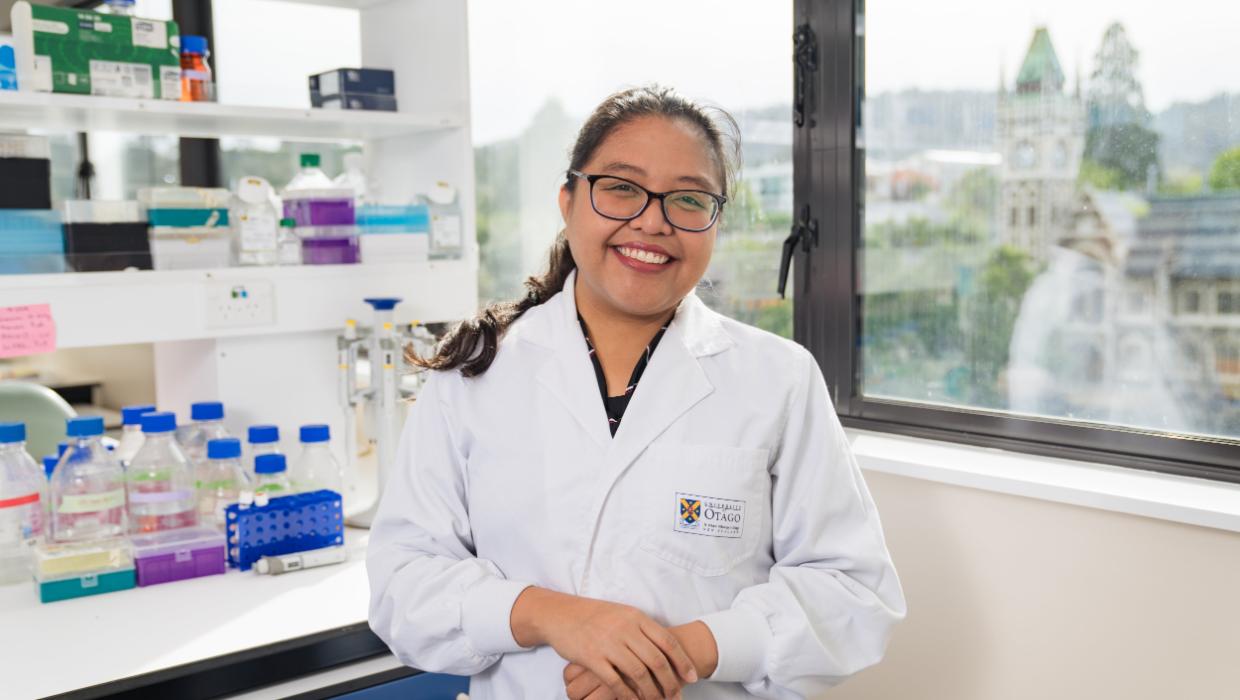
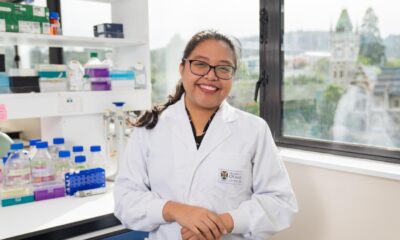
A childhood friend’s battle with cancer has ignited a significant career for South Island researcher Dr. Judy Ann Cocadiz. Her innovative work aims to improve the accuracy of early-stage cancer diagnoses. Dr. Cocadiz, affiliated with the University of Otago, has been awarded a $300,000 post-doctoral fellowship as part of the Cancer Society’s 2025 National Research Grant Round.
Dr. Cocadiz’s research focuses on circulating tumour DNA (ctDNA), which are fragments of DNA released by cancer cells into the bloodstream. The concentration of ctDNA typically increases as cancer progresses, making it a valuable biomarker for diagnosis and monitoring. She is developing a device that can be inserted into a blood vessel, acting as a “sieve” to capture ctDNA for analysis. This advancement could revolutionize the way doctors detect cancers at earlier stages and monitor patients for residual or recurring disease after treatment.
Current methods involve drawing blood samples, usually around 8-10 ml, but this poses challenges in early-stage cancer where ctDNA levels are low. Dr. Cocadiz explained, “It is like looking for a needle in a haystack.” She noted the ethical implications of extracting larger blood samples, particularly for vulnerable populations such as children and frail individuals.
The device she envisions would function similarly to an intravenous (IV) line, allowing for a brief collection of ctDNA before being safely removed. This approach not only minimizes discomfort for patients but also enhances the chances of early and accurate cancer detection. While her research remains in the proof-of-concept phase, Dr. Cocadiz remains optimistic about its potential. “I am really grateful for this grant from the Cancer Society,” she stated, emphasizing its importance in supporting her research and early career.
Dr. Cocadiz’s commitment to cancer research is deeply personal. Her interest in the field was sparked in her preschool years in the Philippines when she noticed her best friend frequently had unexplained bruises. Concerned, she informed her parents, which led to a medical evaluation. Her friend was diagnosed with early-stage leukaemia, enabling timely treatment. Reuniting with him earlier this year, Dr. Cocadiz was delighted to see that he has fully recovered.
After completing her PhD in biochemistry last year, Dr. Cocadiz redirected her career aspirations away from becoming a doctor, choosing instead to focus on cancer research. “Everything just kind of fell into place,” she reflected, expressing her satisfaction with her path in the fight against cancer.
The next steps in bringing Dr. Cocadiz’s device to clinical use will take time, but the implications of her research could be profound. By improving the methods of detecting and monitoring cancer, her work has the potential to make significant strides in cancer care and patient outcomes. As she continues her research, the support from organizations like the Cancer Society is crucial, not only for funding but for fostering innovation in the essential field of oncology.






South Island Researcher’s Cancer Tool Inspired by Childhood Friend

Central Stags Triumph Over Canterbury; Ajaz Patel Reaches 400 Wickets

Lifeguards Save Three Swimmers from Rip Current at Bethells Beach

Experts Examine Impact of Social Media Ban on Youth Engagement

Qatar Showcases Real Estate Growth at LPS Shanghai 2025

Supergirl Teaser Launches; Full Trailer Expected Soon

Researcher Develops Innovative Device for Early Cancer Detection

NRL Proposes Two-Year Ban for Tongan Officials After Katoa Injury

Off-Duty Lifeguards Save Three Swimmers from Rip at Bethells Beach

Private Funeral Held for Dean Field and His Three Children

Funeral Planned for Field Siblings After Tragic House Fire

Netball New Zealand Stands Down Dame Noeline Taurua for Series

Tributes Pour In for Lachlan Rofe, Reality Star, Dead at 47

New ‘Maverick’ Chaser Joins Beat the Chasers Season Finale

Silver Ferns Legend Laura Langman Criticizes Team’s Attitude

Eli Katoa Rushed to Hospital After Sideline Incident During Match

Investigation Underway in Tragic Sanson House Fire Involving Family

Netball NZ Calls for Respect Amid Dame Taurua’s Standoff
-
 World2 weeks ago
Private Funeral Held for Dean Field and His Three Children
-
 Top Stories2 weeks ago
Funeral Planned for Field Siblings After Tragic House Fire
-
 Sports3 months ago
Netball New Zealand Stands Down Dame Noeline Taurua for Series
-
 Entertainment3 months ago
Tributes Pour In for Lachlan Rofe, Reality Star, Dead at 47
-
 Entertainment2 months ago
New ‘Maverick’ Chaser Joins Beat the Chasers Season Finale
-
 Sports3 months ago
Silver Ferns Legend Laura Langman Criticizes Team’s Attitude
-
 Sports1 month ago
Eli Katoa Rushed to Hospital After Sideline Incident During Match
-
 World3 weeks ago
Investigation Underway in Tragic Sanson House Fire Involving Family
-
 Politics2 months ago
Netball NZ Calls for Respect Amid Dame Taurua’s Standoff
-
 Top Stories3 weeks ago
Shock and Grief Follow Tragic Family Deaths in New Zealand
-

 Entertainment3 months ago
Khloe Kardashian Embraces Innovative Stem Cell Therapy in Mexico
-
 World4 months ago
Police Arrest Multiple Individuals During Funeral for Zain Taikato-Fox