
Top Stories
Burwood Homeowner Rejects Insurance Sea Surge Assessment

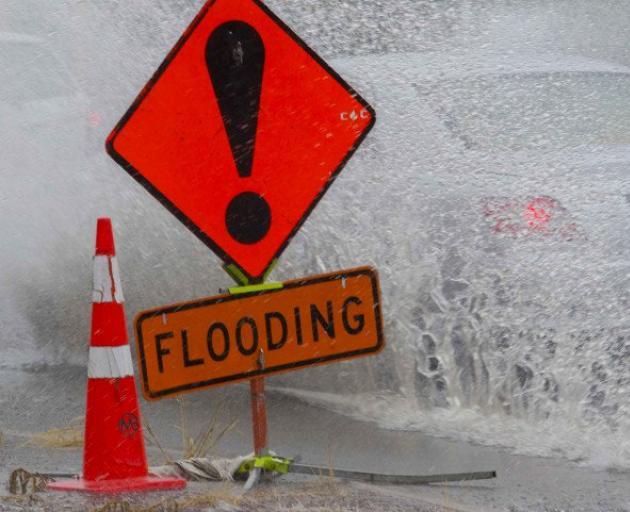
Trevor Taylor, a homeowner in Burwood, Christchurch, has opted to terminate his insurance policy with Tower Insurance after disputing the company’s assessment of his property’s vulnerability to sea surges. Tower Insurance conducted a risk evaluation that included considerations for sea surge, landslips, earthquakes, and flooding. However, Taylor argues that his home is situated several kilometres from the nearest coastline and finds the assessment to be unfounded.
Taylor has actively challenged the insurer’s findings, claiming the risk of a sea surge affecting his property is negligible. He expressed his frustration in an interview with RNZ, stating, “They are doubling down and saying ‘no, I am at risk here’ and I just think it’s a load of rubbish.” His objections stem from his belief that the predicted path of any potential surge would require water to travel through an estuary and river, break through stop banks, and go uphill past several houses before reaching his property.
In his attempts to understand Tower’s methods, Taylor requested access to the specific data used in the assessment. Tower Insurance has denied this request, citing the information as commercially sensitive. Taylor noted that while Tower claims its evaluation is based on approximately 200 million data points, he believes his own research contradicts much of their conclusion. He referenced data from the Ministry of Environment, which indicates that storm surges typically exceed 0.6 metres on open coasts across New Zealand, with the highest recorded surge being 0.9 metres in Kawhia Harbour in May 2013.
Taylor insists that Tower is overestimating the risk associated with his property. “I’d actually like someone from Tower to get out of their ivory tower in Auckland and come down,” he said, suggesting a personal review of his property’s location and the surrounding area. He expressed concerns about a disconnect between local authorities, including Environment Canterbury, and the insurance company, highlighting a lack of uniformity in risk assessment data.
Despite Taylor’s challenges, Tower Insurance maintains that its risk rating accurately reflects the potential for flooding from nearby water systems, including the Avon River, Travis Wetland Nature Heritage Park, and Horseshoe Lake. In a statement, the company explained that during storm events, water levels can rise significantly, which may result in flooding far inland, especially if such storms coincide with high tides. Tower emphasized that its assessment aligns with the Christchurch City Council‘s flood maps, which categorize Taylor’s property as being in a flood hazard management area with a one in 200-year flood risk.
Tower also clarified that less than 10 percent of properties classified with higher sea surge or landslide risks would experience an increase in the natural hazards portion of their premiums. Among those affected, a third would see adjustments of under $100 per year, while most would face changes of less than $300 annually. For properties deemed at significantly higher risk, the increase could be more substantial.
The company refrained from sharing detailed assessment data, asserting that such information would not enhance customer understanding of their risks and would remain commercially sensitive. “Our sea surge model considers a range of different historical and possible tidal heights within storm scenarios,” Tower stated, indicating that simplifying this information into a risk rating is intended to provide a clearer evaluation of the insurance risk associated with specific properties.
As Taylor continues to seek clarification and justification for the assessment he deems unjust, the situation highlights ongoing concerns about the transparency of risk evaluations conducted by insurance companies and the need for consistent data across regulatory bodies and local councils.











Researcher Develops Innovative Device for Early Cancer Detection

NRL Proposes Two-Year Ban for Tongan Officials After Katoa Injury

Off-Duty Lifeguards Save Three Swimmers from Rip at Bethells Beach

Burwood Homeowner Rejects Insurance Sea Surge Assessment

Qatar Showcases Real Estate Potential at LPS Shanghai 2025

News Fix: Key Highlights from December 8, 2025

Exploring Intimacy: What It’s Like for Single Men in Their 60s

ACT MP Mark Cameron to Undergo Life-Saving Kidney Transplant

PM Dismisses Inquiry into McSkimming Scandal, Cites Oversight Measures

Private Funeral Held for Dean Field and His Three Children

Funeral Planned for Field Siblings After Tragic House Fire

Netball New Zealand Stands Down Dame Noeline Taurua for Series

Tributes Pour In for Lachlan Rofe, Reality Star, Dead at 47

New ‘Maverick’ Chaser Joins Beat the Chasers Season Finale

Silver Ferns Legend Laura Langman Criticizes Team’s Attitude

Eli Katoa Rushed to Hospital After Sideline Incident During Match

Investigation Underway in Tragic Sanson House Fire Involving Family

Netball NZ Calls for Respect Amid Dame Taurua’s Standoff
-
 World2 weeks ago
Private Funeral Held for Dean Field and His Three Children
-
 Top Stories2 weeks ago
Funeral Planned for Field Siblings After Tragic House Fire
-
 Sports3 months ago
Netball New Zealand Stands Down Dame Noeline Taurua for Series
-
 Entertainment3 months ago
Tributes Pour In for Lachlan Rofe, Reality Star, Dead at 47
-
 Entertainment2 months ago
New ‘Maverick’ Chaser Joins Beat the Chasers Season Finale
-
 Sports3 months ago
Silver Ferns Legend Laura Langman Criticizes Team’s Attitude
-
 Sports1 month ago
Eli Katoa Rushed to Hospital After Sideline Incident During Match
-
 World3 weeks ago
Investigation Underway in Tragic Sanson House Fire Involving Family
-
 Politics2 months ago
Netball NZ Calls for Respect Amid Dame Taurua’s Standoff
-
 Top Stories2 weeks ago
Shock and Grief Follow Tragic Family Deaths in New Zealand
-

 Entertainment3 months ago
Khloe Kardashian Embraces Innovative Stem Cell Therapy in Mexico
-
 World4 months ago
Police Arrest Multiple Individuals During Funeral for Zain Taikato-Fox