
Lifestyle
Demand for Gold Shifts Amid Falling Jewelry Sales and Market Changes

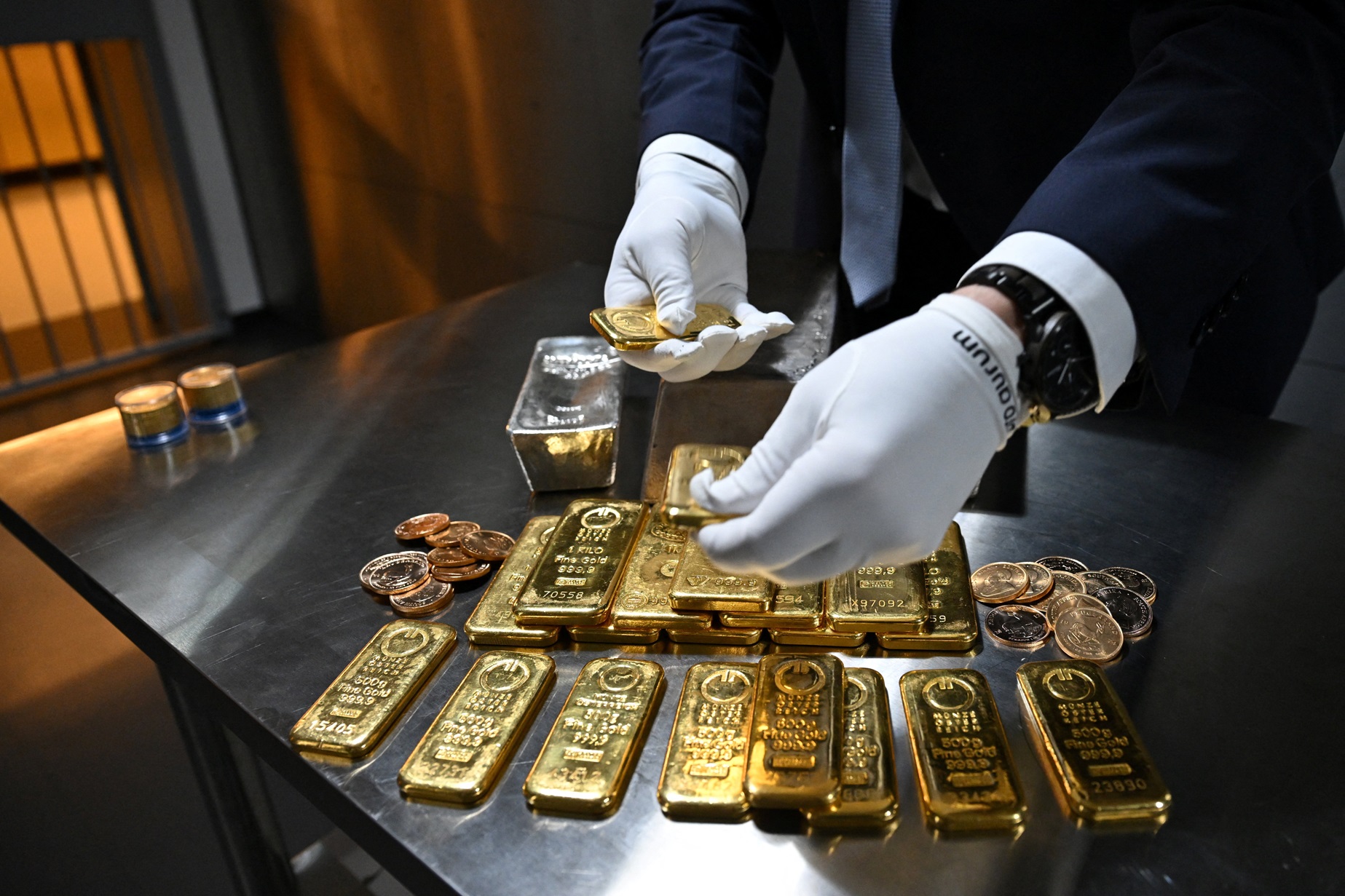
The demand for gold is undergoing a significant transformation as sales of jewelry decline sharply. According to the World Gold Council, jewelry demand fell by 18% last year, reflecting changing consumer behaviors and economic conditions. Santana Minerals, a mining company operating in the Central Otago region of New Zealand, is preparing for potential government approval to expand its operations, but the landscape for gold is shifting.
Among those analyzing the evolving market is Dr. Muhammad A. Cheema, a senior lecturer at the University of Otago Ōtākou Whakaihu Waka. He emphasizes that gold’s traditional role as a status symbol is being challenged by its increasing use as a financial asset. Dr. Cheema, who has studied gold’s historical significance, notes that in many cultures, such as in his home country of Pakistan, gold is not just decorative but serves as a form of investment, particularly in the context of dowries.
Despite its historical reputation as a “safe haven” during economic downturns, Dr. Cheema’s research suggests that gold may no longer hold that status consistently. His findings indicate that the rise of gold exchange-traded funds (ETFs) has changed the investment landscape. When the first gold ETF launched in 2003, its assets were valued at about $600 million. As of last month, that figure has surged to $669 billion in assets under management, with significant contributions from major players like BlackRock and increased participation from Chinese investors.
Investing in gold ETFs allows individuals to gain exposure to gold without needing to physically hold the metal, making it more accessible for smaller investors. As Dr. Cheema explains, “Compared to holding physical gold, a gold ETF is very easy; you can invest even a very small amount.” This shift has transformed gold into a more conventional investment, with its performance under scrutiny during recent crises, including the COVID-19 pandemic and geopolitical tensions stemming from the Ukraine conflict.
Historically, gold has experienced volatility, losing nearly half of its value between 2011 and 2015. It also underperformed as a safe haven during crises, demonstrating price fluctuations similar to those of equities. Dr. Cheema states, “A safe-haven asset is expected to hold its value during periods of market stress and move independently of risky assets such as equities.” However, gold has not consistently met these expectations, raising doubts about its reliability.
Another factor contributing to the rising gold prices is the demand from central banks, which have been accumulating gold reserves at unprecedented rates. Dr. Cheema points out that countries like China, Turkey, and India are increasing their gold holdings, motivated partly by concerns over the weakening US dollar. For instance, Russia has also been increasing its gold reserves as a response to sanctions and asset freezes due to its actions in Ukraine.
The emergence of gold-backed cryptocurrencies is a newer but less significant trend. While this market is developing, the scale of investment remains modest compared to traditional gold markets. Nevertheless, the growing interest in gold can be attributed to various psychological factors, including herd behavior, where rising prices attract more investors.
Dr. Cheema notes that the political climate, particularly policies from the Trump administration, has eroded confidence in the US dollar, further propelling interest in gold. Notably, gold has now surpassed the euro as the world’s second-largest reserve asset, following the US dollar. This shift highlights a broader trend of nations reevaluating their asset allocations in response to global uncertainties.
Countries like Germany are actively repatriating gold reserves, having brought back hundreds of tonnes previously stored in the United States. This movement is often championed by political factions advocating for a return to a “hard money” system, which is backed by precious metals. Such sentiments have gained traction among various German political groups, reflecting a growing apprehension about fiat currencies.
As the global landscape continues to evolve, many investors are reconsidering their strategies regarding gold. Glenn Thomas, co-founder of Gold Survival Guide, acknowledges the uncertainty surrounding the future of the paper money system, noting that the transition away from the gold standard in the early 1970s has created widespread concern. He states, “There’s probably a lot more people that are just wondering, what comes next?”
The sentiment among those investing in gold is not necessarily apocalyptic but rather a rational response to mounting debt and economic instability. For some, holding gold serves as a safeguard against potential financial crises, echoing concerns raised by former US presidential candidate Ron Paul about the sustainability of current monetary policies.
Waihihi Bullion founder Baz Howie articulates a growing distrust in the dollar, suggesting that the actions taken by the Biden administration concerning Russia’s foreign reserves have irrevocably altered perceptions of the currency. He asserts that gold will play a pivotal role in the future of global reserve currencies, potentially leading to a system that is both gold-backed and digital.
In New Zealand, there are questions about whether the government should consider reestablishing gold reserves. Currently, the nation holds no gold assets, having sold its last reserves years ago. Dr. Cheema believes that, at present prices, investing in gold is not advisable. He suggests that a diversified portfolio of safe-haven assets typically offers better protection against market downturns than relying solely on gold.
As the conversation about gold continues, it remains to be seen how these dynamics will unfold in the coming years. Investors and governments alike are navigating a complex landscape, balancing the historical allure of gold with the realities of modern financial systems. The future of gold as both a commodity and a financial asset remains uncertain but undeniably significant.











Cancer Society Opens New Centre in Queenstown for Community Support

Can You Solve Today’s Challenging Word Puzzle in One Minute?

Anthropic Rejects Pentagon Demands, Prioritizes AI Ethics

Bioeconomy Science Institute Announces 6% Staff Reduction

Brumbies Snatch Victory from Blues in Thrilling Finish

Lotto Powerball Draws $6 Million Jackpot; Winning Numbers Revealed

Brumbies Triumph Over Blues with Late Surge in Canberra

Two Lotto Players Win $500,000 Each as Powerball Reaches $8 Million

Jason Pine Delivers Weekend Sports Highlights on February 28

Community Mourns Teens Lost in Mount Maunganui Landslide

Tributes Pour In for Lachlan Rofe, Reality Star, Dead at 47

Private Funeral Held for Dean Field and His Three Children

Funeral Planned for Field Siblings After Tragic House Fire

Netball New Zealand Stands Down Dame Noeline Taurua for Series

Julian Dennison Ties the Knot with Christian Baledrokadroka in New Zealand

New ‘Maverick’ Chaser Joins Beat the Chasers Season Finale

Silver Ferns Legend Laura Langman Criticizes Team’s Attitude

Eli Katoa Rushed to Hospital After Sideline Incident During Match
-
 Top Stories1 month ago
Community Mourns Teens Lost in Mount Maunganui Landslide
-
 Entertainment6 months ago
Tributes Pour In for Lachlan Rofe, Reality Star, Dead at 47
-
 World3 months ago
Private Funeral Held for Dean Field and His Three Children
-
 Top Stories3 months ago
Funeral Planned for Field Siblings After Tragic House Fire
-
 Sports6 months ago
Netball New Zealand Stands Down Dame Noeline Taurua for Series
-
 Entertainment1 month ago
Julian Dennison Ties the Knot with Christian Baledrokadroka in New Zealand
-
 Entertainment5 months ago
New ‘Maverick’ Chaser Joins Beat the Chasers Season Finale
-
 Sports6 months ago
Silver Ferns Legend Laura Langman Criticizes Team’s Attitude
-
 Sports4 months ago
Eli Katoa Rushed to Hospital After Sideline Incident During Match
-

 Sports4 months ago
All Blacks Star Damian McKenzie and Partner Announce Baby News
-

 Sports3 months ago
Nathan Williamson’s Condition Improves Following Race Fall
-

 Politics5 months ago
Netball NZ Calls for Respect Amid Dame Taurua’s Standoff