
Science
AI Technology Enhances Rescue Efforts for Stranded Whales in Golden Bay

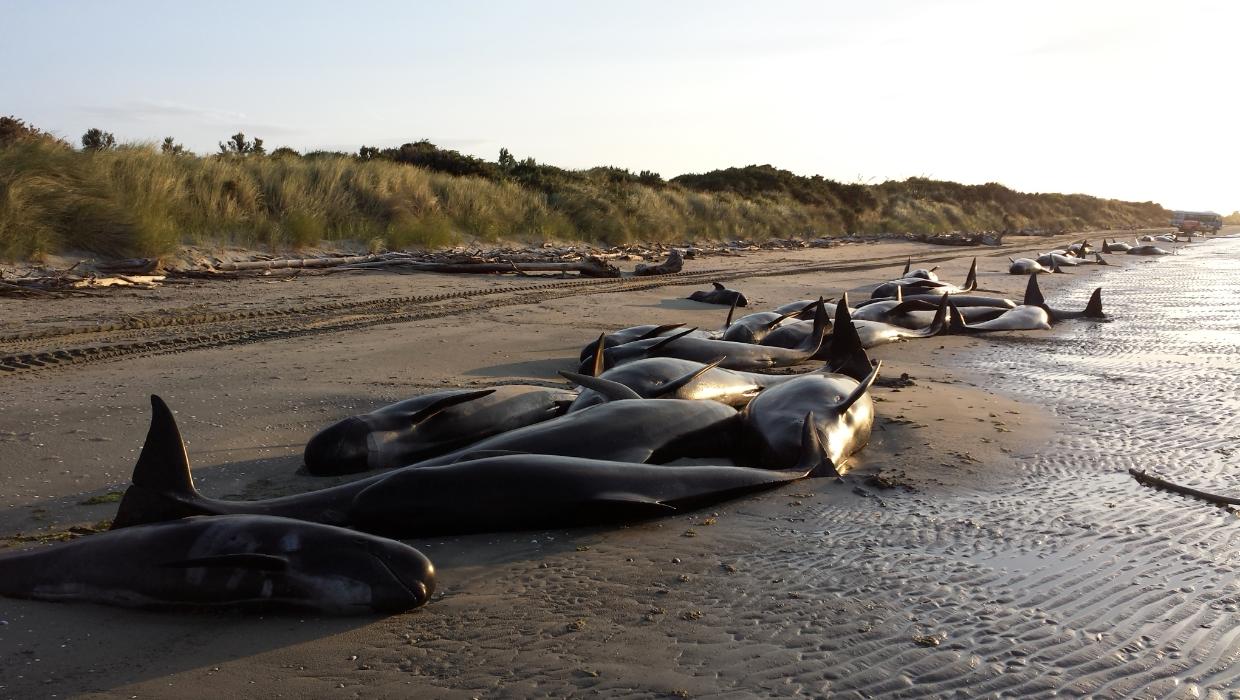
An innovative artificial intelligence (AI) buoy is transforming rescue operations for stranded pilot whales in Golden Bay, New Zealand. This advanced technology allows rescuers to detect distressed dolphins before they strand themselves, significantly improving response times and potentially saving more marine lives.
The AI buoy, developed in collaboration with the University of Otago and the New Zealand Department of Conservation (DOC), utilizes sophisticated algorithms to analyze underwater sounds. By identifying distress signals from pilot whales, the buoy alerts authorities, allowing them to mobilize quickly to prevent mass strandings. This proactive approach was successfully tested in July 2023, during a pilot operation in Taranaki.
Life-Saving Technology in Action
During the recent trials, the AI buoy demonstrated its effectiveness in monitoring whale activities. Equipped with hydrophones, it can capture and interpret various underwater sounds, distinguishing between normal and distressed vocalizations. This capability enables rescuers to respond before whales beach themselves, a situation that often leads to high mortality rates.
Dr. Sarah Thompson, a marine biologist at the University of Otago, emphasized the significance of this technology. “The AI buoy represents a major advancement in our ability to understand and respond to whale behavior. Early detection is crucial, and this system allows us to act swiftly to mitigate the risks of stranding,” she stated.
The buoy’s deployment aligns with ongoing efforts to protect marine life in New Zealand waters. According to DOC statistics, pilot whale strandings have been a recurring issue, with hundreds of whales stranding in recent years. The new technology aims to reduce these incidents and improve outcomes for affected wildlife.
Collaboration and Future Prospects
The development of the AI buoy is a collaboration between various stakeholders, including researchers, conservationists, and government agencies. This partnership underscores a collective commitment to marine conservation and the well-being of New Zealand’s unique marine ecosystem.
As the AI buoy technology continues to be refined, researchers hope to expand its application to other areas prone to marine strandings. The potential for this technology to be adapted for different species and environments presents exciting possibilities for future marine conservation efforts.
Officials from DOC expressed optimism about the AI buoy’s role in enhancing rescue operations. They anticipate that with further testing and refinement, the buoy could become a standard tool in marine wildlife protection initiatives throughout New Zealand and beyond.
The success of the AI buoy project not only highlights the importance of technology in conservation efforts but also illustrates how interdisciplinary collaboration can lead to innovative solutions for pressing environmental challenges.










Kelly Osbourne Responds to Body Shaming After Brit Awards

Otago Classics Day Showcases Fashion Talent for Champions Day

Luxon Engages Kiwi-Indians as Hipkins Critiques National Party

Professor Brian Cox Launches Global ‘Emergence’ Tour in June

New Zealand Breakers Seek Global Talent for Head Coach Role

Police Launch Investigation into Unexplained Death in Te Kamo

Israeli Strikes Kill 31 in Lebanon, Escalating Regional Conflict

Waikaka Gold Mine Approved for Operation Near Gore

Heather du Plessis-Allan Drive Podcast Highlights Key Issues

Community Mourns Teens Lost in Mount Maunganui Landslide

Tributes Pour In for Lachlan Rofe, Reality Star, Dead at 47

Private Funeral Held for Dean Field and His Three Children

Funeral Planned for Field Siblings After Tragic House Fire

Netball New Zealand Stands Down Dame Noeline Taurua for Series

Julian Dennison Ties the Knot with Christian Baledrokadroka in New Zealand

New ‘Maverick’ Chaser Joins Beat the Chasers Season Finale

Silver Ferns Legend Laura Langman Criticizes Team’s Attitude

Eli Katoa Rushed to Hospital After Sideline Incident During Match
-
 Top Stories1 month ago
Community Mourns Teens Lost in Mount Maunganui Landslide
-
 Entertainment6 months ago
Tributes Pour In for Lachlan Rofe, Reality Star, Dead at 47
-
 World3 months ago
Private Funeral Held for Dean Field and His Three Children
-
 Top Stories3 months ago
Funeral Planned for Field Siblings After Tragic House Fire
-
 Sports6 months ago
Netball New Zealand Stands Down Dame Noeline Taurua for Series
-
 Entertainment1 month ago
Julian Dennison Ties the Knot with Christian Baledrokadroka in New Zealand
-
 Entertainment5 months ago
New ‘Maverick’ Chaser Joins Beat the Chasers Season Finale
-
 Sports6 months ago
Silver Ferns Legend Laura Langman Criticizes Team’s Attitude
-
 Sports4 months ago
Eli Katoa Rushed to Hospital After Sideline Incident During Match
-

 Sports4 months ago
All Blacks Star Damian McKenzie and Partner Announce Baby News
-

 Sports3 months ago
Nathan Williamson’s Condition Improves Following Race Fall
-

 Politics5 months ago
Netball NZ Calls for Respect Amid Dame Taurua’s Standoff