
Top Stories
Papua New Guinea Government Targets Gun Violence Ahead of Elections

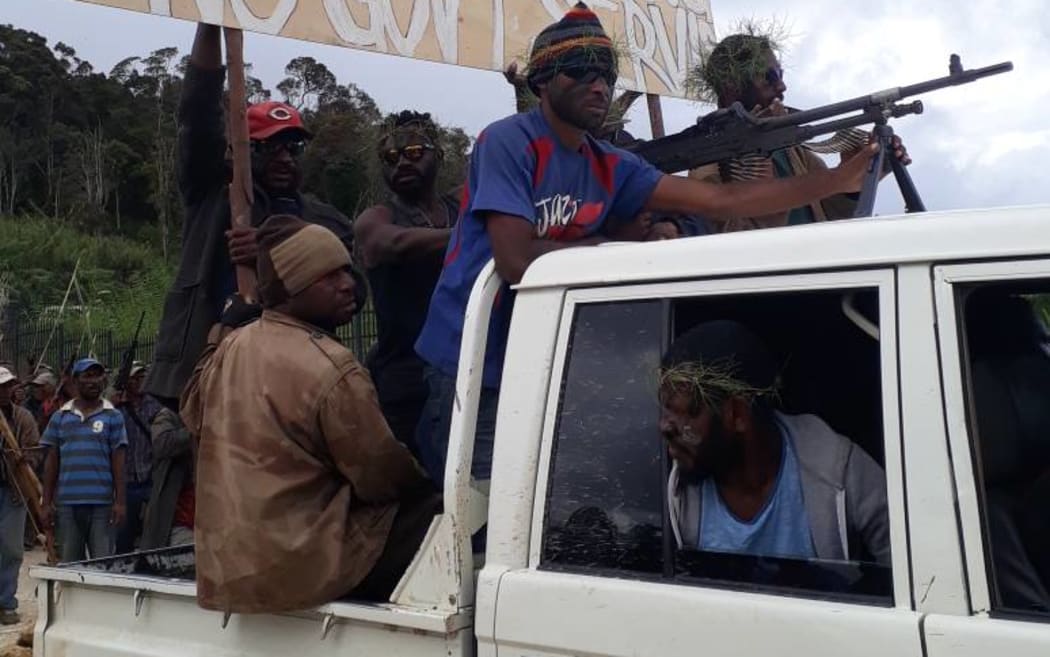
Papua New Guinea Prime Minister James Marape has initiated a comprehensive strategy to combat gun violence and enhance political stability as the nation approaches the 2027 General Election. This strategy involves a multi-faceted approach that connects law enforcement, election preparations, and governance, signaling a shift in how the government addresses these intertwined issues.
Marape’s recent remarks on illegal firearms underscore a decisive stance. He framed the proliferation of high-powered weapons as a direct challenge to the authority of the state. “The gun must belong only to the state,” he stated, highlighting the government’s commitment to expanding Operation Kumul 23, a tactical police initiative aimed at curbing armed violence. This hardline approach suggests that the government is willing to face controversy in pursuit of visible enforcement outcomes.
The Prime Minister’s endorsement of a police operation that resulted in five deaths, including two armed suspects, illustrates his support for aggressive policing. By publicly backing the operation, Marape has accepted responsibility for the actions of security forces, marking a significant political choice. Historically, fatal incidents involving police have led to public outrage and demands for restraint. Yet, Marape has chosen to frame these deaths within a broader narrative of restoring order and dismantling criminal networks linked to firearms.
While this approach aims to bolster government authority, it carries inherent risks. Community leaders and families affected by the operation have voiced concerns regarding the conduct of security forces. Additionally, some members of parliament are reportedly advocating for a more restrained approach given the impact of recent raids on their constituencies. Although these tensions have not yet surfaced publicly, they reflect the precarious balance Marape is attempting to maintain between enforcement and political unity.
The appointment of John Pundari as Police Minister further reinforces Marape’s strategy, but it has not been without controversy. Pundari, a senior political figure from Enga Province, is linked to areas heavily affected by illegal firearms and election-related violence. While Marape has lauded Pundari’s suitability based on his background, detractors point to his local challenges, questioning his ability to manage order at a national level.
Amid the political dynamics, Marape has also made a concerted effort to remove politics from policing. He has issued directives to ensure that law enforcement actions are guided by state policy rather than local political pressures. This move aims to streamline police operations and reduce hesitation during execution of authorized operations.
In conjunction with these initiatives, the government has commenced preparations for the 2027 General Election earlier than usual. Marape has called for a comprehensive government approach, involving security, intelligence, and electoral agencies, with an allocation of K50 million from the 2026 budget. This proactive stance marks a departure from the reactive and compressed election planning often seen in Papua New Guinea.
Marape’s early preparations for elections raise questions about the government’s readiness for potential instability. Recent elections have been marred by violence and logistical failures, leading to public distrust. Marape has acknowledged these challenges, highlighting that past elections were compromised by inadequate security and poor data. His administration’s early involvement of security agencies indicates an awareness of these risks, as they prepare for a potentially turbulent election cycle.
Critically, Marape’s administration is framing election preparations not as an admission of anticipated instability but as a demonstration of responsible governance. He has encouraged voters to reject violence and corruption, inviting citizens to vote against him if they are dissatisfied. This approach seeks to enhance democratic legitimacy while preemptively addressing concerns regarding electoral integrity.
The government’s strategy encompasses multiple fronts: addressing gun violence, appointing effective leadership, and preparing for elections. By tackling these issues simultaneously, Marape aims to disrupt a cycle of violence and instability that has historically plagued Papua New Guinea’s political landscape.
Despite the government’s K50 million budget allocation for election preparations, significant challenges remain. Concerns about the timely release of funds and the effectiveness of grassroots action linger. Previous elections have seen budgeted funds fail to translate into successful outcomes, leading to logistical breakdowns and security gaps.
Moreover, public dissatisfaction with the electoral system itself poses a major hurdle. Issues like inaccurate electoral rolls and unresolved census data have eroded trust in the electoral process. For many voters, confidence has diminished over successive election cycles, regardless of the ruling party.
The upcoming months will test the government’s resolve as it seeks to implement its strategy. Policing will be scrutinized, the reach of the state will be assessed on the ground, and early election preparations will be closely monitored. Marape’s initiatives signal a significant political shift, but only time will reveal if these measures can effectively stabilize Papua New Guinea ahead of the crucial elections.













Dan Carter and Lisa Carrington Reflect on Women Who Inspire Sport

Economic Recovery Fuels Property Market Resilience Amid Challenges

Sophie Henderson Shares Her Reading Journey and Upcoming Play

Cancer Society Opens New Centre in Queenstown for Community Support

Can You Solve Today’s Challenging Word Puzzle in One Minute?

Anthropic Rejects Pentagon Demands, Prioritizes AI Ethics

Bioeconomy Science Institute Announces 6% Staff Reduction

Brumbies Snatch Victory from Blues in Thrilling Finish

Lotto Powerball Draws $6 Million Jackpot; Winning Numbers Revealed

Community Mourns Teens Lost in Mount Maunganui Landslide

Tributes Pour In for Lachlan Rofe, Reality Star, Dead at 47

Private Funeral Held for Dean Field and His Three Children

Funeral Planned for Field Siblings After Tragic House Fire

Netball New Zealand Stands Down Dame Noeline Taurua for Series

Julian Dennison Ties the Knot with Christian Baledrokadroka in New Zealand

New ‘Maverick’ Chaser Joins Beat the Chasers Season Finale

Silver Ferns Legend Laura Langman Criticizes Team’s Attitude

Eli Katoa Rushed to Hospital After Sideline Incident During Match
-
 Top Stories1 month ago
Community Mourns Teens Lost in Mount Maunganui Landslide
-
 Entertainment6 months ago
Tributes Pour In for Lachlan Rofe, Reality Star, Dead at 47
-
 World3 months ago
Private Funeral Held for Dean Field and His Three Children
-
 Top Stories3 months ago
Funeral Planned for Field Siblings After Tragic House Fire
-
 Sports6 months ago
Netball New Zealand Stands Down Dame Noeline Taurua for Series
-
 Entertainment1 month ago
Julian Dennison Ties the Knot with Christian Baledrokadroka in New Zealand
-
 Entertainment5 months ago
New ‘Maverick’ Chaser Joins Beat the Chasers Season Finale
-
 Sports6 months ago
Silver Ferns Legend Laura Langman Criticizes Team’s Attitude
-
 Sports4 months ago
Eli Katoa Rushed to Hospital After Sideline Incident During Match
-

 Sports4 months ago
All Blacks Star Damian McKenzie and Partner Announce Baby News
-

 Sports3 months ago
Nathan Williamson’s Condition Improves Following Race Fall
-

 Politics5 months ago
Netball NZ Calls for Respect Amid Dame Taurua’s Standoff