
Entertainment
Author Airana Ngarewa Launches Provocative New Book on 1940s Taranaki

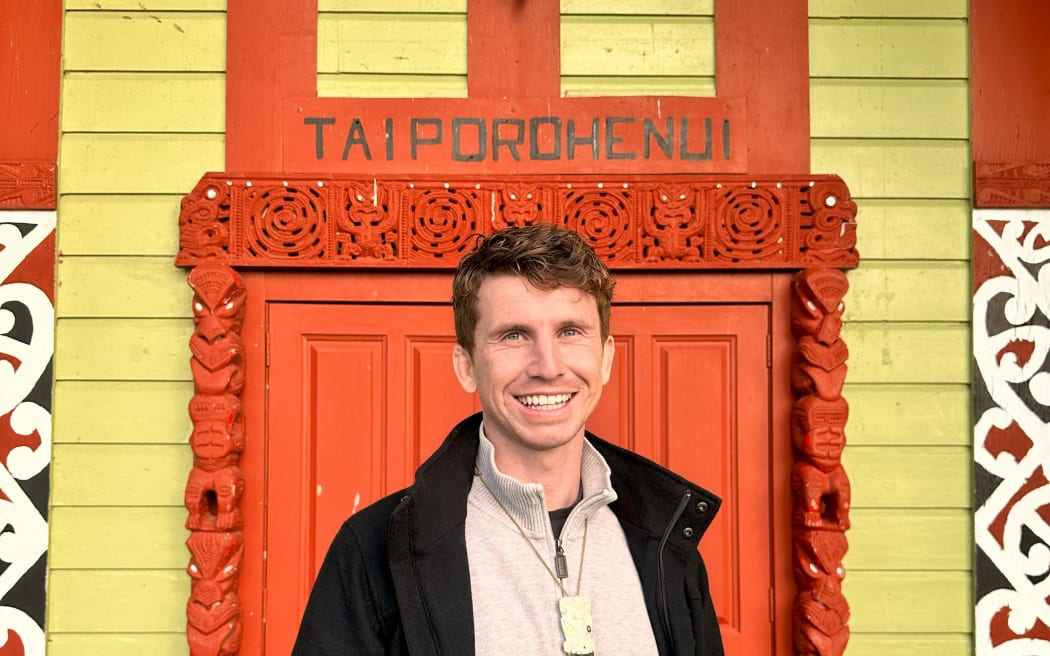
Airana Ngarewa has unveiled his latest book, The Last Living Cannibal, which reimagines life in Taranaki during the 1940s. This marks Ngarewa’s third publication, and he will be promoting it at various bookshops and writers’ festivals across the country in the coming weeks. Unlike his previous works that focused on contemporary themes, this book delves into historical narratives rooted in his family history and the broader Māori experience.
During an interview with Jesse Mulligan on RNZ’s Afternoons, Ngarewa discussed the book’s title, which he described as deliberately provocative. The narrative draws inspiration from the Ngāruahine leader Tītokowaru, who led a resistance against the colonial government in 1868. Ngarewa explained that at the onset of the war, Tītokowaru had a mere 60 warriors at his disposal. To increase his chances of success, he employed guerrilla tactics, including a notorious act where he killed a colonial soldier and returned part of the body to his village for ritual consumption.
This book is set against the backdrop of 1940, a period when many Māori from Taranaki and Waikato chose not to enlist in the Māori Battalion. Ngarewa’s work evolved from discussions held at his marae, Pariroa, located just outside Pātea. These gatherings, known as wānanga, brought together families who had long been away, allowing them to share stories of their upbringing and family history.
Ngarewa expressed gratitude for the opportunity to engage with individuals who have deep roots in the marae. His familial connections trace back to Ngāti Ruanui, Ngāruahine, and Ngā Rauru, with lineage linked to the arrival of the Aotea waka. Following the arrival of Turi, captain of Aotea, Ngarewa’s family has remained in the region, with the exception of a three-year period when men and children were imprisoned for their involvement in Tītokowaru’s conflict and subsequently sent to Dunedin.
Upon their return to Taranaki in 1872, the community built three churches on significant battle sites, symbolizing a shift towards Christianity and a desire for reconciliation with the colonial government. Ngarewa noted that these stories remained largely untold for many years, only resurfacing during his father’s generation.
Despite addressing serious historical themes, Ngarewa emphasized that Māori narratives are often infused with humor and lightness. He pointed out that during traditional welcome ceremonies, or pōwhiri, laughter frequently accompanies serious speeches and rituals. This balance of humor and gravity is a hallmark of his writing style. For instance, one character in the book is named Dairy, a nod to his mixed Māori and Irish heritage, embodying the playful integration of cultural identities.
Through The Last Living Cannibal, Ngarewa aims to illuminate forgotten stories while maintaining a connection to the humor that characterizes Māori storytelling. As he embarks on this promotional journey, readers can expect a blend of history, culture, and rich personal narratives, all woven into a compelling literary tapestry.











New $25 Million Funding Boosts Hospital Capacity Ahead of Winter

Discover Sleep Space’s Affordable Bach Bed Packages Today

Jury Dismissed in Sexual Assault Trial Over Misguided Questions

Wellington’s New Gallery Unveils Community-Driven Art Exhibition

All Whites Face Challenges as Injuries Strike Before World Cup

Heroic Bystander Rescues Swimmers from Dangerous Surf in Napier

Nina Oyama Returns to Crime Comedy in Deadloch Season 2

China Southern Airlines Offers Reliable Journey from Auckland to Vietnam

Nina Oyama Returns to Deadloch for Anticipated Season 2

Community Mourns Teens Lost in Mount Maunganui Landslide

Tributes Pour In for Lachlan Rofe, Reality Star, Dead at 47

Private Funeral Held for Dean Field and His Three Children

Funeral Planned for Field Siblings After Tragic House Fire

Netball New Zealand Stands Down Dame Noeline Taurua for Series

Julian Dennison Ties the Knot with Christian Baledrokadroka in New Zealand

New Research Reveals Simple Path to Enhanced Happiness

New ‘Maverick’ Chaser Joins Beat the Chasers Season Finale

Silver Ferns Legend Laura Langman Criticizes Team’s Attitude
-
 Top Stories3 months ago
Community Mourns Teens Lost in Mount Maunganui Landslide
-
 Entertainment8 months ago
Tributes Pour In for Lachlan Rofe, Reality Star, Dead at 47
-
 World5 months ago
Private Funeral Held for Dean Field and His Three Children
-
 Top Stories6 months ago
Funeral Planned for Field Siblings After Tragic House Fire
-
 Sports8 months ago
Netball New Zealand Stands Down Dame Noeline Taurua for Series
-
 Entertainment4 months ago
Julian Dennison Ties the Knot with Christian Baledrokadroka in New Zealand
-
 Science6 months ago
New Research Reveals Simple Path to Enhanced Happiness
-
 Entertainment7 months ago
New ‘Maverick’ Chaser Joins Beat the Chasers Season Finale
-
 Sports8 months ago
Silver Ferns Legend Laura Langman Criticizes Team’s Attitude
-

 Sports7 months ago
All Blacks Star Damian McKenzie and Partner Announce Baby News
-

 Sports6 months ago
Eli Katoa Rushed to Hospital After Sideline Incident During Match
-

 Politics7 months ago
Netball NZ Calls for Respect Amid Dame Taurua’s Standoff