
Business
Albert Town Sees 225% Surge in House Prices Over Decade

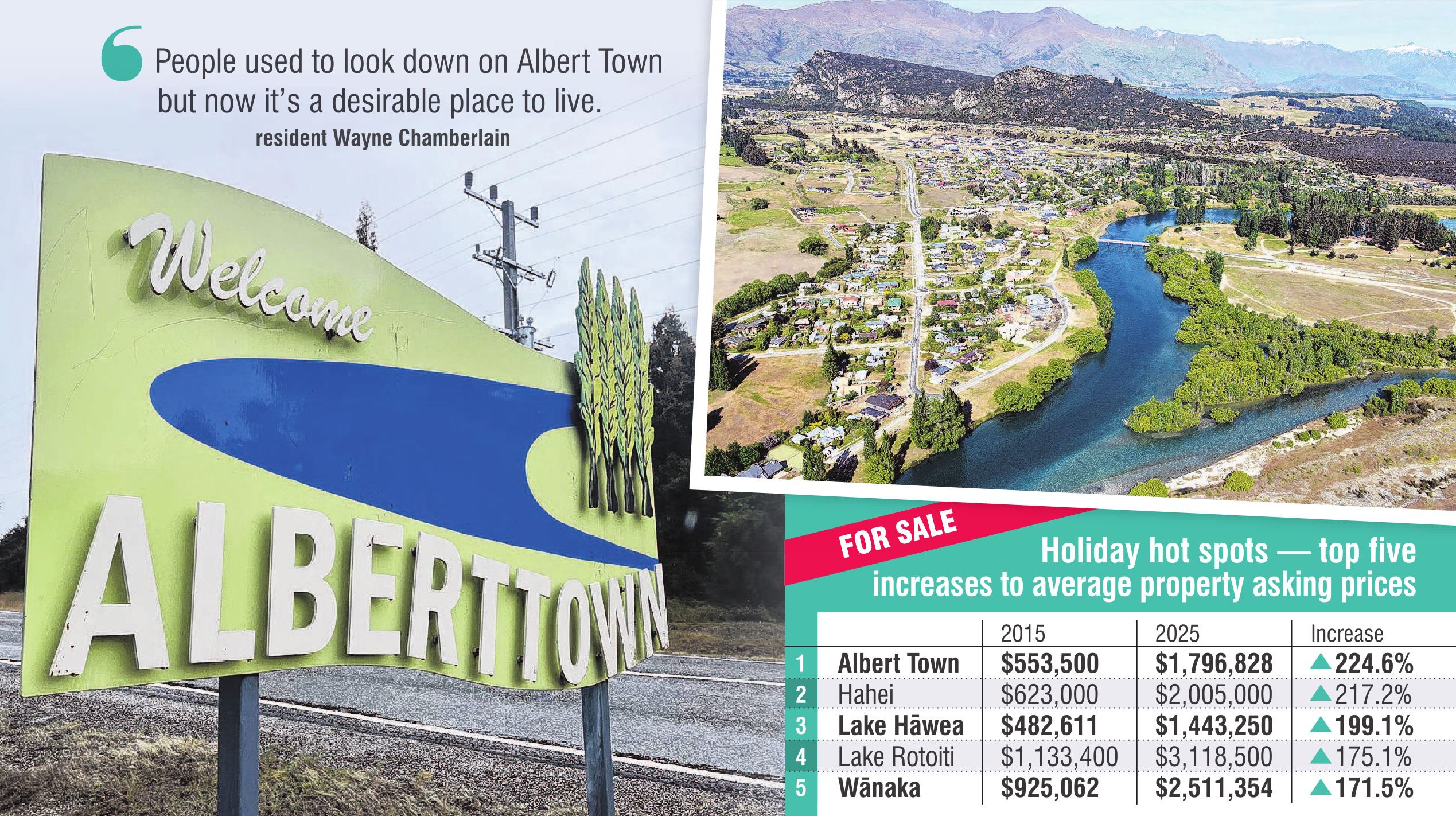
House prices in Albert Town, located on the outskirts of Wānaka, have soared by an astonishing 225% over the past decade. Current data indicates that the average asking price for homes in the area now stands at $1.7 million, a significant increase from the average of $553,500 recorded in 2015. This remarkable price surge highlights Albert Town as one of the fastest-growing residential markets in New Zealand.
The township has transformed considerably in recent years, welcoming new amenities such as a Four Square supermarket, Pembroke Patisserie, The Albie Tavern, a Liquorland outlet, and a laundromat. These developments have played a crucial role in enhancing the community’s appeal. According to Wayne Chamberlain, a long-term resident who purchased his home in 1995 for $206,000, the area’s desirability has dramatically increased. He stated, “People used to look down on Albert Town, but now it’s a desirable place to live. I’m not tempted to sell at all.”
Chamberlain noted that the area’s charm lies in its quiet, safe environment, with the most noticeable change being the increase in traffic and the arrival of new businesses. He remarked on the local attractions, such as access to the river and biking tracks, which contribute to its growing popularity. “Since Covid, house prices around here have just skyrocketed,” he added.
Another resident, Chris Aspinall, who moved to Albert Town 20 years ago, purchased his house for $360,000, with its recent valuation exceeding $1 million. Aspinall expressed his satisfaction with the community, stating, “Albert Town is a great place to live — we could sell but we don’t want to.”
Real estate agent Amy Allan has witnessed the transformation of the housing market firsthand. “We first built in Albert Town in 2013 — house and land for $325,000. That same house is now worth about $1 million,” she explained. Allan attributed the area’s growth to its strong community spirit, quiet streets, and river access, all within close proximity to Wānaka without the pressures of living in the town centre.
Allan highlighted that the initial affordability of Albert Town attracted young families and locals, fostering the community feel that continues to drive demand today. While Wānaka has seen substantial price increases driven by lifestyle buyers and investors, she noted that Albert Town’s growth appears to be more organic, reflecting a genuine desire for long-term residency rather than speculative investment.
According to a recent report from Realestate.co.nz, Albert Town’s impressive 224.6% increase in asking prices is notable, although similar trends have emerged in other regions, such as Hahei in the Coromandel, where prices escalated from $623,000 in 2015 to a staggering $2,005,000 in 2025, marking a 217.2% rise. Vanessa Williams, a spokeswoman for Realestate.co.nz, remarked, “If you bought in Albert Town a decade ago, you’ve basically won the property Lotto.”
Other lakeside areas such as Hawea, Rotoiti, and Wānaka have also seen significant increases in average asking prices since 2015. Williams noted that the data not only underscores New Zealanders’ affection for classic holiday destinations but also indicates a shift toward less conventional locations around the lakes. “While iconic destinations still hold lifestyle appeal, we’re seeing serious price gains in less expected spots,” she added.
The skyrocketing property values in Albert Town reflect broader trends in New Zealand’s real estate market, where lifestyle choices and long-term investment potential increasingly influence buyer decisions.










New $25 Million Funding Boosts Hospital Capacity Ahead of Winter

Discover Sleep Space’s Affordable Bach Bed Packages Today

Jury Dismissed in Sexual Assault Trial Over Misguided Questions

Wellington’s New Gallery Unveils Community-Driven Art Exhibition

All Whites Face Challenges as Injuries Strike Before World Cup

Heroic Bystander Rescues Swimmers from Dangerous Surf in Napier

Nina Oyama Returns to Crime Comedy in Deadloch Season 2

China Southern Airlines Offers Reliable Journey from Auckland to Vietnam

Nina Oyama Returns to Deadloch for Anticipated Season 2

Community Mourns Teens Lost in Mount Maunganui Landslide

Tributes Pour In for Lachlan Rofe, Reality Star, Dead at 47

Private Funeral Held for Dean Field and His Three Children

Funeral Planned for Field Siblings After Tragic House Fire

Netball New Zealand Stands Down Dame Noeline Taurua for Series

Al Waha Motors Opens Flagship Jetour Showroom in Al Khor

Julian Dennison Ties the Knot with Christian Baledrokadroka in New Zealand

Auckland’s Average Rent Surpasses $700 for Three-Bedroom Homes

New Research Reveals Simple Path to Enhanced Happiness
-
 Top Stories7 months ago
Community Mourns Teens Lost in Mount Maunganui Landslide
-
 Entertainment11 months ago
Tributes Pour In for Lachlan Rofe, Reality Star, Dead at 47
-
 World9 months ago
Private Funeral Held for Dean Field and His Three Children
-
 Top Stories9 months ago
Funeral Planned for Field Siblings After Tragic House Fire
-
 Sports11 months ago
Netball New Zealand Stands Down Dame Noeline Taurua for Series
-
 Health7 months ago
Al Waha Motors Opens Flagship Jetour Showroom in Al Khor
-
 Entertainment7 months ago
Julian Dennison Ties the Knot with Christian Baledrokadroka in New Zealand
-
 Business7 months ago
Auckland’s Average Rent Surpasses $700 for Three-Bedroom Homes
-
 Science10 months ago
New Research Reveals Simple Path to Enhanced Happiness
-

 Entertainment10 months ago
New ‘Maverick’ Chaser Joins Beat the Chasers Season Finale
-

 Lifestyle11 months ago
Maia Wilson Faces Backlash Following Taurua’s Suspension
-

 Sports10 months ago
All Blacks Star Damian McKenzie and Partner Announce Baby News