
Politics
Tensions Emerge at Waitangi as MPs Address Māori Concerns

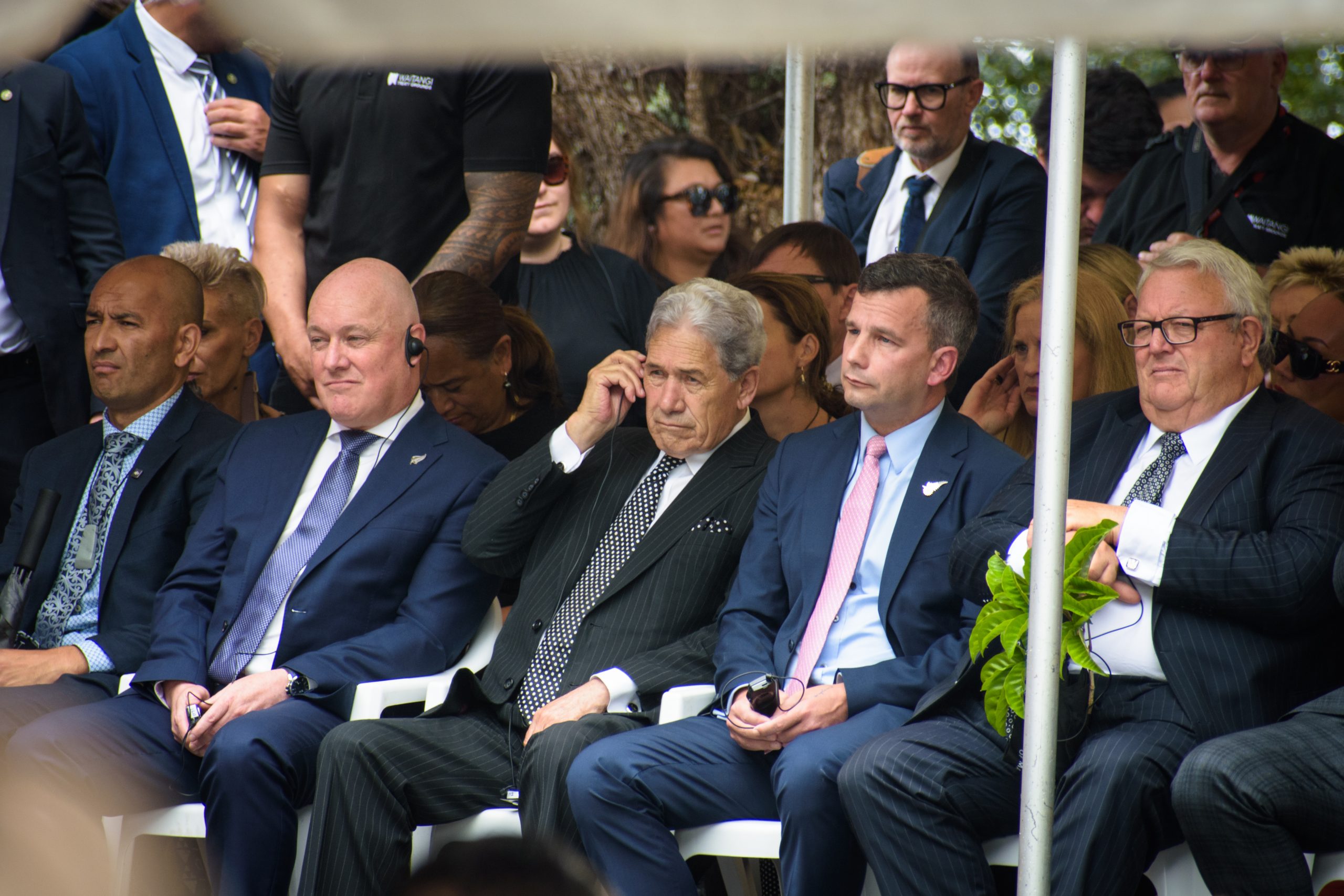
The annual political pōwhiri at Waitangi took place on March 14, 2024, despite adverse weather conditions and the potential for protests. While clouds and drizzle obscured the sun, the event proceeded without the anticipated disruption. Organizers of a planned protest had initially announced their intention to block access to Te Whare Rūnanga but subsequently canceled the action at the request of local iwi leaders, who expressed concerns over breaching tikanga, or Māori customs.
Although a small group of protesters attended, performing haka and waiata, the atmosphere was notably less charged than in previous years. Last year, tensions flared when some members of the hau kāinga turned their backs during speeches, and microphones were confiscated. This year, a few hecklers made their presence felt during speeches, but the overall mood was more subdued.
Prime Minister Christopher Luxon delivered a speech outlining the three articles of the Treaty of Waitangi and presented policies he asserted reaffirmed the Government’s commitment to the Treaty. These included initiatives in education reform, iwi-led community housing projects, and law enforcement. A notable moment occurred when Luxon mentioned Education Minister Erica Stanford, prompting a strong reaction from the audience. Stanford’s recent decision to remove te reo Māori words from school readers and modify the responsibilities of school boards regarding the Treaty appears to have influenced this response.
Luxon’s remarks drew mixed reactions, with a persistent heckler voicing dissent. The Prime Minister’s speech, while politically charged, echoed themes of unity and collaboration. He emphasized the importance of understanding the implications of their actions and decisions on future generations as New Zealand approaches the bicentennial of the signing of Te Tiriti o Waitangi.
In a lighter moment, Green MP Teanau Tuiono humorously acknowledged the political undertones of the speeches. He remarked that while he had not come for votes, he would not refuse any offered to him. Labour leader Chris Hipkins also highlighted the challenges faced by Māori MPs, particularly in navigating political landscapes, and he shared a poignant Cherokee tale about the duality of human nature—encouraging unity over division.
The speeches interconnected various political themes, with David Seymour, leader of the Act Party, advocating for liberal democratic values while suggesting that the narrative surrounding colonisation often lacks nuance. He stated, “I’m always amazed by the myopic drone that colonisation and everything that’s happened in our country is all bad,” asserting that New Zealand’s current success stands in stark contrast to historical challenges.
Former Deputy Prime Minister Winston Peters urged attendees to focus less on politics during the event, yet he nonetheless referenced the upcoming election, suggesting that political conversations would soon resume in earnest. His remarks prompted laughter from the audience, reflecting a blend of seriousness and levity.
The Green Party co-leader Marama Davidson reiterated her party’s commitment to Māori issues, highlighting their history of advocacy. She announced that the Greens would be contesting four Māori seats in the upcoming elections, including candidates like Tania Waikato and Hūhana Lyndon.
As the event drew to a close, Waihoroi Shortland, a respected leader from Ngāti Hine, delivered a powerful reflection on the speeches and the relationship between Māori and the government. He posed a critical question to the MPs: “Have you understood?” He articulated the challenges faced by Māori in a political landscape that often overlooks their identity, stating, “In order to be a good New Zealander, I must deny that most important part of me, of being Māori.”
Shortland’s call for understanding highlighted the complexities of the ongoing dialogue between Māori and the Crown. His closing remarks underscored the necessity of maintaining a relationship with the government, despite its difficulties, and he expressed hope for a future where young leaders could forge a united path forward.
The pōwhiri at Waitangi served as a reminder of the intricate dynamics at play in New Zealand’s political landscape, where historical grievances and contemporary issues intersect. As leaders engaged with the hau kāinga, the event underscored the ongoing need for dialogue, understanding, and collaboration in addressing the concerns of Māori communities across the nation.









New $25 Million Funding Boosts Hospital Capacity Ahead of Winter

Discover Sleep Space’s Affordable Bach Bed Packages Today

Jury Dismissed in Sexual Assault Trial Over Misguided Questions

Wellington’s New Gallery Unveils Community-Driven Art Exhibition

All Whites Face Challenges as Injuries Strike Before World Cup

Heroic Bystander Rescues Swimmers from Dangerous Surf in Napier

Nina Oyama Returns to Crime Comedy in Deadloch Season 2

China Southern Airlines Offers Reliable Journey from Auckland to Vietnam

Nina Oyama Returns to Deadloch for Anticipated Season 2

Community Mourns Teens Lost in Mount Maunganui Landslide

Tributes Pour In for Lachlan Rofe, Reality Star, Dead at 47

Private Funeral Held for Dean Field and His Three Children

Funeral Planned for Field Siblings After Tragic House Fire

Netball New Zealand Stands Down Dame Noeline Taurua for Series

Julian Dennison Ties the Knot with Christian Baledrokadroka in New Zealand

New Research Reveals Simple Path to Enhanced Happiness

New ‘Maverick’ Chaser Joins Beat the Chasers Season Finale

Silver Ferns Legend Laura Langman Criticizes Team’s Attitude
-
 Top Stories2 months ago
Community Mourns Teens Lost in Mount Maunganui Landslide
-
 Entertainment7 months ago
Tributes Pour In for Lachlan Rofe, Reality Star, Dead at 47
-
 World4 months ago
Private Funeral Held for Dean Field and His Three Children
-
 Top Stories5 months ago
Funeral Planned for Field Siblings After Tragic House Fire
-
 Sports7 months ago
Netball New Zealand Stands Down Dame Noeline Taurua for Series
-
 Entertainment3 months ago
Julian Dennison Ties the Knot with Christian Baledrokadroka in New Zealand
-
 Science5 months ago
New Research Reveals Simple Path to Enhanced Happiness
-
 Entertainment6 months ago
New ‘Maverick’ Chaser Joins Beat the Chasers Season Finale
-
 Sports7 months ago
Silver Ferns Legend Laura Langman Criticizes Team’s Attitude
-

 Sports5 months ago
Eli Katoa Rushed to Hospital After Sideline Incident During Match
-

 Sports6 months ago
All Blacks Star Damian McKenzie and Partner Announce Baby News
-

 Politics6 months ago
Netball NZ Calls for Respect Amid Dame Taurua’s Standoff