
Science
NASA Uncovers Potential Biosignature in Mars Rock Analysis

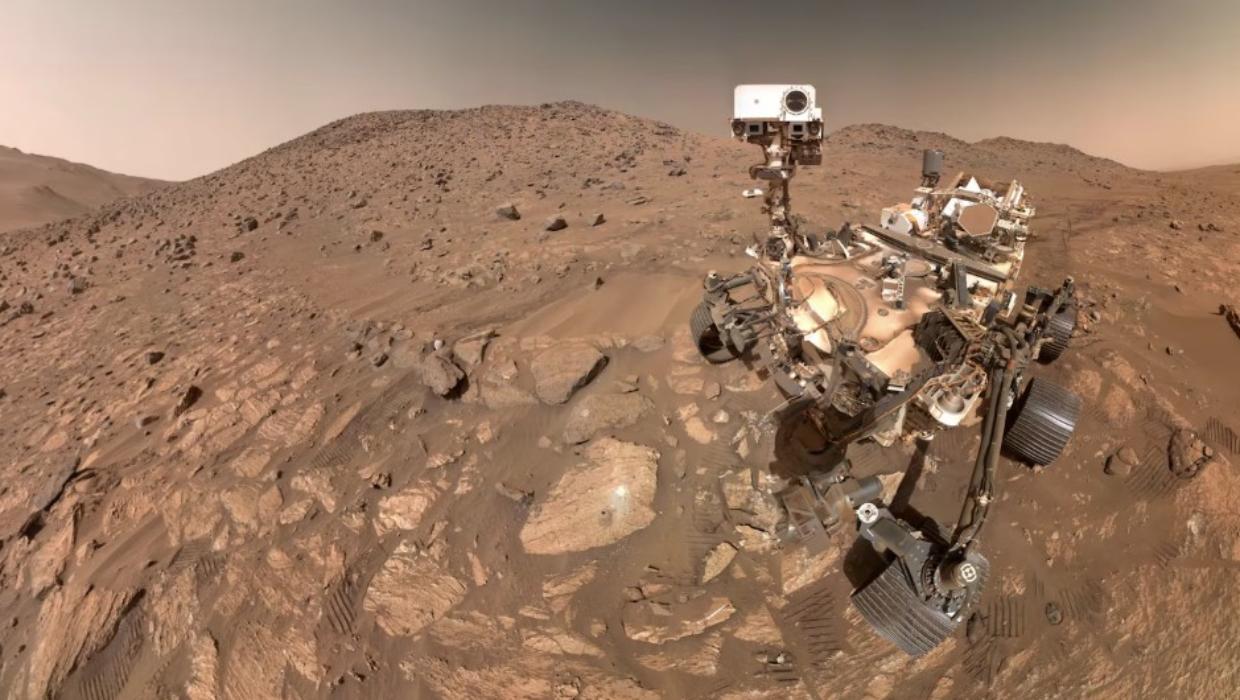
NASA has identified what it describes as the “clearest sign of life that we’ve ever found on Mars.” Detailed analysis of images taken by the Perseverance rover has revealed a potential biosignature in speckled rocks located on the Martian surface. This discovery adds to the ongoing exploration of the planet and raises intriguing questions about the possibility of life beyond Earth.
The findings come from the rover’s extensive study of rocks in the Jezero Crater, an area believed to have once contained water. The analysis focused on chemical compounds that could indicate biological activity. Scientists emphasize that while the evidence is compelling, further investigation is necessary to confirm the presence of life.
Details of the Discovery
Images captured by Perseverance show unique patterns on the rocks that may suggest biological processes. Researchers have been examining these images meticulously, looking for signs that could be linked to ancient microorganisms. According to reports from NASA, these patterns are unlike typical geological formations observed on Mars.
Dr. Ken Farley, a project scientist for the Perseverance mission, stated, “We are excited about these findings. They provide a new perspective on the potential for life on Mars and invite us to think about how to further explore these intriguing features.”
The analysis highlights specific minerals and organic compounds, which scientists believe could be remnants of past life forms. The ongoing study aims to determine whether these findings are indeed indicative of biotic processes or if they are the result of abiotic factors.
Implications for Future Mars Missions
This discovery has significant implications for future missions to Mars. Scientists are now more motivated than ever to continue exploring the planet’s surface and subsurface for additional biosignatures. The findings could influence the design of upcoming missions, including potential sample return missions that aim to bring Martian materials back to Earth for detailed analysis.
The Perseverance rover, which landed on Mars in February 2021, has been equipped with advanced tools designed for this kind of investigation. Its primary mission is to search for signs of ancient life and to collect rock and soil samples for future return missions.
As researchers continue to analyze the data collected, the scientific community remains hopeful about what these findings could mean for our understanding of life in the universe. The quest for extraterrestrial life is a complex and challenging endeavor, but discoveries like this one provide a tantalizing glimpse into the possibilities that lie ahead.
In conclusion, NASA’s identification of a potential biosignature on Mars marks a pivotal moment in the search for life beyond our planet. With ongoing analysis and future missions on the horizon, the quest to uncover the mysteries of Mars continues to captivate scientists and the public alike.












New $25 Million Funding Boosts Hospital Capacity Ahead of Winter

Discover Sleep Space’s Affordable Bach Bed Packages Today

Jury Dismissed in Sexual Assault Trial Over Misguided Questions

Wellington’s New Gallery Unveils Community-Driven Art Exhibition

All Whites Face Challenges as Injuries Strike Before World Cup

Heroic Bystander Rescues Swimmers from Dangerous Surf in Napier

Nina Oyama Returns to Crime Comedy in Deadloch Season 2

China Southern Airlines Offers Reliable Journey from Auckland to Vietnam

Nina Oyama Returns to Deadloch for Anticipated Season 2

Community Mourns Teens Lost in Mount Maunganui Landslide

Tributes Pour In for Lachlan Rofe, Reality Star, Dead at 47

Private Funeral Held for Dean Field and His Three Children

Funeral Planned for Field Siblings After Tragic House Fire

Netball New Zealand Stands Down Dame Noeline Taurua for Series

Julian Dennison Ties the Knot with Christian Baledrokadroka in New Zealand

New Research Reveals Simple Path to Enhanced Happiness

New ‘Maverick’ Chaser Joins Beat the Chasers Season Finale

Maia Wilson Faces Backlash Following Taurua’s Suspension
-
 Top Stories6 months ago
Community Mourns Teens Lost in Mount Maunganui Landslide
-
 Entertainment10 months ago
Tributes Pour In for Lachlan Rofe, Reality Star, Dead at 47
-
 World8 months ago
Private Funeral Held for Dean Field and His Three Children
-
 Top Stories8 months ago
Funeral Planned for Field Siblings After Tragic House Fire
-
 Sports10 months ago
Netball New Zealand Stands Down Dame Noeline Taurua for Series
-
 Entertainment6 months ago
Julian Dennison Ties the Knot with Christian Baledrokadroka in New Zealand
-
 Science9 months ago
New Research Reveals Simple Path to Enhanced Happiness
-
 Entertainment9 months ago
New ‘Maverick’ Chaser Joins Beat the Chasers Season Finale
-
 Lifestyle9 months ago
Maia Wilson Faces Backlash Following Taurua’s Suspension
-

 Sports9 months ago
All Blacks Star Damian McKenzie and Partner Announce Baby News
-

 Health6 months ago
Al Waha Motors Opens Flagship Jetour Showroom in Al Khor
-

 Sports10 months ago
Silver Ferns Legend Laura Langman Criticizes Team’s Attitude