
Science
NASA’s Perseverance Rover Uncovers Potential Sign of Life on Mars

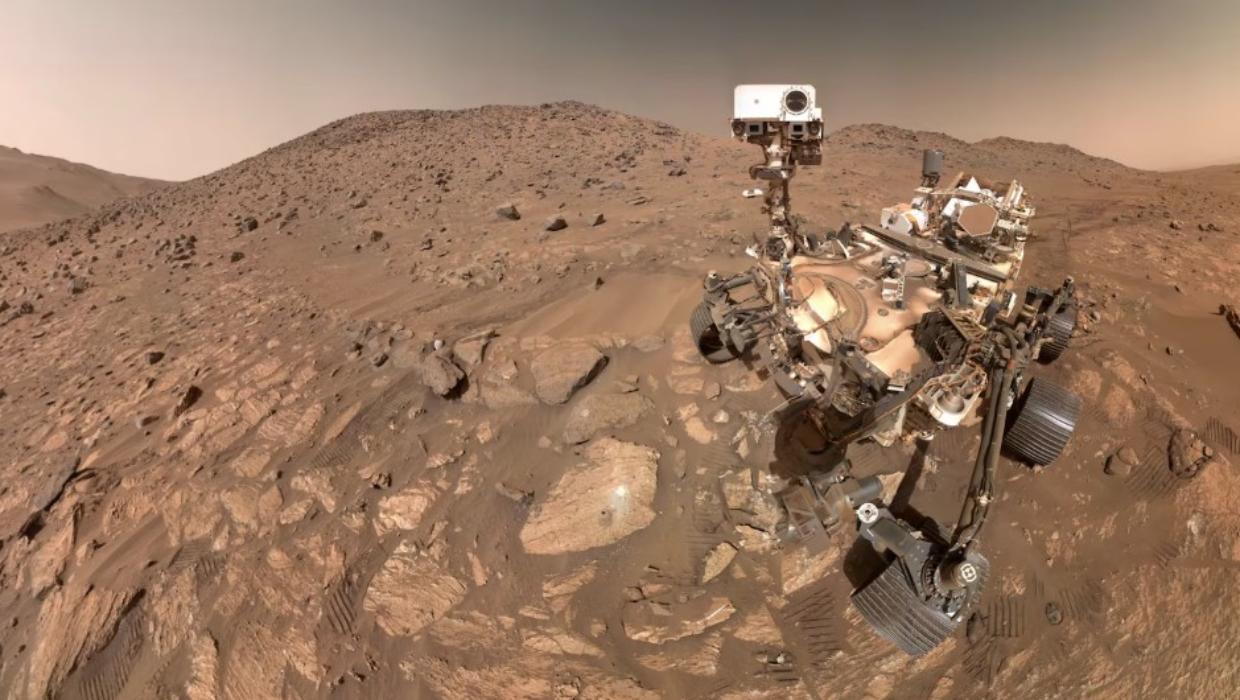
NASA has made a significant discovery on Mars, identifying what scientists describe as a “potential biosignature.” Detailed analysis of images captured by the Perseverance Rover has revealed speckled rocks that could indicate past microbial life on the planet.
The findings stem from investigations conducted in the Jezero Crater, a site believed to have once housed a lake. The rover collected high-resolution images of the rocks during its exploration, and researchers have noted unusual patterns that could suggest biological activity. This discovery marks a pivotal moment in the ongoing quest to understand whether life ever existed beyond Earth.
The term “biosignature” refers to any substance, such as organic molecules or structures, that provides evidence of past life. In this case, the speckled rocks exhibit characteristics that warrant further examination. NASA scientists are enthusiastic about the implications of this finding, as it could reshape our understanding of Mars’ history and its capacity to support life.
According to Dr. Ken Farley, a project scientist for the Perseverance mission, “While we cannot yet confirm that these patterns are the result of biological processes, they are the clearest indicators we have found so far.” This cautious optimism reflects the broader scientific approach to interpreting potential evidence of past life.
The Perseverance Rover landed on Mars in February 2021, tasked with exploring the planet’s geology and searching for signs of ancient life. Since then, it has been traversing the Martian landscape, collecting samples and sending data back to Earth for analysis. The rover’s advanced instruments allow for detailed investigations that were not possible in previous missions.
NASA plans to conduct further analyses of the rocks in the coming months, utilizing both the rover’s onboard capabilities and additional laboratory techniques on Earth. The goal is to determine the exact nature of the speckled rocks and whether they can indeed be classified as biosignatures.
This discovery has sparked excitement within the scientific community and among space enthusiasts worldwide. As researchers continue to analyze the data, the possibility of confirming the existence of life on another planet remains tantalizingly close.
As we look ahead, the findings from Mars could have profound implications for future exploration and our understanding of life in the universe. The Perseverance Rover’s mission exemplifies humanity’s enduring curiosity and desire to explore the unknown, pushing the boundaries of what we know about our cosmic neighborhood.
With each new discovery, the mystery of Mars deepens, leaving scientists eager to unravel the secrets hidden beneath its surface. The journey of exploration is far from over, and the potential for groundbreaking revelations remains high as NASA continues its quest on the Red Planet.












New $25 Million Funding Boosts Hospital Capacity Ahead of Winter

Discover Sleep Space’s Affordable Bach Bed Packages Today

Jury Dismissed in Sexual Assault Trial Over Misguided Questions

Wellington’s New Gallery Unveils Community-Driven Art Exhibition

All Whites Face Challenges as Injuries Strike Before World Cup

Heroic Bystander Rescues Swimmers from Dangerous Surf in Napier

Nina Oyama Returns to Crime Comedy in Deadloch Season 2

China Southern Airlines Offers Reliable Journey from Auckland to Vietnam

Nina Oyama Returns to Deadloch for Anticipated Season 2

Community Mourns Teens Lost in Mount Maunganui Landslide

Tributes Pour In for Lachlan Rofe, Reality Star, Dead at 47

Private Funeral Held for Dean Field and His Three Children

Funeral Planned for Field Siblings After Tragic House Fire

Netball New Zealand Stands Down Dame Noeline Taurua for Series

Julian Dennison Ties the Knot with Christian Baledrokadroka in New Zealand

New Research Reveals Simple Path to Enhanced Happiness

New ‘Maverick’ Chaser Joins Beat the Chasers Season Finale

Maia Wilson Faces Backlash Following Taurua’s Suspension
-
 Top Stories6 months ago
Community Mourns Teens Lost in Mount Maunganui Landslide
-
 Entertainment10 months ago
Tributes Pour In for Lachlan Rofe, Reality Star, Dead at 47
-
 World8 months ago
Private Funeral Held for Dean Field and His Three Children
-
 Top Stories8 months ago
Funeral Planned for Field Siblings After Tragic House Fire
-
 Sports10 months ago
Netball New Zealand Stands Down Dame Noeline Taurua for Series
-
 Entertainment6 months ago
Julian Dennison Ties the Knot with Christian Baledrokadroka in New Zealand
-
 Science9 months ago
New Research Reveals Simple Path to Enhanced Happiness
-
 Entertainment9 months ago
New ‘Maverick’ Chaser Joins Beat the Chasers Season Finale
-
 Lifestyle9 months ago
Maia Wilson Faces Backlash Following Taurua’s Suspension
-

 Sports9 months ago
All Blacks Star Damian McKenzie and Partner Announce Baby News
-

 Health6 months ago
Al Waha Motors Opens Flagship Jetour Showroom in Al Khor
-

 Sports10 months ago
Silver Ferns Legend Laura Langman Criticizes Team’s Attitude