
Science
New Techniques Reveal Ancient Secrets of Verulamium

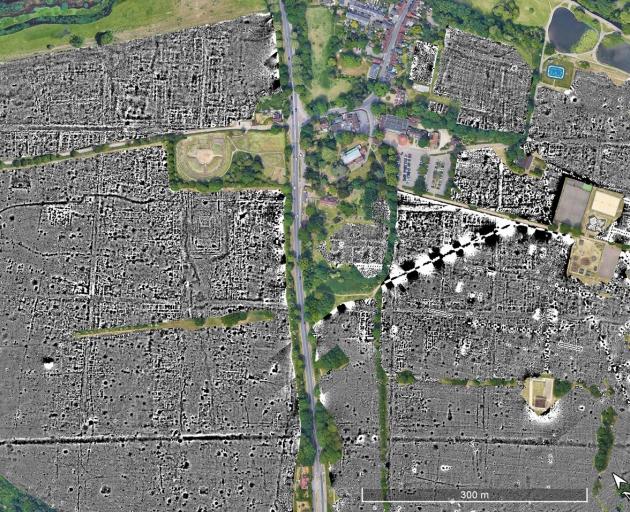
Recent advancements in geophysical survey techniques are shedding new light on the ancient city of Verulamium, revealing its rich historical layout. The application of a new method, the proton magnetometer, was pioneered by a team including Martin Aitken, an Oxford University scientist. This ground-breaking approach allows researchers to investigate what lies beneath the surface without extensive excavation.
Innovative Techniques Uncover Roman History
The proton magnetometer, a device resembling a bottle connected to various wires and a signal-receiving screen, enables archaeologists to detect underground disturbances. In a collaborative effort, Aitken and his team successfully mapped an early Roman defensive ditch, believed to have been hastily constructed in response to the threat posed by the formidable forces of Queen Boudicca. This discovery, initially made years ago, serves as a precursor to the current wave of archaeological exploration.
Recently, a new geophysical survey has expanded the scope of investigation across the entirety of Verulamium’s interior, which was once protected by a circuit of stone walls. The latest findings illustrate a detailed layout of the city’s streets, houses, kilns, and significant structures, such as the forum and theatre, which were situated adjacent to a large temple. This remarkable mapping provides insight into the urban planning of the Roman settlement.
Streets of History Revealed
As archaeologists delve deeper into the site, they have uncovered a grid pattern of streets dividing the city into distinct sections. Each area features elaborate houses with hypocausts, bath complexes, and intricately designed mosaic floors. The recent survey has clearly identified the early defensive ditch as a dark, straight line that makes a right angle at its western edge, further enhancing our understanding of the city’s layout.
Interestingly, the team chose not to take readings under the St Alban’s first XI cricket pitch, mindful of the groundsman’s potential disapproval. This decision highlights the delicate balance between preserving recreational spaces and uncovering historical treasures. In addition to the defensive ditch, a sinuous dark line has been identified as the aqueduct leading to the theatre, hinting at the sophisticated engineering of the time.
Previous excavations at the site yielded breathtaking discoveries, including a stunning mosaic floor featuring a lion at its center. Archaeologists believe that many more treasures lie buried beneath the surface, waiting to be unveiled. As technology continues to evolve, the potential for further discoveries at Verulamium seems limitless.
These findings not only enrich our understanding of Roman history but also emphasize the importance of innovative techniques in archaeology. The ongoing exploration of Verulamium stands as a testament to the enduring fascination with our past and the continuous quest for knowledge about ancient civilizations.












New $25 Million Funding Boosts Hospital Capacity Ahead of Winter

Discover Sleep Space’s Affordable Bach Bed Packages Today

Jury Dismissed in Sexual Assault Trial Over Misguided Questions

Wellington’s New Gallery Unveils Community-Driven Art Exhibition

All Whites Face Challenges as Injuries Strike Before World Cup

Heroic Bystander Rescues Swimmers from Dangerous Surf in Napier

Nina Oyama Returns to Crime Comedy in Deadloch Season 2

China Southern Airlines Offers Reliable Journey from Auckland to Vietnam

Nina Oyama Returns to Deadloch for Anticipated Season 2

Community Mourns Teens Lost in Mount Maunganui Landslide

Tributes Pour In for Lachlan Rofe, Reality Star, Dead at 47

Private Funeral Held for Dean Field and His Three Children

Funeral Planned for Field Siblings After Tragic House Fire

Netball New Zealand Stands Down Dame Noeline Taurua for Series

Julian Dennison Ties the Knot with Christian Baledrokadroka in New Zealand

New Research Reveals Simple Path to Enhanced Happiness

New ‘Maverick’ Chaser Joins Beat the Chasers Season Finale

Maia Wilson Faces Backlash Following Taurua’s Suspension
-
 Top Stories6 months ago
Community Mourns Teens Lost in Mount Maunganui Landslide
-
 Entertainment10 months ago
Tributes Pour In for Lachlan Rofe, Reality Star, Dead at 47
-
 World8 months ago
Private Funeral Held for Dean Field and His Three Children
-
 Top Stories8 months ago
Funeral Planned for Field Siblings After Tragic House Fire
-
 Sports10 months ago
Netball New Zealand Stands Down Dame Noeline Taurua for Series
-
 Entertainment6 months ago
Julian Dennison Ties the Knot with Christian Baledrokadroka in New Zealand
-
 Science9 months ago
New Research Reveals Simple Path to Enhanced Happiness
-
 Entertainment9 months ago
New ‘Maverick’ Chaser Joins Beat the Chasers Season Finale
-
 Lifestyle9 months ago
Maia Wilson Faces Backlash Following Taurua’s Suspension
-

 Sports9 months ago
All Blacks Star Damian McKenzie and Partner Announce Baby News
-

 Sports10 months ago
Silver Ferns Legend Laura Langman Criticizes Team’s Attitude
-

 Health6 months ago
Al Waha Motors Opens Flagship Jetour Showroom in Al Khor