
Science
Parasitic Worms Transform Spiders into ‘Zombies’, Research Reveals

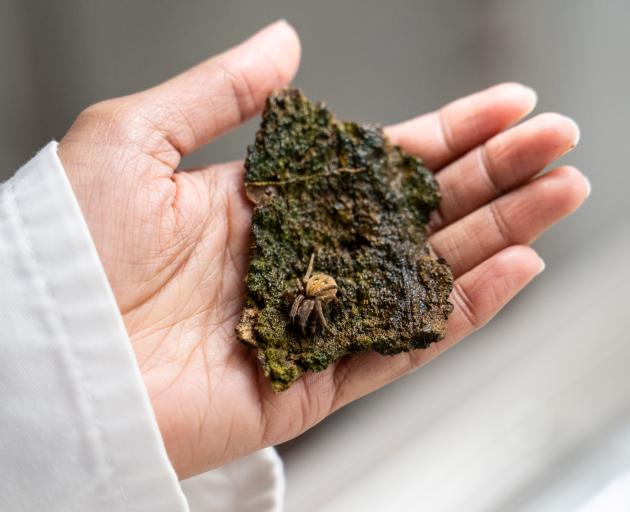
A fascinating yet alarming phenomenon is unfolding in New Zealand, where parasitic worms known as mermithids are transforming spiders into what researchers describe as “zombies.” Usha Mendis, a PhD student at Lincoln University, is dedicated to uncovering the intricacies of this unsettling relationship between the nematodes and their arachnid hosts.
Mendis is investigating how these parasitic worms infect various invertebrates, including spiders, caddisflies, and grasshoppers. So far, her research has identified three distinct spider species carrying the mermithids, raising concerns about the potential impact on local ecosystems. “New Zealand has a large number of endemic spiders; over 90% of them are unique to this region,” Mendis noted. She stressed the importance of these spiders in maintaining biodiversity, stating that their decline could have significant repercussions.
The process by which the mermithids exploit their hosts is both slow and fatal. Spiders infected with the nematodes exhibit physical changes, often developing larger and thicker limbs. “They can be very abnormal. Their legs get shorter but thicker, and the abdomen swells,” Mendis explained. “They look like zombies.” While these signs can indicate an infection, the definitive proof comes only after the spider dies and the nematode emerges to continue its life cycle.
The lifecycle of mermithids remains partially shrouded in mystery. Researchers understand how the nematodes exit their hosts, but the method of entry into the spiders is still under investigation. Mendis emphasizes that the worms depend on spiders for a critical phase of their existence. “They can’t live without a host. They consume the energy and nutrients of the host, and grow inside it,” she clarified.
Moisture plays a crucial role in the nematodes’ lifecycle. They manipulate the spiders to seek out damp environments, where they can grow, mate, and lay eggs. This often leads to unfortunate outcomes for the spiders, which are frequently found drowned. Even if an infected spider survives the emergence of the nematode, it is likely to die shortly thereafter.
To study the mermithids further, Mendis is employing water traps to capture the nematodes, a method that could provide more insight into their lifecycle and behavior. Despite the fact that mermithids were first reported in New Zealand just 35 years ago, much remains unknown about their interactions with local spider populations.
Mendis urges the public to reconsider their perceptions of spiders, which often provoke fear and misunderstanding. “Spiders may look disruptive and creepy, but they’re not the enemy,” she stated. “They’ve got their own problems to deal with.” As her research continues, Mendis hopes to shed light on the complexities of these relationships and the implications for New Zealand’s unique biodiversity.









New $25 Million Funding Boosts Hospital Capacity Ahead of Winter

Discover Sleep Space’s Affordable Bach Bed Packages Today

Jury Dismissed in Sexual Assault Trial Over Misguided Questions

Wellington’s New Gallery Unveils Community-Driven Art Exhibition

All Whites Face Challenges as Injuries Strike Before World Cup

Heroic Bystander Rescues Swimmers from Dangerous Surf in Napier

Nina Oyama Returns to Crime Comedy in Deadloch Season 2

China Southern Airlines Offers Reliable Journey from Auckland to Vietnam

Nina Oyama Returns to Deadloch for Anticipated Season 2

Community Mourns Teens Lost in Mount Maunganui Landslide

Tributes Pour In for Lachlan Rofe, Reality Star, Dead at 47

Private Funeral Held for Dean Field and His Three Children

Funeral Planned for Field Siblings After Tragic House Fire

Netball New Zealand Stands Down Dame Noeline Taurua for Series

Julian Dennison Ties the Knot with Christian Baledrokadroka in New Zealand

New Research Reveals Simple Path to Enhanced Happiness

New ‘Maverick’ Chaser Joins Beat the Chasers Season Finale

Silver Ferns Legend Laura Langman Criticizes Team’s Attitude
-
 Top Stories3 months ago
Community Mourns Teens Lost in Mount Maunganui Landslide
-
 Entertainment8 months ago
Tributes Pour In for Lachlan Rofe, Reality Star, Dead at 47
-
 World5 months ago
Private Funeral Held for Dean Field and His Three Children
-
 Top Stories6 months ago
Funeral Planned for Field Siblings After Tragic House Fire
-
 Sports8 months ago
Netball New Zealand Stands Down Dame Noeline Taurua for Series
-
 Entertainment4 months ago
Julian Dennison Ties the Knot with Christian Baledrokadroka in New Zealand
-
 Science6 months ago
New Research Reveals Simple Path to Enhanced Happiness
-
 Entertainment7 months ago
New ‘Maverick’ Chaser Joins Beat the Chasers Season Finale
-
 Sports8 months ago
Silver Ferns Legend Laura Langman Criticizes Team’s Attitude
-

 Sports7 months ago
All Blacks Star Damian McKenzie and Partner Announce Baby News
-

 Sports6 months ago
Eli Katoa Rushed to Hospital After Sideline Incident During Match
-

 Politics7 months ago
Netball NZ Calls for Respect Amid Dame Taurua’s Standoff