
Top Stories
The Remarkable Journey of Mac: Coach Horse Survives Shooting

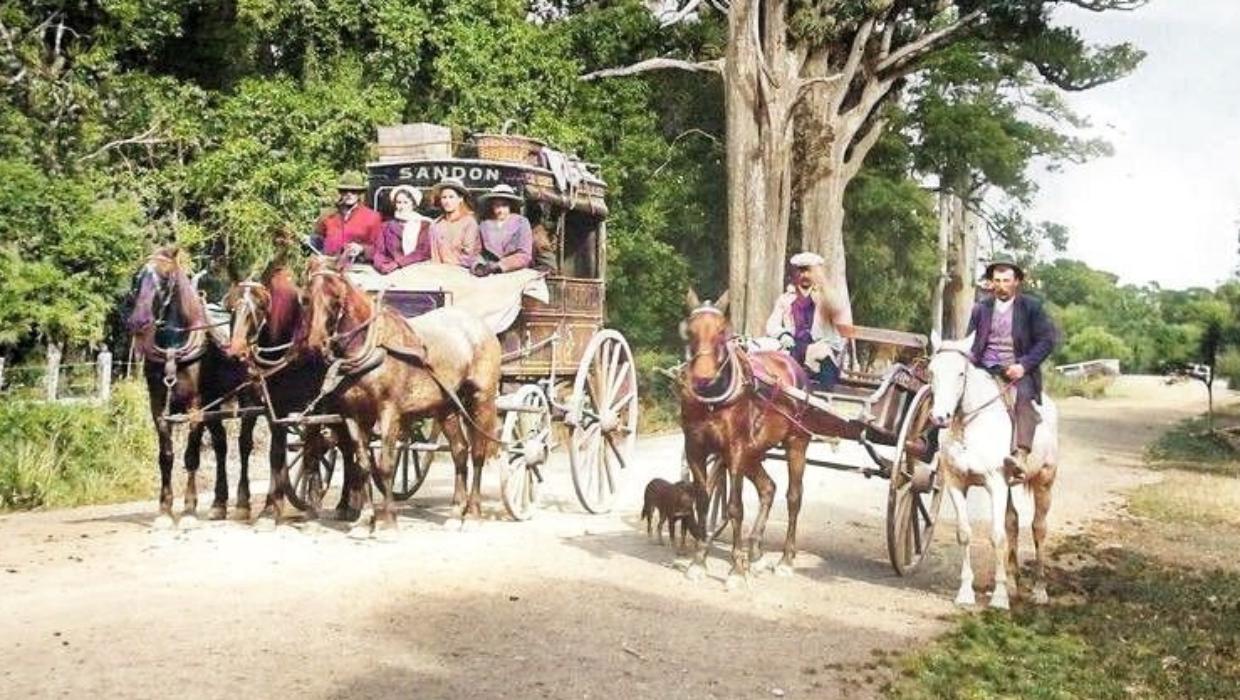
The story of Mac, a coach horse in 19th-century New Zealand, takes a dramatic turn when he is shot during a tense confrontation on April 30, 1874. Owned by Andrew Young, a notable figure in New Zealand’s mail coach service, Mac’s journey reflects both the challenges of early transport and the resilience of animals that played vital roles in these ventures.
Young, renowned for his insistence on purchasing only horses capable of swimming, began his bi-weekly mail coach service between Wellington and Whanganui in December 1868. This service expanded to New Plymouth by January 1871. The partnership with American W.H. Shepard ended in March 1871, with Young taking control of the Wellington-Whanganui route. Tragically, Shepard died in a coach accident later that year, leading to Young managing the entire route.
In April 1874, Young won a tender to convey mail between Palmerston North and Waipukurau. The journey was complicated by dense bush and ongoing disputes over land ownership. On April 30, Young and his team set out with a load of horse feed to be delivered via the newly constructed Awahuri Bridge.
The coach, carrying Young, the driver John McKenzie, and a passenger named Mr. Smith, left Bulls at 14:30. They reached Charles Schultze‘s hotel at 16:10, where they encountered local tensions. A heated exchange with a local man, Alexander McDonald, escalated when McDonald retrieved a shotgun from the hotel.
As the coach approached Awahuri Bridge, McDonald aimed the shotgun at the horses. Just as Mac was about two meters away, McDonald fired, hitting him about four centimeters above his right eye. Young immediately leapt from the coach to assess the injury, discovering that the bullet had penetrated approximately five centimeters into Mac’s skull.
Young’s initial assessment led him to believe Mac would not survive, but the horse was taken back to Bulls. The incident stirred local unrest, as it was connected to broader disputes regarding Māori land ownership and governmental oversight. McDonald was arrested shortly after the shooting, complying with law enforcement.
Mac’s fate took a remarkable turn when James Samuel Smiley, a stable owner from Whanganui, successfully operated on him two days later. He removed Mac’s eye but could not locate the bullet. Miraculously, Mac was declared likely to recover, and discussions began about exhibiting the now “celebrated” horse.
Smiley’s background adds another layer to this story. After a challenging childhood, he had gained veterinary skills while working in Australia. His expertise proved crucial in saving Mac’s life. Meanwhile, McDonald faced legal consequences for his actions. On July 6, 1874, he pleaded guilty in Wellington, receiving a three-year sentence, the minimum under the 1867 Malicious Injuries to Property Act.
The incident did not resolve the underlying tensions. In mid-June, local Māori groups, including Ngāti Kauwhata, took action by blockading the newly established Government road on their land. McDonald continued to instigate conflict, but the Government remained largely inactive.
The road between Bulls and Palmerston North finally opened to Young’s mail coaches in August 1874. Following McDonald’s release from prison, life gradually returned to normal. The historian James Glenny Wilson later reflected on the incident, describing McDonald in contrasting terms, from “lunatic” at the time to a “true friend” in later accounts.
Ultimately, Mac resumed his work as a coach horse, even taking on the role of the center leader in Young’s team. The mark above his eye served as a lasting reminder of his courage. As history notes, Mac’s experience symbolizes the vital contributions of horses to early transport in New Zealand, with his resilience marking an extraordinary chapter in the story of the region’s development.











New $25 Million Funding Boosts Hospital Capacity Ahead of Winter

Discover Sleep Space’s Affordable Bach Bed Packages Today

Jury Dismissed in Sexual Assault Trial Over Misguided Questions

Wellington’s New Gallery Unveils Community-Driven Art Exhibition

All Whites Face Challenges as Injuries Strike Before World Cup

Heroic Bystander Rescues Swimmers from Dangerous Surf in Napier

Nina Oyama Returns to Crime Comedy in Deadloch Season 2

China Southern Airlines Offers Reliable Journey from Auckland to Vietnam

Nina Oyama Returns to Deadloch for Anticipated Season 2

Community Mourns Teens Lost in Mount Maunganui Landslide

Tributes Pour In for Lachlan Rofe, Reality Star, Dead at 47

Private Funeral Held for Dean Field and His Three Children

Funeral Planned for Field Siblings After Tragic House Fire

Netball New Zealand Stands Down Dame Noeline Taurua for Series

Al Waha Motors Opens Flagship Jetour Showroom in Al Khor

Julian Dennison Ties the Knot with Christian Baledrokadroka in New Zealand

Auckland’s Average Rent Surpasses $700 for Three-Bedroom Homes

New Research Reveals Simple Path to Enhanced Happiness
-
 Top Stories7 months ago
Community Mourns Teens Lost in Mount Maunganui Landslide
-
 Entertainment11 months ago
Tributes Pour In for Lachlan Rofe, Reality Star, Dead at 47
-
 World9 months ago
Private Funeral Held for Dean Field and His Three Children
-
 Top Stories9 months ago
Funeral Planned for Field Siblings After Tragic House Fire
-
 Sports11 months ago
Netball New Zealand Stands Down Dame Noeline Taurua for Series
-
 Health7 months ago
Al Waha Motors Opens Flagship Jetour Showroom in Al Khor
-
 Entertainment7 months ago
Julian Dennison Ties the Knot with Christian Baledrokadroka in New Zealand
-
 Business7 months ago
Auckland’s Average Rent Surpasses $700 for Three-Bedroom Homes
-
 Science10 months ago
New Research Reveals Simple Path to Enhanced Happiness
-

 Entertainment10 months ago
New ‘Maverick’ Chaser Joins Beat the Chasers Season Finale
-

 Lifestyle10 months ago
Maia Wilson Faces Backlash Following Taurua’s Suspension
-

 Sports10 months ago
All Blacks Star Damian McKenzie and Partner Announce Baby News