
Lifestyle
Kiwi Volunteer Thrives in Suva After Timor-Leste Experience

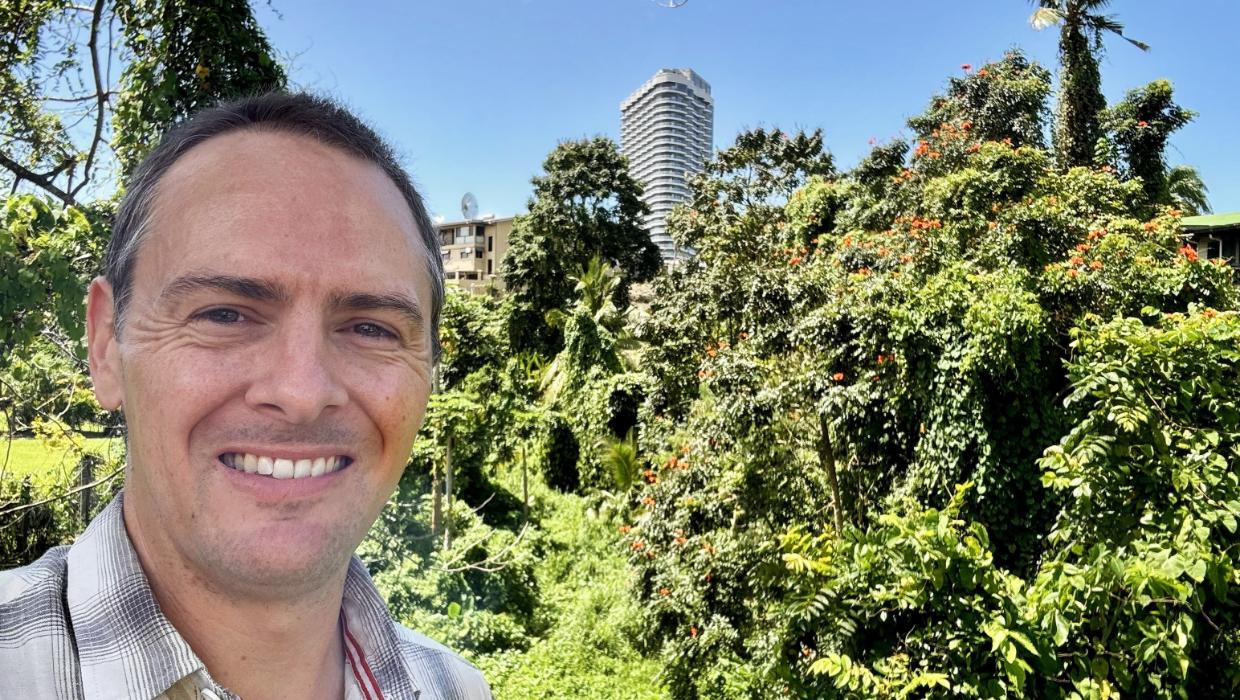
Jonty Crane and his wife have embarked on a new chapter in their lives as volunteers in Suva, Fiji, following a transformative year in Timor-Leste. Their decision to continue volunteering with Volunteer Service Abroad (VSA) stems from a deeply rewarding experience that left them eager to make a further impact abroad.
The couple originally hails from the UK and relocated to New Zealand in 2010. After becoming citizens in 2016, they spent a decade in Auckland before moving to Wellington. “After our time in Timor-Leste, it was difficult to readjust to normal life,” Crane explained. “We wanted to continue contributing, and VSA offered opportunities in Fiji.” They arrived in Suva in August 2024.
Life in Suva: A New Home
Crane and his wife live in a compact apartment complex near the Flagstaff shops, situated in the heart of the Suva peninsula. Their building serves as a hub for other VSA volunteers and houses the VSA Fiji office. “It’s a simple but very liveable apartment, compact, tidy, and with welcome air conditioning,” Crane noted.
Settling into Suva was relatively straightforward, thanks to VSA’s assistance with accommodation, travel logistics, visas, and language lessons. Crane shared that Suva is one of the most developed cities in the Pacific, offering a stark contrast to their experience in Timor-Leste, which is known as the poorest country in Southeast Asia.
In his role as a Donor and Partnerships Advisor at the Pacific Travel Organisation (SPTO), Crane focuses on supporting sustainable tourism development across 22 Pacific island nations. His wife serves as a Climate and Environment Law Adviser with Fiji’s Ministry of Climate Change and the Environment and recently supported the Fijian delegation at COP30 in Belém, Brazil.
Challenges and Rewards of Suva Living
Crane shares that living in Suva comes with several advantages. The city features reliable electricity, decent supermarkets, and a calm atmosphere, even among its population of street dogs. English is widely spoken, and internet connectivity is decent. “Compared with most Pacific cities, life in Suva is relatively straightforward,” he remarked.
Despite these benefits, Crane highlighted some drawbacks. Suva lacks the postcard-perfect beaches and lagoons that many associate with Fiji. Travel to these picturesque locations can be time-consuming and costly. Additionally, while Suva is charming, it does not offer a plethora of activities, and navigating from Auckland to Nadi is often quicker than the drive from Nadi to Suva.
In terms of living expenses, Crane noted that VSA covers their accommodation. Most daily costs are similar to those in New Zealand, with fresh produce being cheaper at local markets, while imported goods may cost around 25% more.
In his spare time, Crane enjoys walking around the city during the cooler parts of the day, often rewarded with stunning sunrises and sunsets. He also hosts interviews for his hiking podcast, The Tramping Life, which focuses on New Zealand’s hiking trails.
When it comes to local cuisine, Crane recommends trying kokoda, a dish made from raw fish cured in lime juice and mixed with coconut milk, onion, and chili. He also suggests lovo, a traditional underground cooking method that involves parcels of vegetables and meat. Visitors to local villages are often invited to share a cup of kava as part of a welcome ceremony.
Transportation in Suva is manageable, with most areas accessible by foot within thirty minutes. Taxis are affordable, averaging around FJ$5 (approximately NZ$4), while buses provide another option, albeit without an official route map.
Crane acknowledged that Suva has a reputation for being less safe after dark, which has led many expatriates to socialise at home or in hotel bars. The city hosts various film festivals throughout the year, offering cultural engagement.
The optimal time to visit Suva is during the dry season, which spans from May to October. Crane noted that despite Suva’s reputation for poor weather, the initial months of their stay were unusually dry and pleasant.
For those considering a visit, Crane recommends three must-see attractions: the waterfront footpath that stretches approximately 6 kilometers around the seawall, the vibrant Suva Municipal Market known for its local delicacies, and the lush trails and swimming holes of Colo-I-Suva Forest Park, located just north of the city.
Despite the fulfilling experiences abroad, Crane admits to missing the accessibility of non-concrete walking surfaces and the absence of heavy traffic. In Suva, while the pavements are clean and wide, the closest walking trails are a short drive away, a stark contrast to the easily accessible trails in Wellington.
As Crane and his wife continue their volunteer journey in Fiji, they remain committed to making a meaningful impact while embracing the challenges and joys of their new environment.








New $25 Million Funding Boosts Hospital Capacity Ahead of Winter

Discover Sleep Space’s Affordable Bach Bed Packages Today

Jury Dismissed in Sexual Assault Trial Over Misguided Questions

Wellington’s New Gallery Unveils Community-Driven Art Exhibition

All Whites Face Challenges as Injuries Strike Before World Cup

Heroic Bystander Rescues Swimmers from Dangerous Surf in Napier

Nina Oyama Returns to Crime Comedy in Deadloch Season 2

China Southern Airlines Offers Reliable Journey from Auckland to Vietnam

Nina Oyama Returns to Deadloch for Anticipated Season 2

Community Mourns Teens Lost in Mount Maunganui Landslide

Tributes Pour In for Lachlan Rofe, Reality Star, Dead at 47

Private Funeral Held for Dean Field and His Three Children

Funeral Planned for Field Siblings After Tragic House Fire

Netball New Zealand Stands Down Dame Noeline Taurua for Series

Al Waha Motors Opens Flagship Jetour Showroom in Al Khor

Julian Dennison Ties the Knot with Christian Baledrokadroka in New Zealand

Auckland’s Average Rent Surpasses $700 for Three-Bedroom Homes

New Research Reveals Simple Path to Enhanced Happiness
-
 Top Stories7 months ago
Community Mourns Teens Lost in Mount Maunganui Landslide
-
 Entertainment11 months ago
Tributes Pour In for Lachlan Rofe, Reality Star, Dead at 47
-
 World9 months ago
Private Funeral Held for Dean Field and His Three Children
-
 Top Stories9 months ago
Funeral Planned for Field Siblings After Tragic House Fire
-
 Sports11 months ago
Netball New Zealand Stands Down Dame Noeline Taurua for Series
-
 Health7 months ago
Al Waha Motors Opens Flagship Jetour Showroom in Al Khor
-
 Entertainment7 months ago
Julian Dennison Ties the Knot with Christian Baledrokadroka in New Zealand
-
 Business7 months ago
Auckland’s Average Rent Surpasses $700 for Three-Bedroom Homes
-
 Science10 months ago
New Research Reveals Simple Path to Enhanced Happiness
-

 Entertainment10 months ago
New ‘Maverick’ Chaser Joins Beat the Chasers Season Finale
-

 Lifestyle11 months ago
Maia Wilson Faces Backlash Following Taurua’s Suspension
-

 Sports10 months ago
All Blacks Star Damian McKenzie and Partner Announce Baby News