
Politics
Craig Renney Emerges as Key Labour Candidate Targeting Parliament

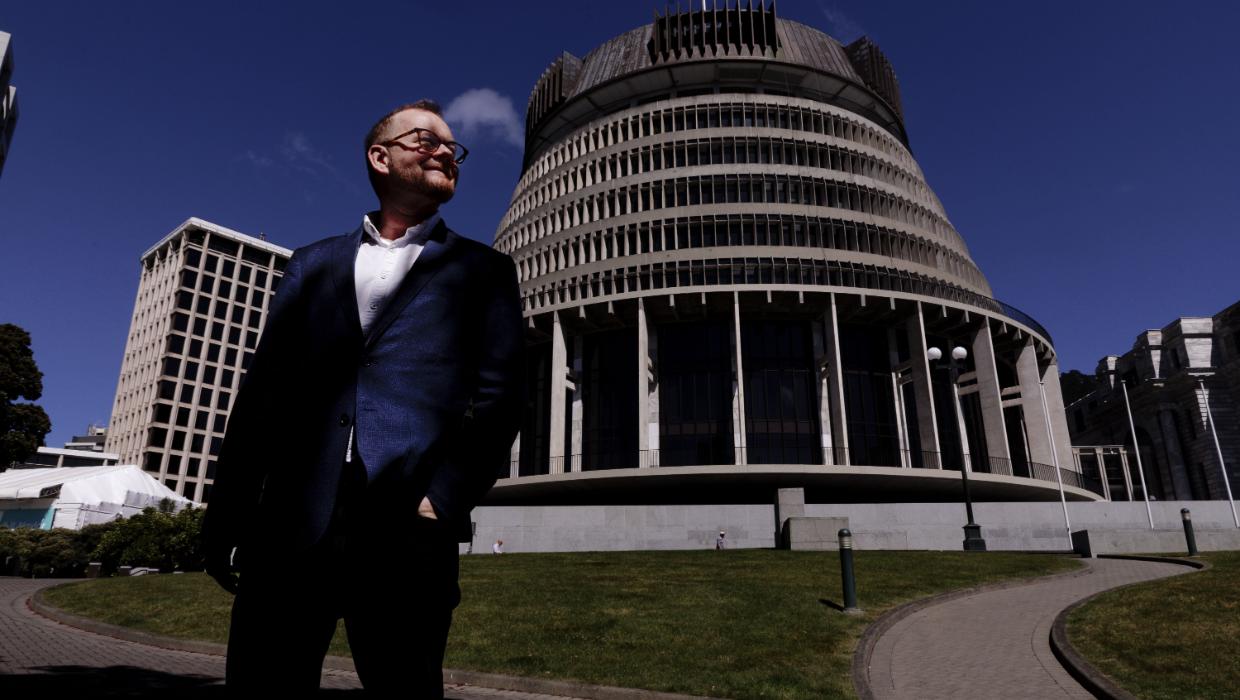
The Labour Party is poised for a potential boost in Parliament with the candidacy of economist and policy director Craig Renney, who is set to contest the Wellington Bays seat in the upcoming election. Renney, a prominent figure within the Council of Trade Unions, has gained attention for his vocal critiques of Finance Minister Nicola Willis, suggesting a dynamic clash of ideologies in the near future.
Originally from England, Renney relocated to New Zealand 14 years ago and has since emerged as a significant player in the political landscape. He serves as the vice chairperson of the Labour Party’s policy council and has frequently voiced his opinions on fiscal matters, particularly in his recently published book, The Good Economy. In this work, he advocates for a series of progressive policies, including a windfall tax on electricity generators, a levy on large banks, and a revival of the National Income Insurance Scheme, previously proposed by former Finance Minister Grant Robertson.
Renney’s candidacy is particularly noteworthy as he aims to represent a constituency formerly known as Rongotai, which is currently held by Green MP Julie Anne Genter. His economic perspectives, which lean towards a more interventionist state role, stand in stark contrast to Willis’s fiscal conservatism. Renney argues that the government has long neglected necessary investments in infrastructure and social programs, leading to a stagnating economy characterized by low growth and low wages.
In his book, he emphasizes the need for an Inflation and Incomes Act to address rising inflation and proposes that median rents should not exceed 30% of median household income. Renney’s commitment to increased government expenditure contrasts sharply with Willis’s goal of reducing core Crown public expenditure from 32.5% to 30% of GDP. He asserts that without significant investment in critical sectors, New Zealand risks further economic decline.
The personal dynamics between Renney and Willis have also attracted attention. In 2024, Willis’s press secretary sought to exclude Renney from a Treasury lock-up, alleging he misrepresented a quote from her. Their ideological rift was highlighted during parliamentary sessions, where Willis criticized Renney’s fiscal views, claiming he does not recognize the importance of savings and fiscal constraints.
Renney’s formative years in Cramlington, near Newcastle, have shaped his economic philosophy. Growing up in a community impacted by the closure of coal mines, he witnessed firsthand the consequences of economic decline. These experiences fuel his belief that government intervention is crucial for community revitalization. He recalls his childhood memories of economic hardship and community resilience, emphasizing the need for effective planning and investment to avoid repeating past mistakes.
His academic background in politics and economics, with degrees from Stirling University and Northumbria University, coupled with professional experiences at the New Zealand Treasury and the Reserve Bank, have prepared him for a potential role in Parliament. He aims to bring his insights to address pressing issues such as child poverty, housing shortages, and industrial relations.
As Renney campaigns for the Wellington Bays seat, speculation grows about how he would fit into Labour’s caucus alongside figures like former minister Michael Wood, who also has strong union support. While some suggest he could be a contender for the finance portfolio, Renney has publicly supported the current finance spokesperson, Barbara Edmonds, highlighting his commitment to party unity.
Renney recognizes the challenges ahead and remains focused on his goal of becoming the MP for Wellington Bays. He believes the area has the potential to be one of the best places in New Zealand, with its proximity to the sea and vibrant communities. Yet, he notes that young people are leaving due to inadequate public infrastructure and outdated facilities.
In his view, the upcoming election presents an opportunity for Labour to redefine its policy direction and address the pressing economic challenges facing New Zealand. While he acknowledges the complexities of implementing his proposals, Renney is determined to advocate for a vision that prioritizes sustainable growth and community well-being. As he embarks on this campaign, all eyes will be on how his candidacy could shape the future of Labour and the broader political landscape in New Zealand.







New $25 Million Funding Boosts Hospital Capacity Ahead of Winter

Discover Sleep Space’s Affordable Bach Bed Packages Today

Jury Dismissed in Sexual Assault Trial Over Misguided Questions

Wellington’s New Gallery Unveils Community-Driven Art Exhibition

All Whites Face Challenges as Injuries Strike Before World Cup

Heroic Bystander Rescues Swimmers from Dangerous Surf in Napier

Nina Oyama Returns to Crime Comedy in Deadloch Season 2

China Southern Airlines Offers Reliable Journey from Auckland to Vietnam

Nina Oyama Returns to Deadloch for Anticipated Season 2

Community Mourns Teens Lost in Mount Maunganui Landslide

Tributes Pour In for Lachlan Rofe, Reality Star, Dead at 47

Private Funeral Held for Dean Field and His Three Children

Funeral Planned for Field Siblings After Tragic House Fire

Netball New Zealand Stands Down Dame Noeline Taurua for Series

Al Waha Motors Opens Flagship Jetour Showroom in Al Khor

Julian Dennison Ties the Knot with Christian Baledrokadroka in New Zealand

Auckland’s Average Rent Surpasses $700 for Three-Bedroom Homes

New Research Reveals Simple Path to Enhanced Happiness
-
 Top Stories7 months ago
Community Mourns Teens Lost in Mount Maunganui Landslide
-
 Entertainment11 months ago
Tributes Pour In for Lachlan Rofe, Reality Star, Dead at 47
-
 World9 months ago
Private Funeral Held for Dean Field and His Three Children
-
 Top Stories9 months ago
Funeral Planned for Field Siblings After Tragic House Fire
-
 Sports11 months ago
Netball New Zealand Stands Down Dame Noeline Taurua for Series
-
 Health7 months ago
Al Waha Motors Opens Flagship Jetour Showroom in Al Khor
-
 Entertainment7 months ago
Julian Dennison Ties the Knot with Christian Baledrokadroka in New Zealand
-
 Business7 months ago
Auckland’s Average Rent Surpasses $700 for Three-Bedroom Homes
-
 Science10 months ago
New Research Reveals Simple Path to Enhanced Happiness
-

 Entertainment10 months ago
New ‘Maverick’ Chaser Joins Beat the Chasers Season Finale
-

 Lifestyle11 months ago
Maia Wilson Faces Backlash Following Taurua’s Suspension
-

 Sports10 months ago
All Blacks Star Damian McKenzie and Partner Announce Baby News