
Politics
Inside the Unique Role of Librarians at New Zealand’s Prisons

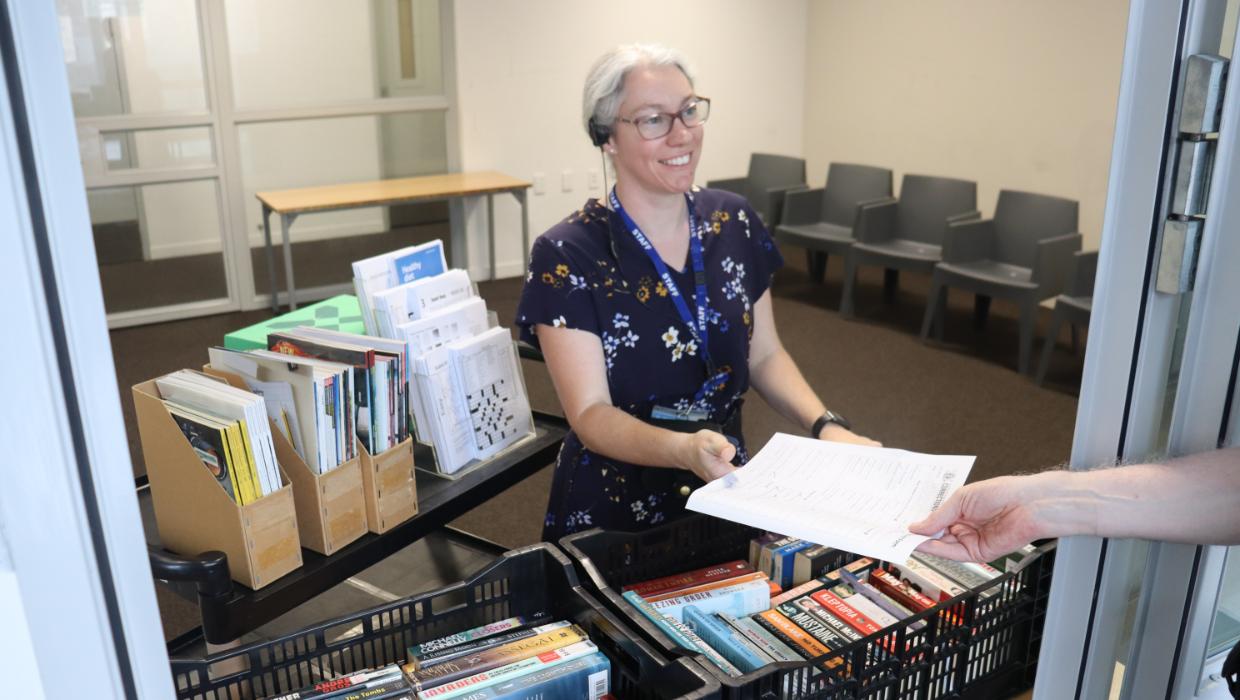
At the Mount Eden Corrections Facility in Auckland, librarians Zoe Cornelius and Ariana Blowers navigate a daily routine that few outside the prison system can imagine. Their workday begins with stringent security checks, which include metal detectors, X-ray machines, and multiple identity verifications. This is a typical morning for the duo, who manage a vital library service within one of New Zealand’s most secure environments.
Mount Eden stands out as one of only two prisons in New Zealand with multiple librarians. The other facility, Auckland Prison, also employs more than one library staff member, while the remaining 16 prisons in the country typically have either part-time or solo librarians. Cornelius and Blowers feel fortunate to support each other in a role that varies significantly across locations.
As they prepare for the day, the librarians remain alert to the possibility of emergencies. They wear radio earpieces that keep them informed about everything from prisoners’ movements to library requests. “We just have to keep a tab on what’s happening,” Cornelius, who has served at Mount Eden for almost nine years, explains.
Life Behind Bars: The Role of a Prison Librarian
At Mount Eden, which primarily houses remand prisoners awaiting trial, the library does not operate with open access as seen in some other facilities. Instead, Cornelius and Blowers offer a curated library service. They select and retrieve books from a secure, windowless room based on requests submitted by inmates. These requests can range from specific authors to genres like fiction or history.
The librarians begin their day by processing prisoners’ requests, which are documented on basic forms and tracked in a spreadsheet. After addressing these needs, they check for book donations that must be vetted before inclusion in the library. Returned books also require careful logging back into the system.
One of the most engaging parts of their job involves preparing a trolley filled with requested titles for distribution. Instead of moving through cells, the librarians conduct their service from a designated doorway, where prisoners approach a table to collect or return books, always accompanied by security staff.
Despite the challenges of their environment, the librarians find that many of the titles popular among inmates mirror those enjoyed by the wider community. Cornelius notes that prisoners often gravitate toward fiction, history, biographies, and self-help literature. “We have everything,” Blowers adds, highlighting the broad spectrum of reading interests they encounter.
Building Connections Through Literature
For some prisoners, recalling their favorite authors can be difficult, making their requests a process of exploration. It may take several visits to determine their specific interests, but the librarians find great satisfaction in hearing back from inmates about books they enjoyed. “That’s my favourite part of my job,” Blowers shares, recalling moments when prisoners express excitement over unexpected finds.
Cornelius emphasizes that her interactions with prisoners have always been positive. The library operates on an opt-in basis, meaning inmates voluntarily participate. “They’ll comment that they missed us if we’ve skipped a week,” she says, indicating a strong rapport between the librarians and the prisoner population.
When the pair encounters inmates struggling with literacy, they can refer them to educational tutors, fostering a supportive learning environment. They stock materials suitable for a wide range of reading abilities and offer additional resources, including puzzles and information on health and wellness.
While navigating the complexities of prison life, Cornelius and Blowers maintain situational awareness to ensure their safety. They are trained in emergency protocols and carry alarms to alert security if needed. Nevertheless, both librarians report that many prisoners are friendly and approachable, often engaging in light-hearted conversations.
“It would be naive to say that it’s a safe environment,” Blowers remarks, acknowledging the reality of their workplace. Yet, she and Cornelius strive to build a comfortable atmosphere where prisoners feel at ease. Their choice to wear everyday clothing instead of uniforms helps break down barriers, allowing for more genuine interactions.
The structure of prison life presents unique challenges, including strict schedules for meals and movements. However, the rewards of their work—such as meaningful conversations about literature and witnessing inmates develop an interest in reading—make the effort worthwhile.
As Cornelius articulates, reading fosters empathy and understanding, connecting inmates to the broader world outside prison walls. “You understand other people’s experiences a lot better,” she explains. The library serves as a bridge to public resources, encouraging inmates to engage with their communities upon release.
Despite relying on donations to stock their library, both librarians express hope for future funding that would allow them to offer a wider selection of books tailored to inmates’ preferences. “We’re giving them escapism, a chance to get out of whatever’s going on in their head,” Cornelius states, recognizing the library’s role in promoting mental well-being.
Blowers adds that connecting inmates with their cultural heritage, such as Māori and Pacific histories, can significantly contribute to their rehabilitation. “It’s been really powerful and really cool for the guys to be like, ‘I didn’t know this about my own history’,” she reflects.
As part of a network of librarians employed by the Department of Corrections, Cornelius and Blowers hope for a more standardized approach across New Zealand’s prisons. This change could facilitate greater collaboration among isolated library staff, enhancing the support available to both prisoners and librarians alike.
In an environment often characterized by isolation, the work of these dedicated librarians fosters connection, learning, and personal growth, demonstrating the profound impact literature can have, even behind bars.








New $25 Million Funding Boosts Hospital Capacity Ahead of Winter

Discover Sleep Space’s Affordable Bach Bed Packages Today

Jury Dismissed in Sexual Assault Trial Over Misguided Questions

Wellington’s New Gallery Unveils Community-Driven Art Exhibition

All Whites Face Challenges as Injuries Strike Before World Cup

Heroic Bystander Rescues Swimmers from Dangerous Surf in Napier

Nina Oyama Returns to Crime Comedy in Deadloch Season 2

China Southern Airlines Offers Reliable Journey from Auckland to Vietnam

Nina Oyama Returns to Deadloch for Anticipated Season 2

Community Mourns Teens Lost in Mount Maunganui Landslide

Tributes Pour In for Lachlan Rofe, Reality Star, Dead at 47

Private Funeral Held for Dean Field and His Three Children

Funeral Planned for Field Siblings After Tragic House Fire

Netball New Zealand Stands Down Dame Noeline Taurua for Series

Al Waha Motors Opens Flagship Jetour Showroom in Al Khor

Julian Dennison Ties the Knot with Christian Baledrokadroka in New Zealand

Auckland’s Average Rent Surpasses $700 for Three-Bedroom Homes

New Research Reveals Simple Path to Enhanced Happiness
-
 Top Stories7 months ago
Community Mourns Teens Lost in Mount Maunganui Landslide
-
 Entertainment11 months ago
Tributes Pour In for Lachlan Rofe, Reality Star, Dead at 47
-
 World9 months ago
Private Funeral Held for Dean Field and His Three Children
-
 Top Stories9 months ago
Funeral Planned for Field Siblings After Tragic House Fire
-
 Sports11 months ago
Netball New Zealand Stands Down Dame Noeline Taurua for Series
-
 Health7 months ago
Al Waha Motors Opens Flagship Jetour Showroom in Al Khor
-
 Entertainment7 months ago
Julian Dennison Ties the Knot with Christian Baledrokadroka in New Zealand
-
 Business7 months ago
Auckland’s Average Rent Surpasses $700 for Three-Bedroom Homes
-
 Science10 months ago
New Research Reveals Simple Path to Enhanced Happiness
-

 Entertainment10 months ago
New ‘Maverick’ Chaser Joins Beat the Chasers Season Finale
-

 Lifestyle11 months ago
Maia Wilson Faces Backlash Following Taurua’s Suspension
-

 Sports10 months ago
All Blacks Star Damian McKenzie and Partner Announce Baby News