
Politics
Teachers Strike for Unity and Fair Conditions Across New Zealand

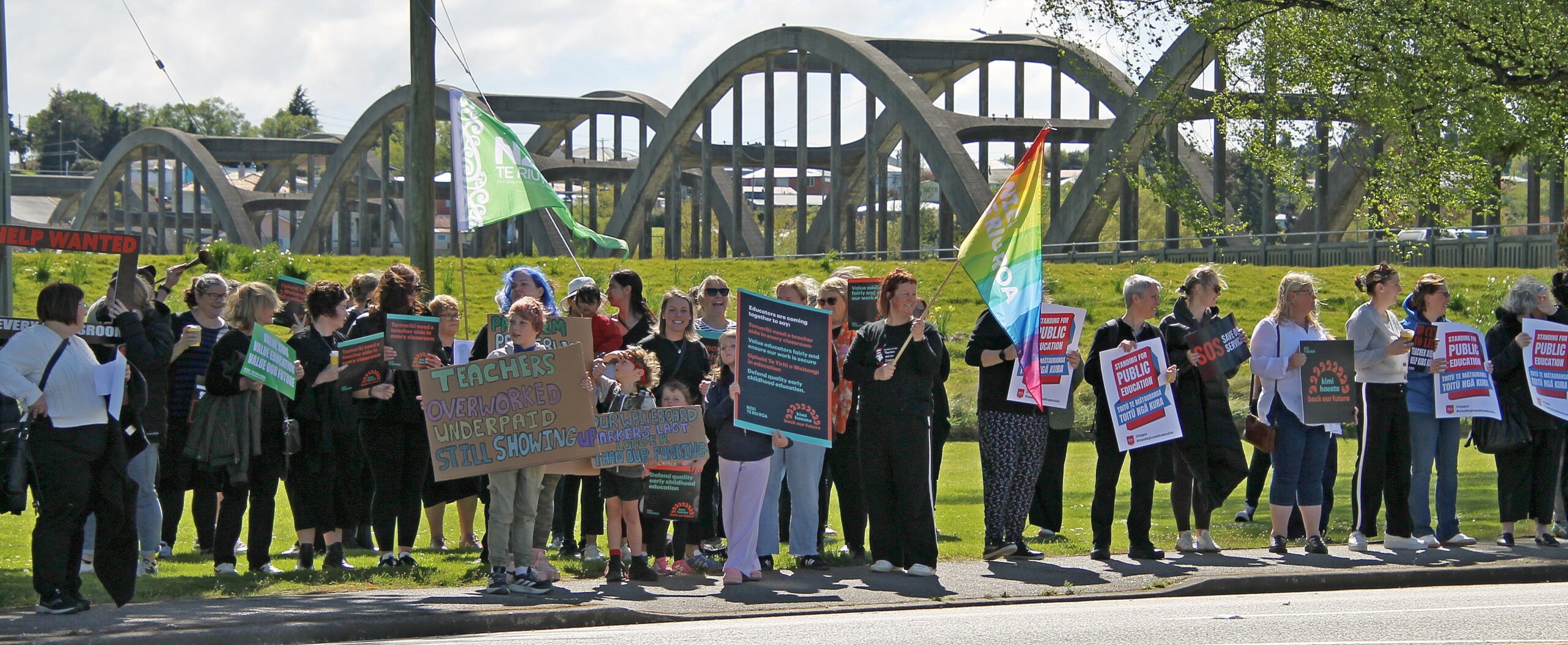
Teachers across New Zealand took part in a nationwide strike to advocate for improved working conditions, fair pay, and quality education for students. The action, organized by the NZEI Te Riu Roa teacher’s union, saw significant turnout in Balclutha, where union representatives emphasized the importance of unity among various labor groups.
Jen Jeffery, a representative from NZEI Te Riu Roa, brought protest materials, including a rainbow-striped flag, from Dunedin to show solidarity. She noted the diverse support at the Balclutha demonstration, stating, “We’ve got Etu union members supporting us and NZNO, ASMS and PSA and some firefighters joining us as well.” The central theme of the strike was kotahitanga, or unity, as participants urged the government to address their demands.
Jeffery pointed out the need for essential resources in classrooms, highlighting the importance of having teacher aides in every classroom and ensuring that the Treaty of Waitangi is honored. While she refrained from discussing the practical implications of this treaty in education, her sentiments resonated with many in attendance.
Toby Swallow, a teacher at South Otago High School and chairman of the Parent-Teacher Association, addressed the crowd, reflecting the frustrations felt by educators. He stated, “Teachers want the best for students but can no longer tolerate growing workloads and resource shortages.” Swallow expressed that while teachers would prefer to be in their classrooms, they could not allow the education system to remain under-resourced.
The strike aimed to highlight that the current collective agreement proposals for secondary teachers would not resolve the ongoing teacher supply crisis. “In fact, the last offer sought to increase teacher workloads at a time when teachers are already leaving the profession,” he noted.
Both Swallow and Jeffery acknowledged that public sector salaries are funded by taxpayers. However, they declined to speculate on how their demands might impact taxation or other public funding areas. Swallow emphasized the importance of pastoral care, stating, “It’s hard to teach children who aren’t attending, haven’t eaten properly or have specialized mental health needs.”
A spokeswoman for the Public Service Association estimated that over 18,000 members and supporters participated in the nationwide demonstration. She claimed that government priorities have resulted in pay offers that fail to address the current cost of living crisis, while “landlords and tobacco companies get big tax breaks.”
The strike reflects growing discontent among educators in New Zealand, as they seek to draw attention to the challenges within the education system and advocate for the necessary resources to support both teachers and students effectively. As the demonstrations continue, the impact of these collective actions remains to be seen in future negotiations with the government.












New $25 Million Funding Boosts Hospital Capacity Ahead of Winter

Discover Sleep Space’s Affordable Bach Bed Packages Today

Jury Dismissed in Sexual Assault Trial Over Misguided Questions

Wellington’s New Gallery Unveils Community-Driven Art Exhibition

All Whites Face Challenges as Injuries Strike Before World Cup

Heroic Bystander Rescues Swimmers from Dangerous Surf in Napier

Nina Oyama Returns to Crime Comedy in Deadloch Season 2

China Southern Airlines Offers Reliable Journey from Auckland to Vietnam

Nina Oyama Returns to Deadloch for Anticipated Season 2

Community Mourns Teens Lost in Mount Maunganui Landslide

Tributes Pour In for Lachlan Rofe, Reality Star, Dead at 47

Private Funeral Held for Dean Field and His Three Children

Funeral Planned for Field Siblings After Tragic House Fire

Netball New Zealand Stands Down Dame Noeline Taurua for Series

Al Waha Motors Opens Flagship Jetour Showroom in Al Khor

Julian Dennison Ties the Knot with Christian Baledrokadroka in New Zealand

Auckland’s Average Rent Surpasses $700 for Three-Bedroom Homes

New Research Reveals Simple Path to Enhanced Happiness
-
 Top Stories6 months ago
Community Mourns Teens Lost in Mount Maunganui Landslide
-
 Entertainment11 months ago
Tributes Pour In for Lachlan Rofe, Reality Star, Dead at 47
-
 World8 months ago
Private Funeral Held for Dean Field and His Three Children
-
 Top Stories9 months ago
Funeral Planned for Field Siblings After Tragic House Fire
-
 Sports11 months ago
Netball New Zealand Stands Down Dame Noeline Taurua for Series
-
 Health6 months ago
Al Waha Motors Opens Flagship Jetour Showroom in Al Khor
-
 Entertainment7 months ago
Julian Dennison Ties the Knot with Christian Baledrokadroka in New Zealand
-
 Business7 months ago
Auckland’s Average Rent Surpasses $700 for Three-Bedroom Homes
-
 Science9 months ago
New Research Reveals Simple Path to Enhanced Happiness
-

 Entertainment10 months ago
New ‘Maverick’ Chaser Joins Beat the Chasers Season Finale
-

 Lifestyle10 months ago
Maia Wilson Faces Backlash Following Taurua’s Suspension
-

 Sports10 months ago
All Blacks Star Damian McKenzie and Partner Announce Baby News