
Politics
Tensions Rise Over Greenland as Denmark Prepares for Conflict

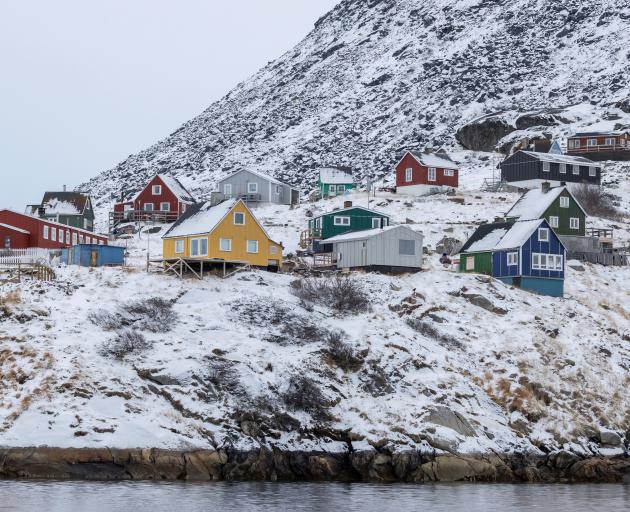
Tensions regarding Greenland’s sovereignty have intensified as Denmark prepares for potential conflict with the United States. Major-General Soren Andersen, commanding the 160 Danish soldiers recently deployed to Greenland, faces a complex situation. His objective is clear: to invoke NATO’s Article 5, which obligates member nations to protect one another in the event of an attack.
Article 5, known for its principle of “one for all and all for one,” has only been invoked once, following the September 11 attacks in 2001. In that instance, NATO allies rallied to assist the United States, resulting in significant military engagement in Afghanistan. Now, as Denmark contemplates how to respond to a hypothetical American invasion of Greenland, the stakes are high. Andersen’s strategy hinges on provoking a response that would justify a full military alliance response.
The rationale behind this approach is steeped in historical precedent. According to reports, during World War I, French General Ferdinand Foch suggested to British Prime Minister David Lloyd George that even a single British soldier’s death would galvanize the British Empire to enter the war. Similarly, Andersen’s unwritten instructions may aim to ensure that at least one Danish soldier is killed, thus compelling NATO allies to respond.
Denmark’s preparations come in the wake of comments made by Donald Trump at the recent Davos meeting, where he stated he would not use force to acquire Greenland. Nevertheless, Trump’s unpredictable nature raises concerns. His past declarations suggest a potential for aggressive maneuvers, particularly given the historical context of his administration’s foreign policy initiatives.
In the event of an American invasion, the implications for both Greenland and Denmark could be significant. Andersen’s forces are not expected to repel a full-scale invasion alone. Instead, the aim would be to galvanize international support, reinforcing the notion that an attack on Denmark is an attack on all NATO members. While the prospect of a violent confrontation looms, Denmark’s government is weighing the consequences of its actions, particularly regarding public opinion and international relations.
The potential for American military action raises broader questions about the future of Greenland and its relationship with the United States. Reports indicate that a substantial majority of Greenlanders oppose becoming part of the United States, which complicates any potential military engagement. A violent takeover may not yield the obedience desired by American authorities, as local sentiment is firmly against such an annexation.
Despite the gravity of the situation, the Danish government is contemplating whether a joint response from European nations could help strengthen solidarity within the European Union. As Denmark prepares to invoke NATO’s Article 5, there is a growing recognition that unity among EU member states could serve as a counterbalance to American pressure.
The crisis surrounding Greenland presents an opportunity for the EU to develop a more cohesive identity in response to external threats. As the political landscape evolves, the situation remains fluid. The prospect of invoking Article 5, alongside the potential for a peaceful resolution, could pave the way for a new chapter in transatlantic relations, particularly as the leadership in the United States continues to change.
In light of these developments, the international community watches closely. The stakes are high, and the outcome could reshape not only Denmark’s future but also the dynamics of NATO and the European Union in the face of American assertiveness. The situation is not inevitable, and the resilience of Danish forces, along with the support of NATO allies, may ultimately determine the course of events.













New $25 Million Funding Boosts Hospital Capacity Ahead of Winter

Discover Sleep Space’s Affordable Bach Bed Packages Today

Jury Dismissed in Sexual Assault Trial Over Misguided Questions

Wellington’s New Gallery Unveils Community-Driven Art Exhibition

All Whites Face Challenges as Injuries Strike Before World Cup

Heroic Bystander Rescues Swimmers from Dangerous Surf in Napier

Nina Oyama Returns to Crime Comedy in Deadloch Season 2

China Southern Airlines Offers Reliable Journey from Auckland to Vietnam

Nina Oyama Returns to Deadloch for Anticipated Season 2

Community Mourns Teens Lost in Mount Maunganui Landslide

Tributes Pour In for Lachlan Rofe, Reality Star, Dead at 47

Private Funeral Held for Dean Field and His Three Children

Funeral Planned for Field Siblings After Tragic House Fire

Netball New Zealand Stands Down Dame Noeline Taurua for Series

Julian Dennison Ties the Knot with Christian Baledrokadroka in New Zealand

New Research Reveals Simple Path to Enhanced Happiness

New ‘Maverick’ Chaser Joins Beat the Chasers Season Finale

Silver Ferns Legend Laura Langman Criticizes Team’s Attitude
-
 Top Stories3 months ago
Community Mourns Teens Lost in Mount Maunganui Landslide
-
 Entertainment8 months ago
Tributes Pour In for Lachlan Rofe, Reality Star, Dead at 47
-
 World5 months ago
Private Funeral Held for Dean Field and His Three Children
-
 Top Stories6 months ago
Funeral Planned for Field Siblings After Tragic House Fire
-
 Sports8 months ago
Netball New Zealand Stands Down Dame Noeline Taurua for Series
-
 Entertainment4 months ago
Julian Dennison Ties the Knot with Christian Baledrokadroka in New Zealand
-
 Science6 months ago
New Research Reveals Simple Path to Enhanced Happiness
-
 Entertainment7 months ago
New ‘Maverick’ Chaser Joins Beat the Chasers Season Finale
-
 Sports8 months ago
Silver Ferns Legend Laura Langman Criticizes Team’s Attitude
-

 Sports7 months ago
All Blacks Star Damian McKenzie and Partner Announce Baby News
-

 Sports6 months ago
Eli Katoa Rushed to Hospital After Sideline Incident During Match
-

 Politics7 months ago
Netball NZ Calls for Respect Amid Dame Taurua’s Standoff