
Science
AI Technology Enhances Rescue Efforts for Stranded Whales in Golden Bay

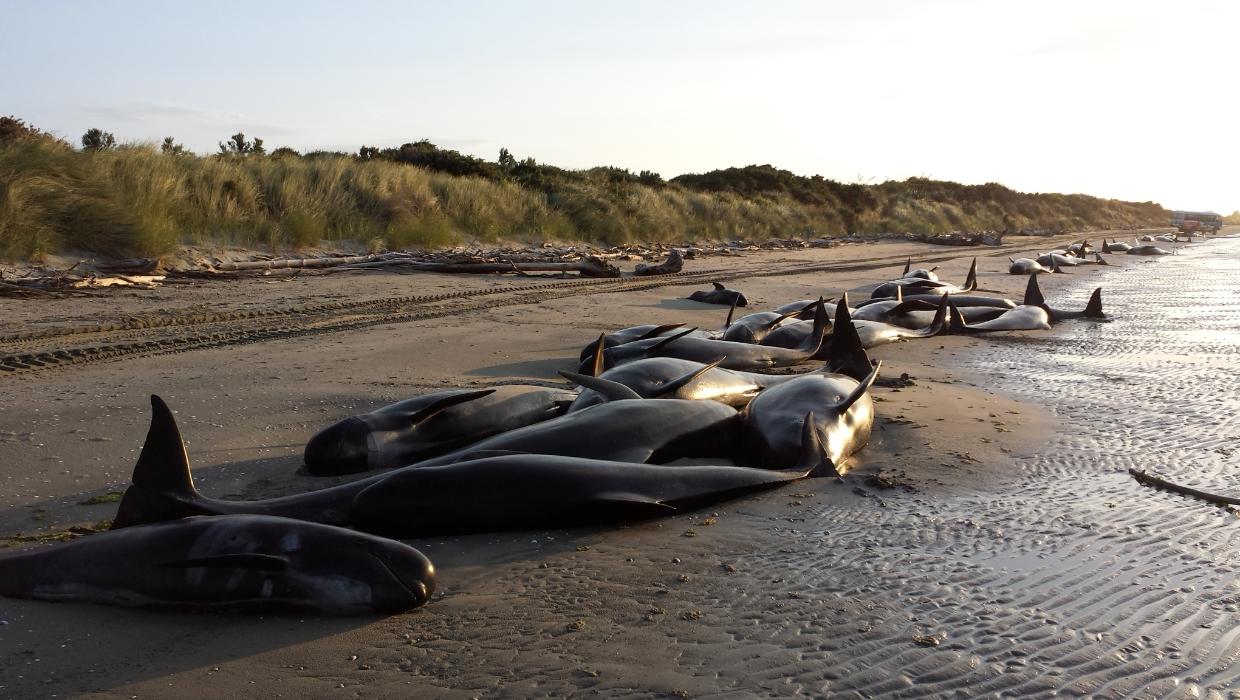
In a significant advancement for marine conservation, the introduction of AI technology is aiding rescuers in detecting distressed dolphins before they strand themselves in Golden Bay, New Zealand. This innovative approach aims to mitigate the alarming trend of pilot whale strandings that have historically impacted the region.
The Department of Conservation (DOC) has collaborated with researchers to deploy AI-powered buoys equipped with sophisticated sensors. These buoys are designed to monitor and analyze dolphin behavior, providing crucial data that can alert rescue teams to potential strandings. By identifying signs of distress, the technology offers rescuers a vital head start in their efforts to save stranded marine life.
Technological Breakthrough in Marine Rescue
This initiative comes in response to a notable increase in pilot whale strandings in New Zealand, particularly in Golden Bay, which has seen several high-profile incidents in recent years. According to DOC, the use of AI technology enhances traditional monitoring methods, allowing for quicker responses to emergencies.
In 2023 alone, more than 200 pilot whales stranded along New Zealand’s coastline, with Golden Bay being a frequent site of these events. The AI buoys, deployed at strategic locations, utilize machine learning algorithms to differentiate between normal dolphin activities and signs of distress. The immediate benefit of this technology is the potential to reduce the number of strandings and improve the overall survival rate of these marine mammals.
The buoys collect data on factors such as water temperature, currents, and dolphin movements, transmitting this information to rescue teams in real time. This proactive approach not only enhances the chances of successful rescues but also contributes to ongoing research efforts aimed at understanding the causes behind such strandings.
Collaborative Efforts in Conservation
The integration of AI technology in marine rescue operations is a collaborative effort involving various stakeholders, including local conservation groups and scientific organizations. Experts emphasize the importance of combining technological advancements with traditional rescue techniques to maximize effectiveness.
According to Dr. Sarah Thompson, a marine biologist involved in the project, “This technology allows us to be more proactive rather than reactive. It gives us a better chance to intervene before a stranding occurs.” Such insights underline the critical role that innovation plays in wildlife conservation efforts.
As the deployment of AI technology continues to evolve, it holds promise not only for the dolphins of Golden Bay but also for other marine species facing similar threats. The ongoing assessment of this initiative could pave the way for broader applications of AI in marine conservation globally.
In conclusion, the introduction of AI-powered buoys marks a pivotal moment in the efforts to protect marine life in New Zealand. By harnessing technology to detect distressed dolphins before they strand, rescue teams are better equipped to respond swiftly and effectively, ensuring a brighter future for pilot whales and other vulnerable species in the region.








New $25 Million Funding Boosts Hospital Capacity Ahead of Winter

Discover Sleep Space’s Affordable Bach Bed Packages Today

Jury Dismissed in Sexual Assault Trial Over Misguided Questions

Wellington’s New Gallery Unveils Community-Driven Art Exhibition

All Whites Face Challenges as Injuries Strike Before World Cup

Heroic Bystander Rescues Swimmers from Dangerous Surf in Napier

Nina Oyama Returns to Crime Comedy in Deadloch Season 2

China Southern Airlines Offers Reliable Journey from Auckland to Vietnam

Nina Oyama Returns to Deadloch for Anticipated Season 2

Community Mourns Teens Lost in Mount Maunganui Landslide

Tributes Pour In for Lachlan Rofe, Reality Star, Dead at 47

Private Funeral Held for Dean Field and His Three Children

Funeral Planned for Field Siblings After Tragic House Fire

Netball New Zealand Stands Down Dame Noeline Taurua for Series

Julian Dennison Ties the Knot with Christian Baledrokadroka in New Zealand

Al Waha Motors Opens Flagship Jetour Showroom in Al Khor

Auckland’s Average Rent Surpasses $700 for Three-Bedroom Homes

New Research Reveals Simple Path to Enhanced Happiness
-
 Top Stories6 months ago
Community Mourns Teens Lost in Mount Maunganui Landslide
-
 Entertainment11 months ago
Tributes Pour In for Lachlan Rofe, Reality Star, Dead at 47
-
 World8 months ago
Private Funeral Held for Dean Field and His Three Children
-
 Top Stories8 months ago
Funeral Planned for Field Siblings After Tragic House Fire
-
 Sports11 months ago
Netball New Zealand Stands Down Dame Noeline Taurua for Series
-
 Entertainment6 months ago
Julian Dennison Ties the Knot with Christian Baledrokadroka in New Zealand
-
 Health6 months ago
Al Waha Motors Opens Flagship Jetour Showroom in Al Khor
-
 Business7 months ago
Auckland’s Average Rent Surpasses $700 for Three-Bedroom Homes
-
 Science9 months ago
New Research Reveals Simple Path to Enhanced Happiness
-

 Entertainment10 months ago
New ‘Maverick’ Chaser Joins Beat the Chasers Season Finale
-

 Lifestyle10 months ago
Maia Wilson Faces Backlash Following Taurua’s Suspension
-

 Sports9 months ago
All Blacks Star Damian McKenzie and Partner Announce Baby News