
Science
New Techniques Reveal Ancient Secrets of Verulamium

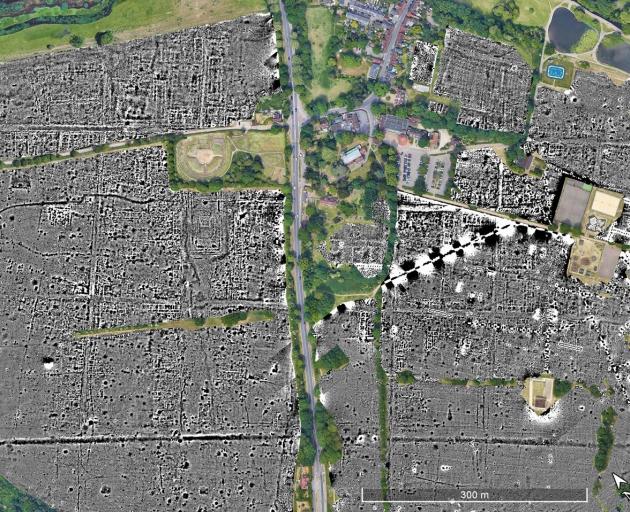
A recent geophysical survey at Verulamium is uncovering remarkable details about the ancient Roman city. The survey employs advanced technology to map the city’s layout, revealing streets, houses, kilns, and walls that have remained hidden for centuries. This initiative is part of ongoing archaeological efforts to understand the city that once thrived behind a circuit of stone walls.
In a surprising twist, the survey has also confirmed the existence of an early Roman defensive ditch, initially mapped in a previous project involving the use of a proton magnetometer. This device, considered groundbreaking at the time, helped identify disturbances in the ground, leading to the discovery of the ditch, which was likely constructed hastily in anticipation of an attack by the forces of Queen Boudicca.
Advancements in Archaeological Techniques
The new geophysical survey employs techniques that significantly extend the reach of previous methods. As researchers delve into the city’s interior, they are able to visualize the intricate grid pattern of streets that divided the city into distinct sections. Each section showcases a range of residential structures, complete with hypocausts, bath complexes, and exquisite mosaic floors.
Among the most notable features identified is the forum, which served as a central hub of activity, flanked by a theatre and a large temple. The survey’s results provide a clearer understanding of the urban design and organization of Verulamium. One particularly striking element is the early enclosure ditch, now visible as a dark straight line on the survey map, turning at a right angle on its western edge.
Interestingly, the research team chose not to conduct readings beneath the St Alban’s first XI cricket pitch, mindful of potential disruption to the sporting venue. This decision reflects the balance between preserving contemporary uses of the land and uncovering its ancient past.
Unearthing Hidden Treasures
The research has also identified a sinuous dark line that represents an aqueduct leading to the theatre, which once brought water to the heart of the city. During previous excavations, a stunning mosaic floor featuring a lion was uncovered, hinting at the artistic and cultural richness that may still be buried beneath the surface.
As technology continues to advance, the potential for further discoveries at Verulamium grows. The current survey not only provides insights into the city’s infrastructure but also opens the door to uncovering more hidden treasures that lie deep underground. Each finding adds to the complex narrative of Verulamium, revealing a city that once played a significant role in Roman Britain.
As researchers explore these ancient remnants, they continue to piece together the vibrant history of Verulamium, ensuring that its secrets are not lost to time but instead celebrated and understood by future generations.












New $25 Million Funding Boosts Hospital Capacity Ahead of Winter

Discover Sleep Space’s Affordable Bach Bed Packages Today

Jury Dismissed in Sexual Assault Trial Over Misguided Questions

Wellington’s New Gallery Unveils Community-Driven Art Exhibition

All Whites Face Challenges as Injuries Strike Before World Cup

Heroic Bystander Rescues Swimmers from Dangerous Surf in Napier

Nina Oyama Returns to Crime Comedy in Deadloch Season 2

China Southern Airlines Offers Reliable Journey from Auckland to Vietnam

Nina Oyama Returns to Deadloch for Anticipated Season 2

Community Mourns Teens Lost in Mount Maunganui Landslide

Tributes Pour In for Lachlan Rofe, Reality Star, Dead at 47

Private Funeral Held for Dean Field and His Three Children

Funeral Planned for Field Siblings After Tragic House Fire

Netball New Zealand Stands Down Dame Noeline Taurua for Series

Julian Dennison Ties the Knot with Christian Baledrokadroka in New Zealand

New Research Reveals Simple Path to Enhanced Happiness

New ‘Maverick’ Chaser Joins Beat the Chasers Season Finale

Maia Wilson Faces Backlash Following Taurua’s Suspension
-
 Top Stories6 months ago
Community Mourns Teens Lost in Mount Maunganui Landslide
-
 Entertainment10 months ago
Tributes Pour In for Lachlan Rofe, Reality Star, Dead at 47
-
 World8 months ago
Private Funeral Held for Dean Field and His Three Children
-
 Top Stories8 months ago
Funeral Planned for Field Siblings After Tragic House Fire
-
 Sports10 months ago
Netball New Zealand Stands Down Dame Noeline Taurua for Series
-
 Entertainment6 months ago
Julian Dennison Ties the Knot with Christian Baledrokadroka in New Zealand
-
 Science9 months ago
New Research Reveals Simple Path to Enhanced Happiness
-
 Entertainment9 months ago
New ‘Maverick’ Chaser Joins Beat the Chasers Season Finale
-
 Lifestyle9 months ago
Maia Wilson Faces Backlash Following Taurua’s Suspension
-

 Sports9 months ago
All Blacks Star Damian McKenzie and Partner Announce Baby News
-

 Health6 months ago
Al Waha Motors Opens Flagship Jetour Showroom in Al Khor
-

 Sports10 months ago
Silver Ferns Legend Laura Langman Criticizes Team’s Attitude