
Science
OpenStar’s Floating Magnet Marks Major Advance in Fusion Energy

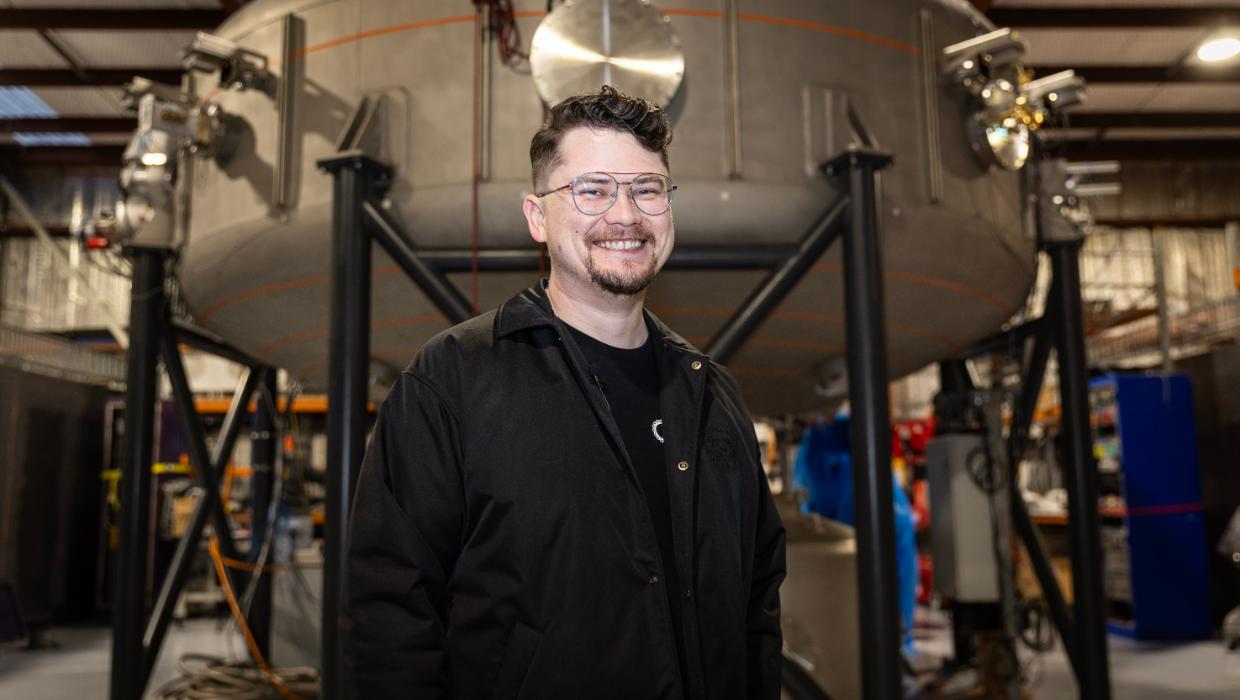
A significant milestone has been achieved in the quest for nuclear fusion energy as New Zealand’s OpenStar Technologies successfully floated a 500 kg magnet, a pivotal step toward creating a sustainable fusion power plant. This demonstration took place on March 15, 2024, at the company’s facility in Wellington, marking OpenStar as the first organization to confine a cloud of ultrahot ionized gas, or plasma, using this innovative technology.
The company’s chief executive, Ratu Mataira, emphasized the importance of this achievement in progressing towards a stable fusion reaction. The process mimics the natural fusion occurring in the Sun, where atoms fuse at temperatures exceeding 100 million degrees Celsius, producing vast amounts of clean, carbon-free energy. Mataira described fusion as a “holy grail of making energy,” highlighting its potential to provide a reliable and continuous power source without the limitations of fossil fuels.
At the core of the machine, named Junior, is a powerful magnet that levitates within a vacuum chamber, supported by another magnet above it. This innovative design has the potential to be simpler, cheaper, and easier to maintain compared to traditional methods, such as the “tokamak” approach, which relies on extensive physical structures to contain plasma within a superconducting magnetic field.
Mataira noted that the successful construction and testing of Junior, which achieved its first plasma within two years, aligns OpenStar with only a select group of companies worldwide that have reached this stage in fusion research. He stated, “This is about getting the world off its addiction to fossil fuels and ensuring that we have enough energy abundantly to keep power prices down.”
New Zealand could emerge as the first site for an OpenStar power plant, with a strong focus on rapid construction and profitability. Mataira asserted that the goal extends beyond reducing carbon emissions in one nation; it aims to address global CO2 emissions effectively.
Fusion energy operates on the principle of combining atoms rather than splitting them, as is done in traditional nuclear fission. This method avoids the long-term radiation risks associated with fission energy. The milestone test with Junior lays the groundwork for developing OpenStar’s next prototype device, Tahi, which is expected to generate a magnetic field four times stronger than Junior and twenty times stronger than the most potent permanent magnets available.
Funding for the next phase of research, which will focus on Tahi, includes up to $35 million from the Regional Infrastructure Fund. The aim is to produce fusion energy at a commercial scale by the 2030s.
The advancements made by OpenStar have drawn attention from experts in the fusion field. Michael Mauel, professor emeritus at Columbia University, praised the levitation of the Junior magnet as a significant development for superconducting magnet technology, noting its implications for steady fusion power.
Mataira acknowledged that while OpenStar is a relatively new player in the global fusion race, its unique approach using a levitated dipole distinguishes it from other initiatives. This innovative design mimics the magnetospheres surrounding planets like Earth and Jupiter, capturing and confining charged cosmic particles.
As one of over 50 companies competing to make fusion energy a reality, OpenStar’s rapid progress and engineering innovations position it as a noteworthy contender in this evolving industry. The journey towards harnessing the power of fusion continues, fueled by a commitment to creating a sustainable energy future.










New $25 Million Funding Boosts Hospital Capacity Ahead of Winter

Discover Sleep Space’s Affordable Bach Bed Packages Today

Jury Dismissed in Sexual Assault Trial Over Misguided Questions

Wellington’s New Gallery Unveils Community-Driven Art Exhibition

All Whites Face Challenges as Injuries Strike Before World Cup

Heroic Bystander Rescues Swimmers from Dangerous Surf in Napier

Nina Oyama Returns to Crime Comedy in Deadloch Season 2

China Southern Airlines Offers Reliable Journey from Auckland to Vietnam

Nina Oyama Returns to Deadloch for Anticipated Season 2

Community Mourns Teens Lost in Mount Maunganui Landslide

Tributes Pour In for Lachlan Rofe, Reality Star, Dead at 47

Private Funeral Held for Dean Field and His Three Children

Funeral Planned for Field Siblings After Tragic House Fire

Netball New Zealand Stands Down Dame Noeline Taurua for Series

Al Waha Motors Opens Flagship Jetour Showroom in Al Khor

Julian Dennison Ties the Knot with Christian Baledrokadroka in New Zealand

Auckland’s Average Rent Surpasses $700 for Three-Bedroom Homes

New Research Reveals Simple Path to Enhanced Happiness
-
 Top Stories7 months ago
Community Mourns Teens Lost in Mount Maunganui Landslide
-
 Entertainment11 months ago
Tributes Pour In for Lachlan Rofe, Reality Star, Dead at 47
-
 World9 months ago
Private Funeral Held for Dean Field and His Three Children
-
 Top Stories9 months ago
Funeral Planned for Field Siblings After Tragic House Fire
-
 Sports11 months ago
Netball New Zealand Stands Down Dame Noeline Taurua for Series
-
 Health7 months ago
Al Waha Motors Opens Flagship Jetour Showroom in Al Khor
-
 Entertainment7 months ago
Julian Dennison Ties the Knot with Christian Baledrokadroka in New Zealand
-
 Business7 months ago
Auckland’s Average Rent Surpasses $700 for Three-Bedroom Homes
-
 Science10 months ago
New Research Reveals Simple Path to Enhanced Happiness
-

 Entertainment10 months ago
New ‘Maverick’ Chaser Joins Beat the Chasers Season Finale
-

 Lifestyle11 months ago
Maia Wilson Faces Backlash Following Taurua’s Suspension
-

 Sports10 months ago
All Blacks Star Damian McKenzie and Partner Announce Baby News