
Top Stories
Influencers Challenge Endless Scrolling with Timely Reminders

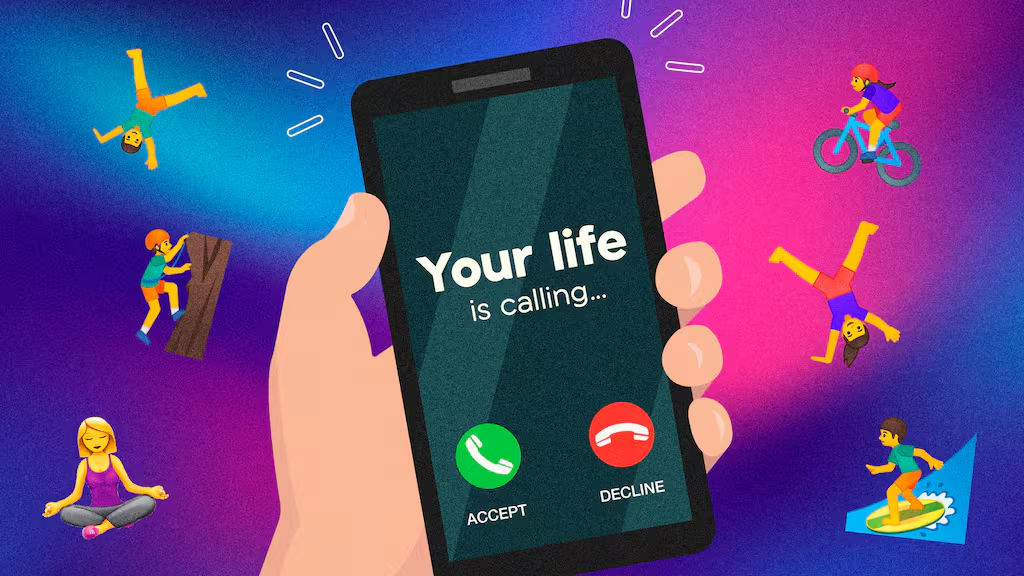
Scrolling through social media platforms such as Instagram and TikTok often leads users into prolonged periods of passive consumption, sometimes exceeding half an hour without any awareness of time passing. This phenomenon has prompted a new wave of content creators who disrupt this cycle by encouraging viewers to take a break and step away from their screens. Among these influencers is Olivia Yokubonis, known online as Olivia Unplugged. Her approach combines a calm demeanor with science-backed insights on attention and memory, aiming to remind users that they may not even remember the content they just viewed.
Yokubonis’ videos serve as a gentle nudge for viewers who appreciate the opportunity to reassess their screen time. Yet, not every response is positive. Some users engage with her content using sarcasm or criticism. “People will comment and they’ll be like, ‘Oh, it’s ironic that you’re posting,’” she shared. “And I’m like, ‘Where else am I supposed to find you, Kyle? Outside? You’re not outside. You are here, sitting here.’ For us to actually be seen, we have to be where people are.”
Growing Awareness of Social Media Consumption
Yokubonis’ efforts resonate with a significant concern among digital users: the lack of awareness regarding time spent on social media. Ofir Turel, a professor of information systems management at the University of Melbourne, has extensively researched this area. He notes that many individuals are often shocked when presented with their actual screen-time data, leading them to voluntarily reduce their online engagement. “Most people have no clue how much time they spend on social media,” Turel stated.
The trend of creators advocating for reduced scrolling is gaining traction. Some adopt aggressive tactics, while others, like Yokubonis, prefer a softer approach. She collaborates with Opal, an app designed to help users “reclaim their focus.” Interestingly, her content is devoid of overt marketing elements, allowing her message to stand out. “People love hearing from people,” she explained, indicating that authenticity is key to her success.
While the effectiveness of this content genre is still under scrutiny, experts see potential. Ian A. Anderson, a postdoctoral scholar at the California Institute of Technology, expresses intrigue but questions whether habitual scrollers engage with the message. “If they’re paying full attention, I feel like it could be an effective disruption,” he noted, while also acknowledging that habitual users might not absorb the message fully.
The Debate Over Social Media Addiction
As billions engage with platforms like TikTok, Instagram, and YouTube, the conversation around excessive screen time remains relevant. The term “social media addiction” continues to evoke debate among researchers and psychologists. While there is agreement that many people spend excessive time online, defining “addiction” poses challenges. Some experts argue that clinical symptoms, such as withdrawal and intense cravings, should be present to classify a user as addicted. Others, like Turel, recognize that while the term may be flawed, it resonates with users’ experiences.
Anderson’s research suggests that many users overestimate their level of addiction. In a representative sample of Instagram users, he found that 18% reported being at least somewhat addicted, with 5% strongly agreeing. However, only 2% met clinical criteria for addiction. He cautions that self-perception of addiction might hinder behavior change. “If you perceive yourself as more addicted, it actually hurts your ability to control your use,” he stated.
For those aiming to reduce their social media engagement, Anderson recommends practical strategies. Moving apps to less accessible locations on devices or disabling notifications can serve as effective interventions. More significant changes, such as keeping phones out of bedrooms, can also help users reclaim their time.
Another influencer in this space, Cat Goetze, known online as CatGPT, leverages her tech background to create content that demystifies the algorithms designed to keep users engaged. “There’s a whole infrastructure — there’s an army of nerds whose only job is to get you to increase your time spent on that platform,” she pointed out. Goetze’s mission extends to her business, Physical Phones, which produces Bluetooth landline phones. These devices aim to encourage users to lessen their dependence on smartphones, with the packaging proclaiming that “offline is the new luxury.”
Goetze attributes her social media success to the support of her audience, which reflects the paradoxical nature of relying on social media to promote a reduction in its use. “Social media will always play a part in our lives. I don’t necessarily think that’s a bad thing,” she said. Her goal is to help individuals reduce their screen time significantly, seeing even a modest decrease as beneficial for both individuals and society.
As the dialogue around social media use evolves, the impact of these influencers who advocate for mindful consumption may play a crucial role in shaping user behavior and awareness.




New $25 Million Funding Boosts Hospital Capacity Ahead of Winter

Discover Sleep Space’s Affordable Bach Bed Packages Today

Jury Dismissed in Sexual Assault Trial Over Misguided Questions

Wellington’s New Gallery Unveils Community-Driven Art Exhibition

All Whites Face Challenges as Injuries Strike Before World Cup

Heroic Bystander Rescues Swimmers from Dangerous Surf in Napier

Nina Oyama Returns to Crime Comedy in Deadloch Season 2

China Southern Airlines Offers Reliable Journey from Auckland to Vietnam

Nina Oyama Returns to Deadloch for Anticipated Season 2

Community Mourns Teens Lost in Mount Maunganui Landslide

Tributes Pour In for Lachlan Rofe, Reality Star, Dead at 47

Private Funeral Held for Dean Field and His Three Children

Funeral Planned for Field Siblings After Tragic House Fire

Netball New Zealand Stands Down Dame Noeline Taurua for Series

Al Waha Motors Opens Flagship Jetour Showroom in Al Khor

Julian Dennison Ties the Knot with Christian Baledrokadroka in New Zealand

Auckland’s Average Rent Surpasses $700 for Three-Bedroom Homes

New Research Reveals Simple Path to Enhanced Happiness
-
 Top Stories7 months ago
Community Mourns Teens Lost in Mount Maunganui Landslide
-
 Entertainment11 months ago
Tributes Pour In for Lachlan Rofe, Reality Star, Dead at 47
-
 World9 months ago
Private Funeral Held for Dean Field and His Three Children
-
 Top Stories9 months ago
Funeral Planned for Field Siblings After Tragic House Fire
-
 Sports11 months ago
Netball New Zealand Stands Down Dame Noeline Taurua for Series
-
 Health7 months ago
Al Waha Motors Opens Flagship Jetour Showroom in Al Khor
-
 Entertainment7 months ago
Julian Dennison Ties the Knot with Christian Baledrokadroka in New Zealand
-
 Business7 months ago
Auckland’s Average Rent Surpasses $700 for Three-Bedroom Homes
-
 Science10 months ago
New Research Reveals Simple Path to Enhanced Happiness
-

 Entertainment10 months ago
New ‘Maverick’ Chaser Joins Beat the Chasers Season Finale
-

 Lifestyle11 months ago
Maia Wilson Faces Backlash Following Taurua’s Suspension
-

 Sports10 months ago
All Blacks Star Damian McKenzie and Partner Announce Baby News