
Top Stories
New Zealand and India Finalize Trade Agreement to Boost Bilateral Relations

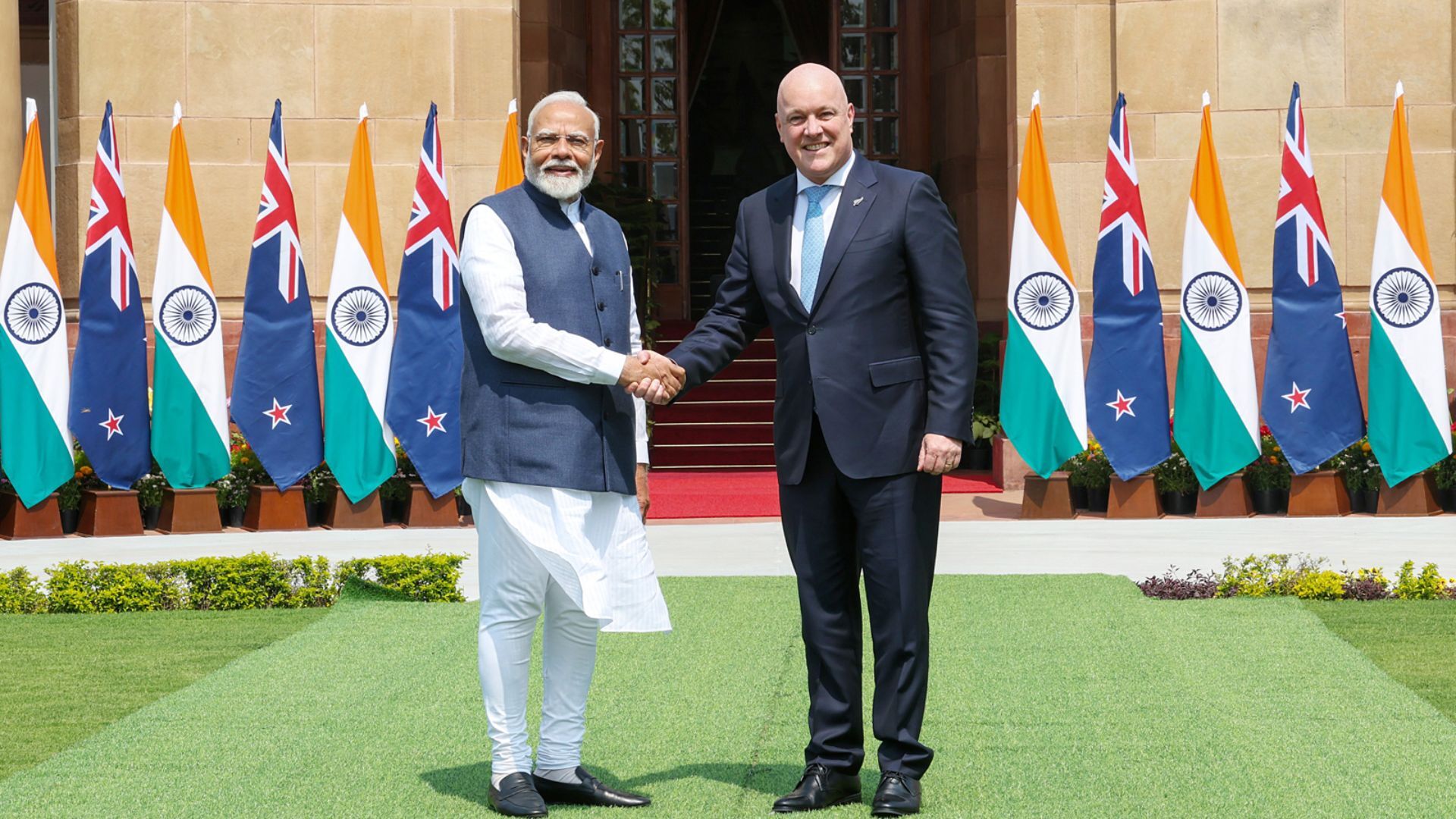
New Zealand and India have finalized negotiations on a free trade agreement (FTA) aimed at significantly enhancing economic relations and doubling bilateral trade over the next five years. Announced on March 4, 2024, the agreement will eliminate or reduce tariffs on approximately 95% of New Zealand’s exports to India, with over half of those exports expected to become duty-free immediately upon the pact’s implementation.
In exchange, all Indian goods will gain duty-free access to the New Zealand market. Additionally, New Zealand has pledged to invest $20 billion in India over the next 15 years, further solidifying the economic partnership.
Prime Minister Christopher Luxon expressed optimism about the agreement, stating, “The gains are wide-ranging and significant. India is the world’s most populous country and is the fastest-growing big economy, and that creates opportunities for jobs for Kiwis, exports, and growth.” This agreement fulfills a promise made by New Zealand’s governing National Party during the 2022 elections to finalize an FTA with India within their first term.
As reported by Reuters, two-way trade between New Zealand and India reached approximately $1.81 billion in 2024. India primarily exports pharmaceuticals to New Zealand, while New Zealand’s exports are largely made up of forestry and agricultural products. Despite this growth, the trade volume remains modest compared to India’s total goods trade, which surpassed $1 trillion in the 2024–25 financial year.
Political Context and Future Implications
The swift conclusion of the negotiations, achieved in just nine months, reflects a strong political will to deepen economic ties between the two nations. Indian Prime Minister Narendra Modi noted in a social media post, “This historic milestone reflects a strong political will and shared ambition to deepen economic ties between our two countries.”
The agreement does, however, exclude certain sensitive sectors from market access, such as dairy, coffee, and sugar, among others. This exclusion is aimed at protecting domestic farmers and industries in India. The deal comes as India intensifies its trade negotiations with various global partners to diversify its export markets, especially following the United States’ recent imposition of a 50% tariff on Indian goods.
This FTA marks India’s third trade agreement in 2024, following agreements with Oman and the United Kingdom, as reported by credible sources.
Challenges Ahead: Parliamentary Approval
While the New Zealand government anticipates signing the agreement in the first half of 2026, parliamentary approval is not guaranteed. The National Party, which holds 48 of the 123 parliamentary seats, relies on coalition partners for support. One such partner, New Zealand First, which has 8 seats, has announced its opposition to the deal.
NZ First leader Winston Peters criticized the agreement, asserting that it does not adequately benefit New Zealand. He stated, “The deal gives too much away, especially on immigration, and does not get enough in return for New Zealanders, including on dairy.” The governing coalition controls 67 seats, indicating they will need to navigate potential obstacles from dissenting partners to pass the legislation.
As discussions around the agreement continue, the outcome could have significant implications for New Zealand’s economic strategy and its relationship with one of the world’s fastest-growing economies.










New $25 Million Funding Boosts Hospital Capacity Ahead of Winter

Discover Sleep Space’s Affordable Bach Bed Packages Today

Jury Dismissed in Sexual Assault Trial Over Misguided Questions

Wellington’s New Gallery Unveils Community-Driven Art Exhibition

All Whites Face Challenges as Injuries Strike Before World Cup

Heroic Bystander Rescues Swimmers from Dangerous Surf in Napier

Nina Oyama Returns to Crime Comedy in Deadloch Season 2

China Southern Airlines Offers Reliable Journey from Auckland to Vietnam

Nina Oyama Returns to Deadloch for Anticipated Season 2

Community Mourns Teens Lost in Mount Maunganui Landslide

Tributes Pour In for Lachlan Rofe, Reality Star, Dead at 47

Private Funeral Held for Dean Field and His Three Children

Funeral Planned for Field Siblings After Tragic House Fire

Netball New Zealand Stands Down Dame Noeline Taurua for Series

Al Waha Motors Opens Flagship Jetour Showroom in Al Khor

Julian Dennison Ties the Knot with Christian Baledrokadroka in New Zealand

Auckland’s Average Rent Surpasses $700 for Three-Bedroom Homes

New Research Reveals Simple Path to Enhanced Happiness
-
 Top Stories7 months ago
Community Mourns Teens Lost in Mount Maunganui Landslide
-
 Entertainment11 months ago
Tributes Pour In for Lachlan Rofe, Reality Star, Dead at 47
-
 World9 months ago
Private Funeral Held for Dean Field and His Three Children
-
 Top Stories9 months ago
Funeral Planned for Field Siblings After Tragic House Fire
-
 Sports11 months ago
Netball New Zealand Stands Down Dame Noeline Taurua for Series
-
 Health7 months ago
Al Waha Motors Opens Flagship Jetour Showroom in Al Khor
-
 Entertainment7 months ago
Julian Dennison Ties the Knot with Christian Baledrokadroka in New Zealand
-
 Business7 months ago
Auckland’s Average Rent Surpasses $700 for Three-Bedroom Homes
-
 Science10 months ago
New Research Reveals Simple Path to Enhanced Happiness
-

 Entertainment10 months ago
New ‘Maverick’ Chaser Joins Beat the Chasers Season Finale
-

 Lifestyle11 months ago
Maia Wilson Faces Backlash Following Taurua’s Suspension
-

 Sports10 months ago
All Blacks Star Damian McKenzie and Partner Announce Baby News