
World
Iranian Diaspora Voices Concerns Amid Ongoing Conflict

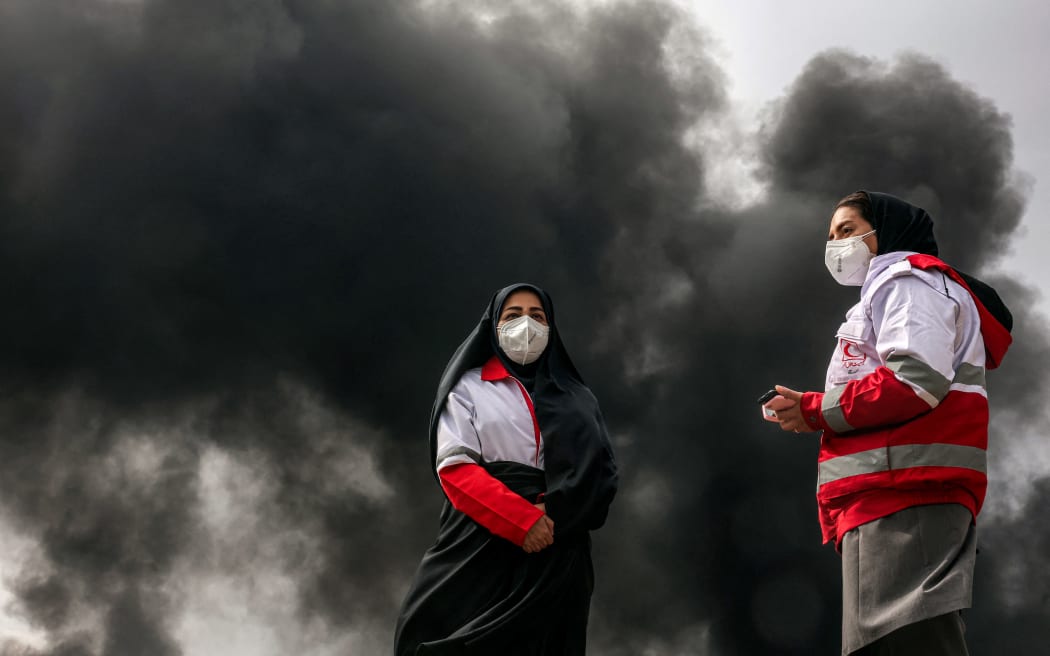
The death of Iran’s Supreme Leader, Ayatollah Ali Khamenei, on February 28, 2024, marked a significant escalation in the conflict involving Iran, the United States, and Israel. Khamenei was killed in coordinated attacks on his residence, sparking a week of military strikes targeting various nuclear and military facilities across Iran. According to the Iranian Red Crescent, the death toll has exceeded 1,000, including at least 165 schoolgirls killed in a bombing in Minab. In retaliation, Iran has launched attacks on military and civilian targets throughout the Gulf region, while Israel has responded with strikes against Hezbollah in Lebanon.
Iranians living in New Zealand have expressed their views on the conflict, highlighting a growing divide within the diaspora community. Mahdis Azarmandi, a senior lecturer in Peace and Conflict Studies at the University of Canterbury, emphasized the political implications of the ongoing violence. “This war is a continuation of the genocide in Gaza and the restructuring of West Asia,” Azarmandi stated. “Iran, as one of the few countries that retains sovereignty, is perceived as a threat to this reordering.”
The Iranian community is split in their reactions to the attacks. Some celebrate Khamenei’s death, while many others condemn the strikes as violations of Iran’s sovereignty. Azarmandi noted the long-term impact of these divisions, stating, “Entire families and communities are going to be completely divided for a very long time.”
For many Iranians in the diaspora, separating personal experiences from current political realities proves challenging. Azarmandi, who left Iran during the 1979 revolution, reflected on the layers of personal history that influence perspectives on the conflict. “I think I am constantly living through all of these layers of personal experience,” he remarked. “The issue of sovereignty is at stake, and that is what concerns me.”
The recent bombings followed weeks of negotiations between Iran and the United States, leading many observers to view the actions as a breach of international law. This sentiment was echoed by Dr. Behzad Dowran, who has resided in New Zealand for eight years. Dowran criticized the military actions, stating, “Nobody has the right to invade another country and kill the head of another country.”
Dowran recounted his experience in Tehran during violent protests earlier this year, noting the devastating toll on civilians. “We had many internal issues, but we were managing them,” he explained. “It is not easy to solve these problems under long-term sanctions, but we were going to address them internally.”
An anonymous member of the Iranian community in New Zealand shared their perspective, emphasizing the importance of internal solutions to Iran’s challenges. “Whatever the people inside Iran want is what should matter most,” they stated. “Different approaches do not mean we are enemies. Most of us want a better, freer, and more dignified future for Iranians.”
As the conflict continues to escalate, members of the Iranian diaspora in New Zealand grapple with their identities and beliefs amid a backdrop of violence and division. The ongoing situation highlights the complexities of international relations and the human impact of geopolitical conflicts.












New $25 Million Funding Boosts Hospital Capacity Ahead of Winter

Discover Sleep Space’s Affordable Bach Bed Packages Today

Jury Dismissed in Sexual Assault Trial Over Misguided Questions

Wellington’s New Gallery Unveils Community-Driven Art Exhibition

All Whites Face Challenges as Injuries Strike Before World Cup

Heroic Bystander Rescues Swimmers from Dangerous Surf in Napier

Nina Oyama Returns to Crime Comedy in Deadloch Season 2

China Southern Airlines Offers Reliable Journey from Auckland to Vietnam

Nina Oyama Returns to Deadloch for Anticipated Season 2

Community Mourns Teens Lost in Mount Maunganui Landslide

Tributes Pour In for Lachlan Rofe, Reality Star, Dead at 47

Private Funeral Held for Dean Field and His Three Children

Funeral Planned for Field Siblings After Tragic House Fire

Netball New Zealand Stands Down Dame Noeline Taurua for Series

Al Waha Motors Opens Flagship Jetour Showroom in Al Khor

Julian Dennison Ties the Knot with Christian Baledrokadroka in New Zealand

Auckland’s Average Rent Surpasses $700 for Three-Bedroom Homes

New Research Reveals Simple Path to Enhanced Happiness
-
 Top Stories7 months ago
Community Mourns Teens Lost in Mount Maunganui Landslide
-
 Entertainment11 months ago
Tributes Pour In for Lachlan Rofe, Reality Star, Dead at 47
-
 World9 months ago
Private Funeral Held for Dean Field and His Three Children
-
 Top Stories9 months ago
Funeral Planned for Field Siblings After Tragic House Fire
-
 Sports11 months ago
Netball New Zealand Stands Down Dame Noeline Taurua for Series
-
 Health7 months ago
Al Waha Motors Opens Flagship Jetour Showroom in Al Khor
-
 Entertainment7 months ago
Julian Dennison Ties the Knot with Christian Baledrokadroka in New Zealand
-
 Business7 months ago
Auckland’s Average Rent Surpasses $700 for Three-Bedroom Homes
-
 Science10 months ago
New Research Reveals Simple Path to Enhanced Happiness
-

 Entertainment10 months ago
New ‘Maverick’ Chaser Joins Beat the Chasers Season Finale
-

 Lifestyle10 months ago
Maia Wilson Faces Backlash Following Taurua’s Suspension
-

 Sports10 months ago
All Blacks Star Damian McKenzie and Partner Announce Baby News