
World
Kiwi Photographer Max Alexander Highlights Planetary Defence Efforts

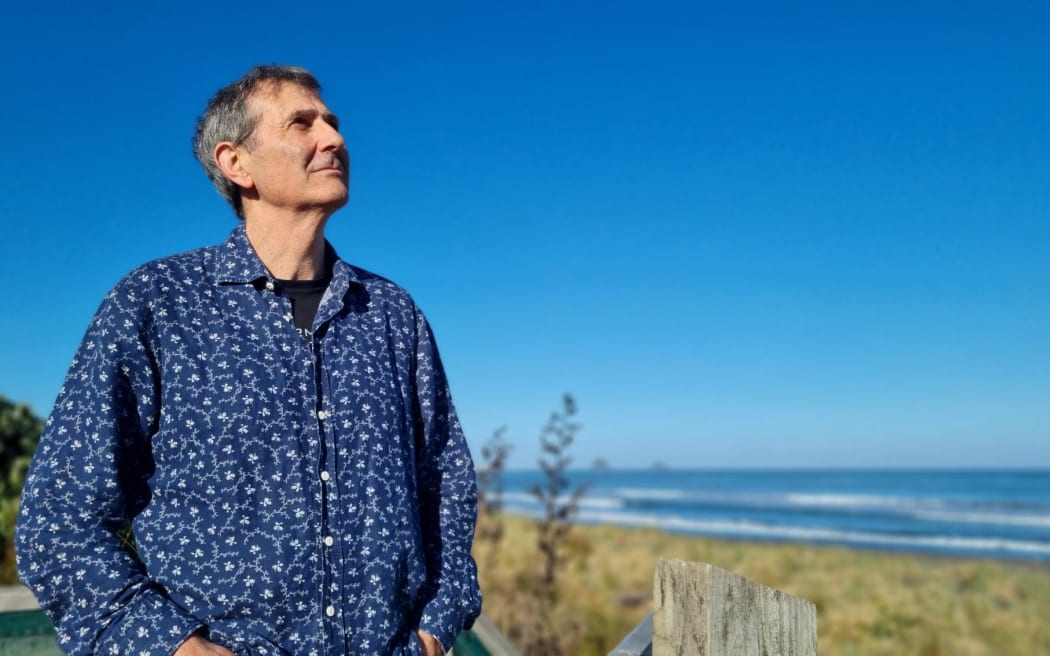
An award-winning New Zealand photographer, Max Alexander, is making headlines for his contributions to space sustainability and his recent honour of having an asteroid named after him. The asteroid, designated as 6548 Maxalexander, was discovered in 1988 by Belgian astronomer Henri Debehogne. Alexander, who now resides in the UK, describes this recognition as a “tremendous thrill,” especially as he works on illustrating critical aspects of “planetary defence.”
Despite the asteroid’s size of 12 kilometers, Alexander reassures the public that it poses no threat to Earth, as it resides in the asteroid belt. “It’s the same size as the asteroid that wiped out the dinosaurs 66 million years ago, but you don’t need to wear a hard hat to work tomorrow – it’s all fine,” he remarked.
Documenting Planetary Defence
Alexander’s current projects delve into the crucial field of planetary defence, where he emphasizes that deflecting asteroids is the only natural disaster humans can actively mitigate. “You can’t do anything about an earthquake or a volcano, but an asteroid, you can deflect it,” he explained. His involvement with NASA’s Double Asteroid Redirection Test (DART) mission, which successfully altered the orbit of the asteroid Dimorphos, is a testament to this potential.
He is also contributing to the European Space Agency’s Hera mission, aimed at characterizing the impact crater from the DART mission. Alexander highlighted the importance of this work, stating that one day an asteroid could threaten Earth. Notably, the asteroid 2024 YR4 has a 4 percent chance of hitting the Moon in 2032, which may prompt NASA to consider deflecting it.
In addition to his work in space, Alexander is a visual storyteller, capturing the efforts of those working to protect Earth from asteroids. Over the next two years, he plans to photograph key figures and facilities involved in planetary defence, culminating in an exhibition that will feature still and video images from the upcoming RAMSES spacecraft. This spacecraft will accompany the asteroid Apophis, measuring 375 meters, as it safely passes close to Earth in 2029.
A Journey from Photography to Astronomy
Alexander’s path to becoming a science communication specialist began during a trip to photograph the Northern Lights, which ignited his interest in astronomy. After studying astrophysics at University College London, he shifted his career focus to specialize in photography for international space organizations, including the UK and European Space Agencies.
His artistic work, showcased in the exhibition ‘Our Fragile Space’, has been recognized for influencing European space policy, including the UK government’s creation of ISAM (In-orbit, Servicing, Assembly and Manufacture). This initiative aims to promote sustainability in space as satellite numbers rapidly increase from 10,000 to 100,000 over the next decade.
Alexander addressed the environmental concerns associated with space debris, noting that satellites that run out of fuel contribute to this growing problem. He advocates for sustainable practices, such as refueling satellites to extend their operational lives and reduce waste. His long-exposure photographs illustrate the number of satellites already in orbit and visualize the potential challenges of space debris.
His collaboration with fellow experts Steve Kelly and Stuart Clark earned the team the Sir Arthur Clarke Space Achievement Team Media Award in 2025, presented by the British Interplanetary Society. Alexander also had the unique opportunity to train British astronaut Tim Peake in photography while he was aboard the International Space Station.
Alexander recalls, “I photographed him during his training, and after some informal training, he invited me to provide guidance while he was in space. The European Space Agency published our exchanges, and he became well-known for his photography.”
As he returns to New Zealand for a new project, Alexander reflects on the honour of having an asteroid named after him. He is particularly proud to share this recognition with Polynesian navigator Tupaia, who sailed with Captain James Cook. “It’s very motivating for my work to have that asteroid named after me,” he said. To celebrate, his family is preparing an asteroid-themed cake in Christchurch, complete with sparklers.
Through his work, Alexander continues to shine a light on the importance of planetary defence and the need for sustainable practices in space, ensuring a safer future for our planet and beyond.








Young Detective Sophie Moore Loses Battle with Rare Cancer

Otago Classics Day Showcases Fashion and Talent Ahead of Champions Day

Iranian Expat Celebrates Khamenei’s Death Amid U.S.-Israel Strikes

Physicist Brian Cox Launches ‘Emergence’ World Tour in June

Auckland’s Lagoon Edge Skatepark Transformed into Skater Haven

Explosions Rock Dubai as Auckland Students Await Flight Home

Michael Hill Reports Strong Profit Growth, Plans Dividend Return

Michael Hill Reports Strong Profit Growth, Signals Dividend Return

Split Enz to Tour New Zealand After Electric Avenue Reunion

Community Mourns Teens Lost in Mount Maunganui Landslide

Tributes Pour In for Lachlan Rofe, Reality Star, Dead at 47

Private Funeral Held for Dean Field and His Three Children

Funeral Planned for Field Siblings After Tragic House Fire

Netball New Zealand Stands Down Dame Noeline Taurua for Series

Julian Dennison Ties the Knot with Christian Baledrokadroka in New Zealand

New ‘Maverick’ Chaser Joins Beat the Chasers Season Finale

Silver Ferns Legend Laura Langman Criticizes Team’s Attitude

Eli Katoa Rushed to Hospital After Sideline Incident During Match
-
 Top Stories1 month ago
Community Mourns Teens Lost in Mount Maunganui Landslide
-
 Entertainment6 months ago
Tributes Pour In for Lachlan Rofe, Reality Star, Dead at 47
-
 World3 months ago
Private Funeral Held for Dean Field and His Three Children
-
 Top Stories3 months ago
Funeral Planned for Field Siblings After Tragic House Fire
-
 Sports6 months ago
Netball New Zealand Stands Down Dame Noeline Taurua for Series
-
 Entertainment1 month ago
Julian Dennison Ties the Knot with Christian Baledrokadroka in New Zealand
-
 Entertainment5 months ago
New ‘Maverick’ Chaser Joins Beat the Chasers Season Finale
-
 Sports6 months ago
Silver Ferns Legend Laura Langman Criticizes Team’s Attitude
-
 Sports4 months ago
Eli Katoa Rushed to Hospital After Sideline Incident During Match
-

 Sports4 months ago
All Blacks Star Damian McKenzie and Partner Announce Baby News
-

 Sports3 months ago
Nathan Williamson’s Condition Improves Following Race Fall
-

 Politics5 months ago
Netball NZ Calls for Respect Amid Dame Taurua’s Standoff