
Health
New Research Unveils New Zealand’s First X-Ray Discovery

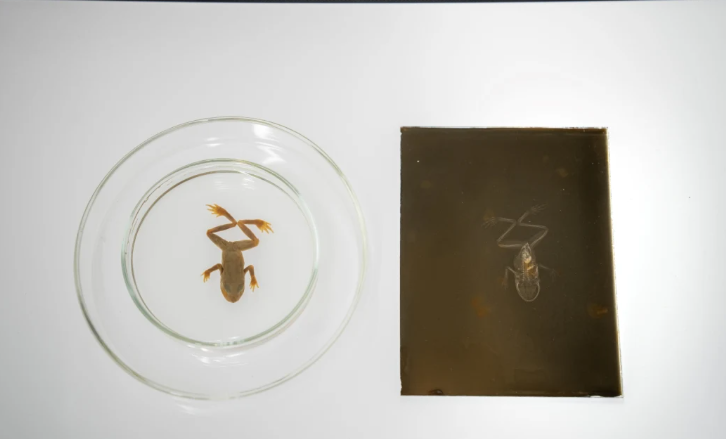
Health New Zealand medical physicist Steven Muir has unveiled significant findings regarding the history of x-ray technology in New Zealand. His research challenges the long-held belief that Dr. William Hosking was the first to take an x-ray in the country in 1896. Muir’s investigation reveals that Hosking’s x-ray machine did not arrive in New Zealand until early 1897, suggesting that Augustus Hamilton, a former registrar at Otago University, actually captured the nation’s first x-ray.
Muir’s findings indicate that Hamilton photographed a frog for a lecture on x-rays at the university in May 1896, just six months after the initial discovery of x-rays by Wilhelm Röntgen, a German physicist credited with the invention in 1895. Muir commented on the significance of this timeline, noting the challenges of shipping and communication that would have delayed the arrival of x-ray technology in New Zealand.
Unfortunately, Hamilton’s original x-ray is believed to have been lost to history. Nevertheless, Muir’s research led to the discovery of New Zealand’s oldest known surviving x-ray, also featuring a frog, held at the Canterbury Museum. He collaborated with Frances Husband, the museum’s associate curator for human history, to locate this historic image within the museum’s extensive collection.
Uncovering the Frog’s Legacy
The x-ray at Canterbury Museum showcases a specimen of Leiopelma hochstetteri, a species that has been preserved since it entered the museum’s collection in 1883. Husband emphasized the importance of ongoing efforts to inventory the museum’s vast collection of over 2.3 million objects and 200,000 photographic negatives, which facilitated the recent discoveries.
To verify the identification of the frog, Muir and Husband arranged for another x-ray to be taken using the latest 2D and 3D high-resolution machines at Christchurch Hospital. “It was very exciting to find that the old and new x-rays were a perfect match,” Husband noted, highlighting the significance of this historical connection.
Muir also engaged with staff at Christ’s College to locate the original x-ray tube used for the 1896 image. The tube was found in a box at the back of the school’s physics laboratory, adding another layer to the historical narrative surrounding New Zealand’s early adoption of x-ray technology.
Muir presented his findings at the Grand Rounds health research lecture series on Wednesday, coinciding with the upcoming 130th anniversary of Röntgen’s groundbreaking discovery. This research not only sheds light on New Zealand’s medical history but also emphasizes the rapid adoption of innovative technologies in the late 19th century.
As the medical community and the public celebrate these discoveries, the story of New Zealand’s first x-ray serves as a reminder of the enduring impact of scientific exploration and the importance of preserving historical artifacts for future generations.












New $25 Million Funding Boosts Hospital Capacity Ahead of Winter

Discover Sleep Space’s Affordable Bach Bed Packages Today

Jury Dismissed in Sexual Assault Trial Over Misguided Questions

Wellington’s New Gallery Unveils Community-Driven Art Exhibition

All Whites Face Challenges as Injuries Strike Before World Cup

Heroic Bystander Rescues Swimmers from Dangerous Surf in Napier

Nina Oyama Returns to Crime Comedy in Deadloch Season 2

China Southern Airlines Offers Reliable Journey from Auckland to Vietnam

Nina Oyama Returns to Deadloch for Anticipated Season 2

Community Mourns Teens Lost in Mount Maunganui Landslide

Tributes Pour In for Lachlan Rofe, Reality Star, Dead at 47

Private Funeral Held for Dean Field and His Three Children

Funeral Planned for Field Siblings After Tragic House Fire

Netball New Zealand Stands Down Dame Noeline Taurua for Series

Al Waha Motors Opens Flagship Jetour Showroom in Al Khor

Julian Dennison Ties the Knot with Christian Baledrokadroka in New Zealand

Auckland’s Average Rent Surpasses $700 for Three-Bedroom Homes

New Research Reveals Simple Path to Enhanced Happiness
-
 Top Stories6 months ago
Community Mourns Teens Lost in Mount Maunganui Landslide
-
 Entertainment11 months ago
Tributes Pour In for Lachlan Rofe, Reality Star, Dead at 47
-
 World8 months ago
Private Funeral Held for Dean Field and His Three Children
-
 Top Stories9 months ago
Funeral Planned for Field Siblings After Tragic House Fire
-
 Sports11 months ago
Netball New Zealand Stands Down Dame Noeline Taurua for Series
-
 Health6 months ago
Al Waha Motors Opens Flagship Jetour Showroom in Al Khor
-
 Entertainment7 months ago
Julian Dennison Ties the Knot with Christian Baledrokadroka in New Zealand
-
 Business7 months ago
Auckland’s Average Rent Surpasses $700 for Three-Bedroom Homes
-
 Science9 months ago
New Research Reveals Simple Path to Enhanced Happiness
-

 Entertainment10 months ago
New ‘Maverick’ Chaser Joins Beat the Chasers Season Finale
-

 Lifestyle10 months ago
Maia Wilson Faces Backlash Following Taurua’s Suspension
-

 Sports10 months ago
All Blacks Star Damian McKenzie and Partner Announce Baby News