
Lifestyle
Education Crisis Deepens for Rohingya Refugee Children in Bangladesh

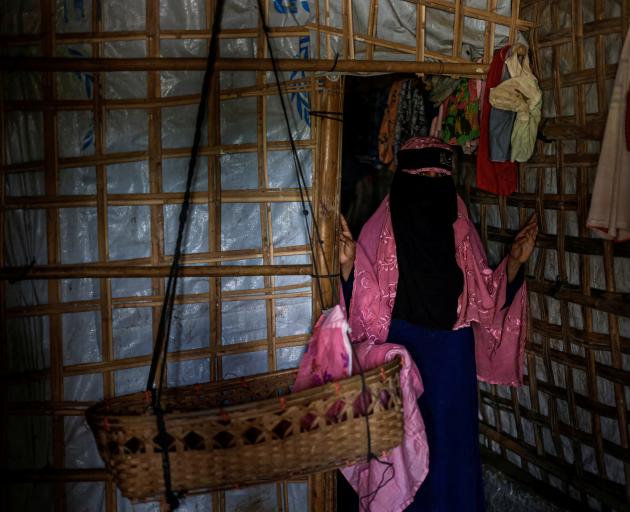
The closure of schools for Rohingya refugee children in Cox’s Bazar, Bangladesh, has left over 227,500 children without access to education. This situation has escalated as funding cuts from international agencies contribute to a growing crisis, with urgent calls for support as the eighth anniversary of the Rohingya’s displacement approaches.
Many families are grappling with the implications of a lack of education. Begum, a mother of five living in a bamboo shelter, expressed her concerns about her daughters’ futures. “Without school, girls sit idle. People start talking,” she said, highlighting the cultural pressures that can lead to early marriages. Her family is among the estimated 1.2 million Rohingya refugees in Bangladesh, half of whom are children. Many fled from Myanmar following a military crackdown that the United Nations has described as a “textbook example of ethnic cleansing.”
The situation has worsened significantly this year. As the United States reduces international aid, the funding for refugee camps has sharply declined. According to the United Nations High Commissioner for Refugees (UNHCR), the agency requires approximately $256 million to support the Rohingya this year, which is the lowest request in six years. Unfortunately, it has received commitments for only about 38% of that total.
Juliette Murekeyisoni, the interim UNHCR Representative in Bangladesh, emphasized the dire circumstances, stating, “This community has already lost everything and is now facing a severe funding shortfall that threatens their survival.” She warned that critical services, including food assistance and education, are at risk of collapse without immediate additional support.
The United Nations Children’s Fund (UNICEF) has suspended operations at more than 4,500 schools, leaving many Rohingya children without any form of education. While classes resumed in July for older students, a significant number of classrooms remain empty, with locked doors and fading murals. Rohingya teacher Naser Khan lamented, “Now the kids just play in the mud or rain. They’re forgetting everything they once learned.”
The impact on families is profound. Mohammed Faruq, a father of six, described his daughters’ lost opportunities for education. “Only a little bit of education our children could learn was snatched away,” he said, reflecting on the struggles faced since fleeing Myanmar in 2017. He expressed concern that without education, the children have no future. The International Rescue Committee (IRC) reported that no Rohingya child under the age of 12 currently has access to education in Cox’s Bazar. It estimates that as many as 500,000 children are missing out on learning altogether.
The IRC’s findings reveal alarming trends, with reported cases of child marriage rising by 3% this year and child labor increasing by 7%. Hasina Rahman, IRC’s Bangladesh director, warned that these figures may be underreported due to limited monitoring and social stigma. She cautioned that families may resort to extreme survival methods, including forced labor and child marriage.
UNICEF’s Rana Flowers highlighted the consequences of “shifting global priorities” that have led to a reduction in contributions. She stated, “To stretch every dollar, we have reduced UNICEF staff, streamlined programmes, and cut costs wherever possible – but the needs far outweigh the resources available.”
As funding continues to dwindle, the UNHCR has raised alarms about the potential reversal of progress made over recent years. The ongoing violence in Myanmar has prompted an influx of up to 150,000 Rohingya refugees into Cox’s Bazar in the past 18 months, further straining already limited resources.
Teachers like Kafayat Ullah fear for their students’ futures. “I dreamed my students would become doctors or engineers. Now, with no classes, they will become nothing,” he said, lamenting the loss of aspirations among young refugees.
Nine-year-old Nahima Bibi, who now spends her days playing in the muddy lanes of the camp, shared her own dream: “If I don’t go to school, how will I ever become a doctor?” Her poignant words highlight the emotional toll of the ongoing crisis. “My heart feels sad,” she added, encapsulating the feelings of many children caught in this dire situation.
The plight of Rohingya refugees in Bangladesh remains critical, as the lack of educational opportunities threatens the future of an entire generation. Immediate international support and renewed funding are essential to provide the necessary resources for education and other vital services.













New $25 Million Funding Boosts Hospital Capacity Ahead of Winter

Discover Sleep Space’s Affordable Bach Bed Packages Today

Jury Dismissed in Sexual Assault Trial Over Misguided Questions

Wellington’s New Gallery Unveils Community-Driven Art Exhibition

All Whites Face Challenges as Injuries Strike Before World Cup

Heroic Bystander Rescues Swimmers from Dangerous Surf in Napier

Nina Oyama Returns to Crime Comedy in Deadloch Season 2

China Southern Airlines Offers Reliable Journey from Auckland to Vietnam

Nina Oyama Returns to Deadloch for Anticipated Season 2

Community Mourns Teens Lost in Mount Maunganui Landslide

Tributes Pour In for Lachlan Rofe, Reality Star, Dead at 47

Private Funeral Held for Dean Field and His Three Children

Funeral Planned for Field Siblings After Tragic House Fire

Netball New Zealand Stands Down Dame Noeline Taurua for Series

Al Waha Motors Opens Flagship Jetour Showroom in Al Khor

Julian Dennison Ties the Knot with Christian Baledrokadroka in New Zealand

Auckland’s Average Rent Surpasses $700 for Three-Bedroom Homes

New Research Reveals Simple Path to Enhanced Happiness
-
 Top Stories7 months ago
Community Mourns Teens Lost in Mount Maunganui Landslide
-
 Entertainment11 months ago
Tributes Pour In for Lachlan Rofe, Reality Star, Dead at 47
-
 World9 months ago
Private Funeral Held for Dean Field and His Three Children
-
 Top Stories9 months ago
Funeral Planned for Field Siblings After Tragic House Fire
-
 Sports11 months ago
Netball New Zealand Stands Down Dame Noeline Taurua for Series
-
 Health7 months ago
Al Waha Motors Opens Flagship Jetour Showroom in Al Khor
-
 Entertainment7 months ago
Julian Dennison Ties the Knot with Christian Baledrokadroka in New Zealand
-
 Business7 months ago
Auckland’s Average Rent Surpasses $700 for Three-Bedroom Homes
-
 Science10 months ago
New Research Reveals Simple Path to Enhanced Happiness
-

 Entertainment10 months ago
New ‘Maverick’ Chaser Joins Beat the Chasers Season Finale
-

 Lifestyle11 months ago
Maia Wilson Faces Backlash Following Taurua’s Suspension
-

 Sports10 months ago
All Blacks Star Damian McKenzie and Partner Announce Baby News