
Politics
Professor Atholl Anderson Reflects on a Life in Archaeology

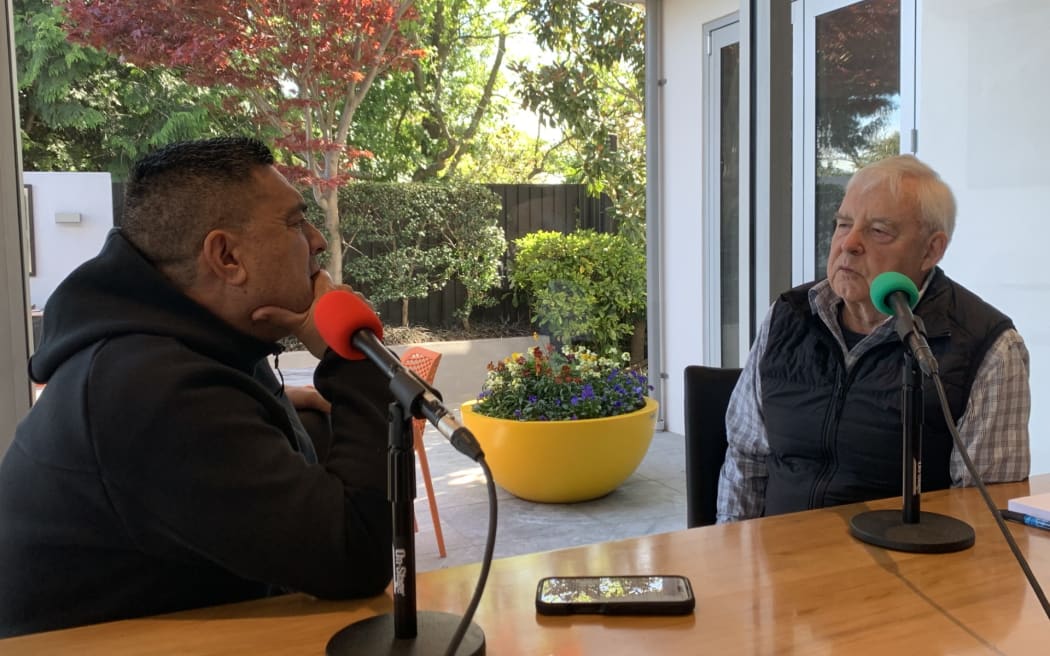
Professor Atholl Anderson, a prominent archaeologist and historian from the Ngāi Tahu iwi, has dedicated his career to exploring the rich history and migrations of peoples in the Pacific. Recently, he released a revised edition of his influential work, The Welcome of Strangers: A History of Southern Māori, originally published in 1998. Anderson believes that his journey into history and archaeology was shaped by factors beyond his control, including his upbringing and early experiences.
Childhood Influences
Reflecting on his formative years, Anderson recalls visiting his grandmother’s home in Hāwera, where he encountered numerous Māori artifacts. “I remember there being some pounamu pieces and a taiaha,” he said. These experiences, he noted, instilled an early fascination with Māori culture and history.
His connection to history deepened during his time at Nelson College, where a teacher known as Jerp Patterson sparked his passion for the subject. “He made history just so interesting and alive,” Anderson stated, crediting Patterson with igniting his enthusiasm for learning.
Shaping a Career
After working overseas in Scandinavia, Anderson returned to focus on the history and archaeology of Aotearoa and the Pacific. He expressed a keen interest in the migration patterns across vast ocean distances, saying, “It’s like looking at a new world… you introduce people to it, and then almost like an experiment, you watch to see what they do.” This perspective has driven his research into how early Māori adapted to their new environments.
Anderson’s work often explores the “margins” of cultural history, where he believes significant insights can be gained. For instance, during his excavations on Enderby Island, part of the Auckland Islands, he studied the survival of Māori culture in challenging conditions. “What could they do and what couldn’t they do?” he asked, highlighting the importance of understanding these limitations.
His commitment to his iwi has propelled him to engage deeply with the history of Ngāi Tahu. He participated in the Waitangi Tribunal process, beginning in 1987, focusing on research related to mahinga kai, or traditional food-gathering practices. “It was a marvellous time, really, because it brought the iwi together,” he reflected.
Anderson acknowledged the complexities in merging archaeology with history, noting that archaeology often leaves gaps due to the anonymity of past peoples. “There’s always that gap, which is so hard to cross,” he said, but he believes advancements are being made toward bridging this divide.
As he continues to explore the past, Professor Anderson remains committed to understanding and preserving the cultural heritage of Māori and the wider Pacific community. His insights contribute to a broader appreciation of the intricate histories that shape contemporary identities.








New $25 Million Funding Boosts Hospital Capacity Ahead of Winter

Discover Sleep Space’s Affordable Bach Bed Packages Today

Jury Dismissed in Sexual Assault Trial Over Misguided Questions

Wellington’s New Gallery Unveils Community-Driven Art Exhibition

All Whites Face Challenges as Injuries Strike Before World Cup

Heroic Bystander Rescues Swimmers from Dangerous Surf in Napier

Nina Oyama Returns to Crime Comedy in Deadloch Season 2

China Southern Airlines Offers Reliable Journey from Auckland to Vietnam

Nina Oyama Returns to Deadloch for Anticipated Season 2

Community Mourns Teens Lost in Mount Maunganui Landslide

Tributes Pour In for Lachlan Rofe, Reality Star, Dead at 47

Private Funeral Held for Dean Field and His Three Children

Funeral Planned for Field Siblings After Tragic House Fire

Netball New Zealand Stands Down Dame Noeline Taurua for Series

Al Waha Motors Opens Flagship Jetour Showroom in Al Khor

Julian Dennison Ties the Knot with Christian Baledrokadroka in New Zealand

Auckland’s Average Rent Surpasses $700 for Three-Bedroom Homes

New Research Reveals Simple Path to Enhanced Happiness
-
 Top Stories7 months ago
Community Mourns Teens Lost in Mount Maunganui Landslide
-
 Entertainment11 months ago
Tributes Pour In for Lachlan Rofe, Reality Star, Dead at 47
-
 World9 months ago
Private Funeral Held for Dean Field and His Three Children
-
 Top Stories9 months ago
Funeral Planned for Field Siblings After Tragic House Fire
-
 Sports11 months ago
Netball New Zealand Stands Down Dame Noeline Taurua for Series
-
 Health7 months ago
Al Waha Motors Opens Flagship Jetour Showroom in Al Khor
-
 Entertainment7 months ago
Julian Dennison Ties the Knot with Christian Baledrokadroka in New Zealand
-
 Business7 months ago
Auckland’s Average Rent Surpasses $700 for Three-Bedroom Homes
-
 Science10 months ago
New Research Reveals Simple Path to Enhanced Happiness
-

 Entertainment10 months ago
New ‘Maverick’ Chaser Joins Beat the Chasers Season Finale
-

 Lifestyle11 months ago
Maia Wilson Faces Backlash Following Taurua’s Suspension
-

 Sports10 months ago
All Blacks Star Damian McKenzie and Partner Announce Baby News