
Science
AI Technology Aids Rescue Efforts in Golden Bay Whale Strandings

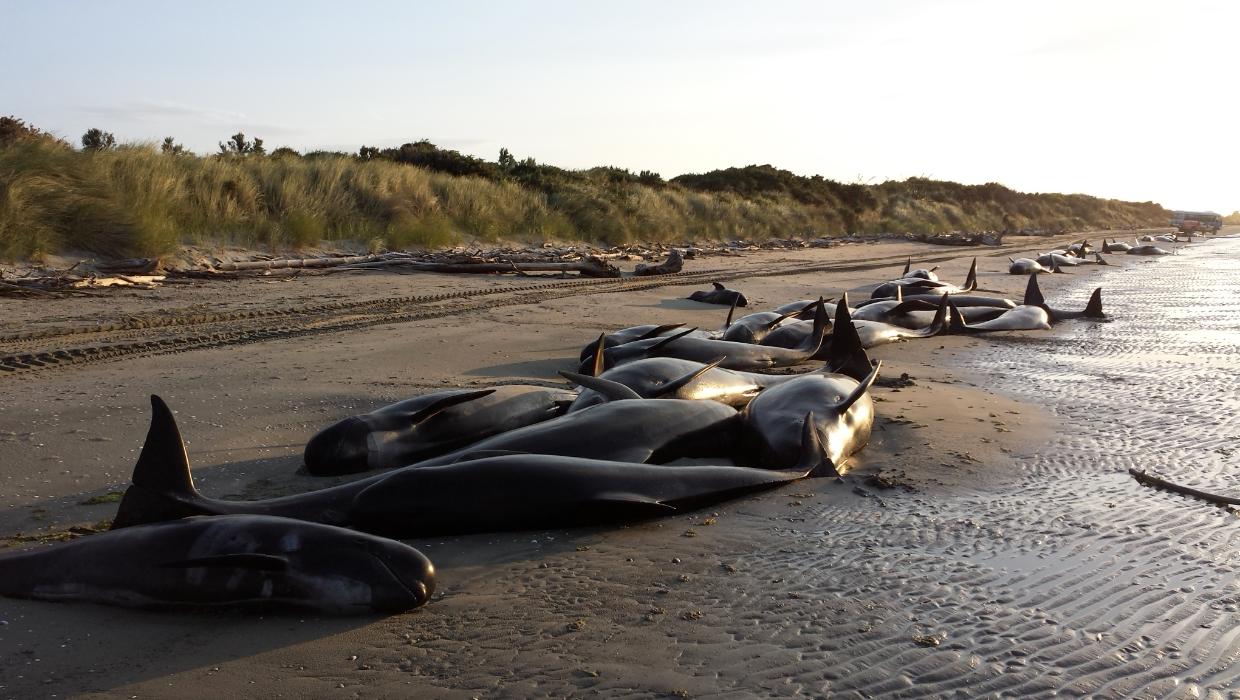
Efforts to rescue stranded pilot whales in Golden Bay have received a significant boost from new artificial intelligence technology. This innovative system is designed to detect distressed dolphins before they strand, potentially saving numerous marine lives. The initiative has garnered attention from conservationists and local communities who are keen on preserving the region’s marine biodiversity.
The technology, developed in collaboration with the National Institute of Water and Atmospheric Research (NIWA) and the Department of Conservation (DOC), utilizes machine learning algorithms to analyze environmental factors that contribute to whale strandings. By monitoring data such as water temperature, weather patterns, and dolphin behavior, the AI provides early warnings about potential stranding events.
The first successful deployment occurred in late 2023, when the system alerted authorities about a group of pilot whales displaying unusual behavior near the shore. Thanks to this timely warning, the Marine Mammal Stranding Network was able to mobilize quickly, leading to the safe rescue of 15 whales before they could strand.
Local communities in Golden Bay have expressed their support for this technological advancement. Many residents have witnessed the heartbreaking aftermath of whale strandings, which often result in the loss of these majestic creatures. With this new AI system, there is renewed hope for more effective rescue operations.
Dr. Sarah Thompson, a marine biologist with NIWA, emphasized the importance of this technology in enhancing proactive measures. “We’ve seen how devastating strandings can be, not just for the whales but for the entire ecosystem. This AI system represents a crucial step towards better understanding and mitigating these events,” she stated.
The collaboration between government agencies and research institutions highlights a growing trend in utilizing technology for environmental conservation. By harnessing data-driven insights, authorities can formulate more effective strategies to protect marine life.
As the AI technology continues to evolve, it is expected to become increasingly accurate in predicting whale behavior. Future enhancements may include real-time data integration from multiple sensors located across the coast, making it possible to cover larger areas more effectively.
The initiative has also sparked discussions on broader applications of AI in wildlife conservation. Experts believe that similar systems could be developed for other marine species at risk of stranding, further expanding the scope of this technology.
The successful implementation of AI in Golden Bay serves as a model for other regions facing similar challenges with marine life. As the world grapples with increasing threats to biodiversity, innovative solutions like this could make a significant difference in conservation efforts.
In summary, the introduction of AI technology in Golden Bay marks a promising advancement in the fight against marine strandings. With ongoing support from both local communities and governmental bodies, this initiative holds the potential to save countless whales, ensuring their survival for future generations.













New $25 Million Funding Boosts Hospital Capacity Ahead of Winter

Discover Sleep Space’s Affordable Bach Bed Packages Today

Jury Dismissed in Sexual Assault Trial Over Misguided Questions

Wellington’s New Gallery Unveils Community-Driven Art Exhibition

All Whites Face Challenges as Injuries Strike Before World Cup

Heroic Bystander Rescues Swimmers from Dangerous Surf in Napier

Nina Oyama Returns to Crime Comedy in Deadloch Season 2

China Southern Airlines Offers Reliable Journey from Auckland to Vietnam

Nina Oyama Returns to Deadloch for Anticipated Season 2

Community Mourns Teens Lost in Mount Maunganui Landslide

Tributes Pour In for Lachlan Rofe, Reality Star, Dead at 47

Private Funeral Held for Dean Field and His Three Children

Funeral Planned for Field Siblings After Tragic House Fire

Netball New Zealand Stands Down Dame Noeline Taurua for Series

Julian Dennison Ties the Knot with Christian Baledrokadroka in New Zealand

Al Waha Motors Opens Flagship Jetour Showroom in Al Khor

Auckland’s Average Rent Surpasses $700 for Three-Bedroom Homes

New Research Reveals Simple Path to Enhanced Happiness
-
 Top Stories6 months ago
Community Mourns Teens Lost in Mount Maunganui Landslide
-
 Entertainment11 months ago
Tributes Pour In for Lachlan Rofe, Reality Star, Dead at 47
-
 World8 months ago
Private Funeral Held for Dean Field and His Three Children
-
 Top Stories8 months ago
Funeral Planned for Field Siblings After Tragic House Fire
-
 Sports11 months ago
Netball New Zealand Stands Down Dame Noeline Taurua for Series
-
 Entertainment6 months ago
Julian Dennison Ties the Knot with Christian Baledrokadroka in New Zealand
-
 Health6 months ago
Al Waha Motors Opens Flagship Jetour Showroom in Al Khor
-
 Business7 months ago
Auckland’s Average Rent Surpasses $700 for Three-Bedroom Homes
-
 Science9 months ago
New Research Reveals Simple Path to Enhanced Happiness
-

 Entertainment10 months ago
New ‘Maverick’ Chaser Joins Beat the Chasers Season Finale
-

 Lifestyle10 months ago
Maia Wilson Faces Backlash Following Taurua’s Suspension
-

 Sports9 months ago
All Blacks Star Damian McKenzie and Partner Announce Baby News