
Top Stories
Influencers Challenge Social Media Habits, Urging Users to Disconnect

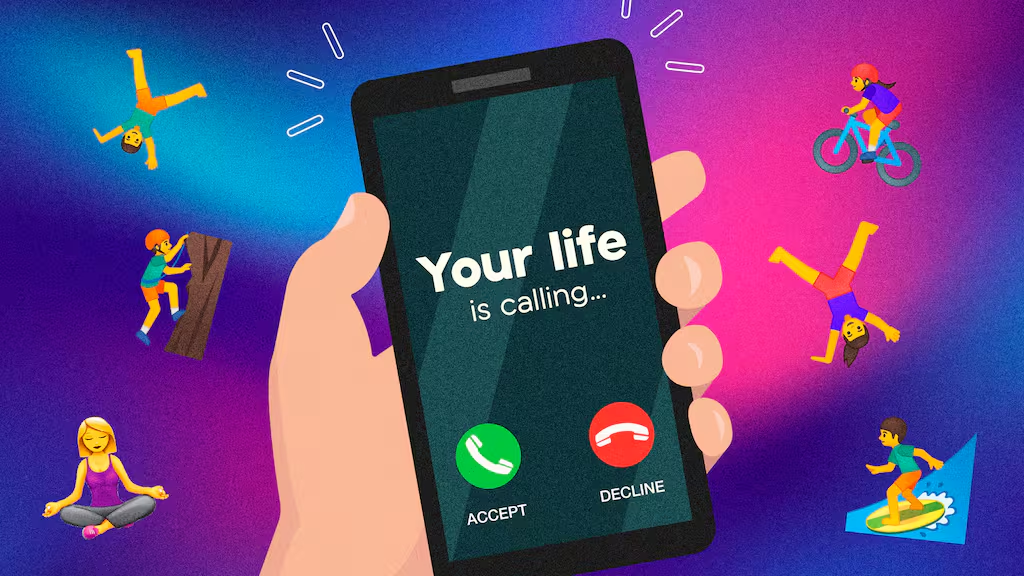
In an effort to counter excessive screen time, a growing number of content creators are encouraging users to stop mindlessly scrolling through social media. This movement has gained traction on platforms like TikTok and Instagram, where influencers like Olivia Yokubonis, known as Olivia Unplugged, advocate for mindful consumption of digital content. They aim to remind viewers that constant scrolling often leads to a disconnection from reality, sparking a conversation about how much time people truly spend online.
Yokubonis’s approach involves delivering calm, science-backed reminders about attention and memory. In her videos, she often highlights that viewers may not even remember the content they just consumed. “Most people have no clue how much time they spend on social media,” said Ofir Turel, a professor at the University of Melbourne who has extensively researched social media usage. He noted that when individuals see their actual screen-time data, the reaction can be one of shock, prompting many to voluntarily cut back on their usage.
Challenging Mindless Scrolling
Yokubonis is part of a burgeoning community of creators dedicated to disrupting habitual scrolling behaviors. While some influencers utilize aggressive tactics, Yokubonis favors a more gentle and reflective approach. Her affiliation with Opal, an app designed to help users focus, is largely unbranded in her content, which allows her messages to resonate more authentically with audiences. “People love hearing from people,” she remarked, emphasizing the importance of relatability in her videos.
With millions of views, her content not only reaches a wide audience but also raises important questions about social media habits. Ian A. Anderson, a postdoctoral scholar at the California Institute of Technology, expressed intrigue about the potential effectiveness of this new genre of content. He noted, “If they’re paying full attention, it could be an effective disruption, but there may be a limit to how engaged habitual scrollers can be with this message.”
As platforms such as TikTok, Instagram, and YouTube see billions of active users, the conversation around excessive screen time and social media addiction is increasingly urgent. While researchers agree that some individuals may spend too much time online, there is ongoing debate about the appropriateness of labeling this behavior as addiction.
The Debate on Social Media Addiction
Some experts argue that addiction should only be classified based on clinical symptoms, such as withdrawal or intense cravings. Turel acknowledges that while the term may be flawed, it resonates with many users’ experiences. Anderson’s research found that among active Instagram users, 18% self-reported feeling at least somewhat addicted, but only 2% met clinical criteria for addiction. He cautioned that perceiving oneself as addicted can hinder efforts to change behavior, leading to increased feelings of self-blame.
For individuals seeking to reduce their screen time, Anderson suggests simple yet intentional changes, such as moving apps to less accessible locations on devices or disabling notifications. More significant alterations, like keeping phones out of bedrooms, may also prove beneficial. Numerous tools exist to help users manage their screen time, but they largely depend on self-awareness and motivation.
In this context, creators like Cat Goetze, known as CatGPT, play a significant role. Goetze, who has a background in the tech industry, produces content that explains the psychological factors that make social media platforms so engaging. “There’s an army of developers whose job is to increase your time spent on these platforms,” she noted, emphasizing that the issue is not solely a matter of willpower.
Goetze also founded Physical Phones, a company that produces Bluetooth landline phones designed to reduce smartphone dependence. Each package contains the message, “offline is the new luxury,” a reflection of the growing demand for practical solutions to excessive screen time.
As Goetze stated, “If we can reduce the average screen time from ten hours to one hour, that’s a net positive for both the individual and society.” While social media will continue to be a part of modern life, the voices of influencers advocating for mindful consumption may help foster a healthier relationship with technology. Ultimately, these creators are not just interrupting scrolling; they are initiating a necessary dialogue about our digital habits and their impact on daily life.




New $25 Million Funding Boosts Hospital Capacity Ahead of Winter

Discover Sleep Space’s Affordable Bach Bed Packages Today

Jury Dismissed in Sexual Assault Trial Over Misguided Questions

Wellington’s New Gallery Unveils Community-Driven Art Exhibition

All Whites Face Challenges as Injuries Strike Before World Cup

Heroic Bystander Rescues Swimmers from Dangerous Surf in Napier

Nina Oyama Returns to Crime Comedy in Deadloch Season 2

China Southern Airlines Offers Reliable Journey from Auckland to Vietnam

Nina Oyama Returns to Deadloch for Anticipated Season 2

Community Mourns Teens Lost in Mount Maunganui Landslide

Tributes Pour In for Lachlan Rofe, Reality Star, Dead at 47

Private Funeral Held for Dean Field and His Three Children

Funeral Planned for Field Siblings After Tragic House Fire

Netball New Zealand Stands Down Dame Noeline Taurua for Series

Al Waha Motors Opens Flagship Jetour Showroom in Al Khor

Julian Dennison Ties the Knot with Christian Baledrokadroka in New Zealand

Auckland’s Average Rent Surpasses $700 for Three-Bedroom Homes

New Research Reveals Simple Path to Enhanced Happiness
-
 Top Stories7 months ago
Community Mourns Teens Lost in Mount Maunganui Landslide
-
 Entertainment11 months ago
Tributes Pour In for Lachlan Rofe, Reality Star, Dead at 47
-
 World9 months ago
Private Funeral Held for Dean Field and His Three Children
-
 Top Stories9 months ago
Funeral Planned for Field Siblings After Tragic House Fire
-
 Sports11 months ago
Netball New Zealand Stands Down Dame Noeline Taurua for Series
-
 Health7 months ago
Al Waha Motors Opens Flagship Jetour Showroom in Al Khor
-
 Entertainment7 months ago
Julian Dennison Ties the Knot with Christian Baledrokadroka in New Zealand
-
 Business7 months ago
Auckland’s Average Rent Surpasses $700 for Three-Bedroom Homes
-
 Science10 months ago
New Research Reveals Simple Path to Enhanced Happiness
-

 Entertainment10 months ago
New ‘Maverick’ Chaser Joins Beat the Chasers Season Finale
-

 Lifestyle11 months ago
Maia Wilson Faces Backlash Following Taurua’s Suspension
-

 Sports10 months ago
All Blacks Star Damian McKenzie and Partner Announce Baby News