
Politics
Tensions Rise Over Greenland as Trump Threatens Tariffs

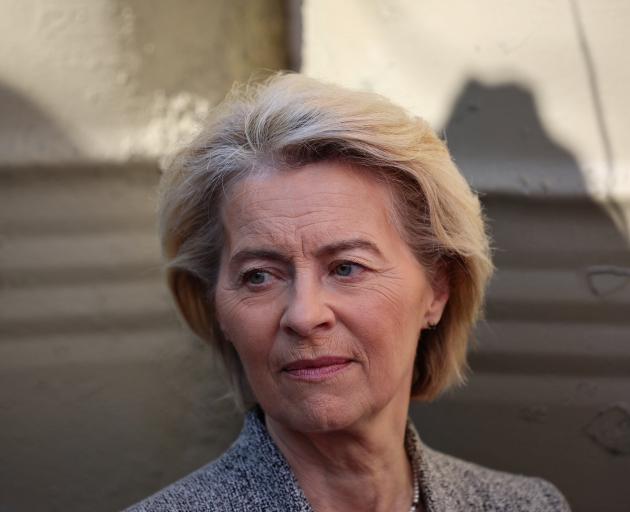
United States President Donald Trump has declared that acquiring Greenland, an Arctic territory currently governed by Denmark, is a national security priority. He argues that US ownership is essential to prevent Russia or China from establishing a foothold in the region. Trump’s comments come as he prepares to impose increased tariffs on several European nations, asserting that such measures will facilitate the acquisition of the island.
The announcement of tariffs, effective from February 1, 2024, targets EU members including Denmark, Sweden, France, Germany, the Netherlands, Finland, as well as Britain and Norway. European leaders have denounced these actions as attempts at blackmail, with many expressing concern over the implications for transatlantic relations.
In a statement on social media, Ursula von der Leyen, President of the European Commission, indicated that she had discussed the escalating situation with various leaders, including NATO Secretary-General Mark Rutte and British Prime Minister Keir Starmer. “We will always protect our strategic economic and security interests,” she asserted, emphasizing the need for a united European front. Starmer expressed his opposition to the tariff threats, stating that penalizing allies for ensuring collective security is misguided.
Mette Frederiksen, the Danish Prime Minister, welcomed the support from other European leaders and reiterated that “Europe will not be blackmailed.” This sentiment reflects a broader consensus among EU nations, who are now strategizing on how to counter Trump’s tariff threats while ensuring the security of the High North.
EU Leaders Coordinate Response
EU ambassadors reached a preliminary agreement on Sunday to intensify diplomatic efforts aimed at dissuading Trump from implementing his planned tariffs. They are also preparing retaliatory measures should those tariffs proceed. An emergency summit is scheduled in Brussels on February 6, 2024, to discuss various options, including a package of tariffs on US imports valued at approximately €93 billion.
Another potential measure under consideration is the “Anti-Coercion Instrument,” which could limit US access to European markets and public contracts. This tool, while untested, could serve as a significant counter to what EU diplomats describe as coercive tactics employed by the Trump administration.
European Council President Antonio Costa reaffirmed the commitment among EU nations to support Denmark and Greenland, emphasizing a collective readiness to confront any form of coercion. Danish Foreign Minister Lars Lokke Rasmussen highlighted the importance of diplomacy, referencing a recent agreement between Denmark, Greenland, and the US to establish a working group focused on cooperation.
Domestic Divisions in the US
Within the United States, reactions to Trump’s Greenland ambitions reveal a split among lawmakers. Scott Bessent, the US Treasury Secretary, suggested that European “weakness” necessitates US control over Greenland for global stability. He argued that acquiring the territory is crucial in the context of global competition with Russia and China.
Nevertheless, bipartisan opposition is emerging. Senator Rand Paul criticized the notion of using emergency powers for this purpose, labeling such a move as “ridiculous.” Senator Tim Kaine indicated that the Senate Homeland Security Committee might pursue a war powers resolution to limit Trump’s authority in this matter.
Moreover, Mike Turner, a Republican representative, cautioned that the tariff strategy could jeopardize relationships with NATO allies. He likened the approach to “The Dating Game” rather than a serious negotiation tactic. In contrast, Senator John Cornyn defended Trump’s actions, framing them as a strategic negotiation tactic.
As the situation develops, the focus remains on how EU leaders will respond to Trump’s threats and what implications these tensions may have for international relations and security in the Arctic region. The outcome could reshape not only US-European relations but also the geopolitical landscape in the Arctic, where strategic interests are increasingly at stake.













New $25 Million Funding Boosts Hospital Capacity Ahead of Winter

Discover Sleep Space’s Affordable Bach Bed Packages Today

Jury Dismissed in Sexual Assault Trial Over Misguided Questions

Wellington’s New Gallery Unveils Community-Driven Art Exhibition

All Whites Face Challenges as Injuries Strike Before World Cup

Heroic Bystander Rescues Swimmers from Dangerous Surf in Napier

Nina Oyama Returns to Crime Comedy in Deadloch Season 2

China Southern Airlines Offers Reliable Journey from Auckland to Vietnam

Nina Oyama Returns to Deadloch for Anticipated Season 2

Community Mourns Teens Lost in Mount Maunganui Landslide

Tributes Pour In for Lachlan Rofe, Reality Star, Dead at 47

Private Funeral Held for Dean Field and His Three Children

Funeral Planned for Field Siblings After Tragic House Fire

Netball New Zealand Stands Down Dame Noeline Taurua for Series

Al Waha Motors Opens Flagship Jetour Showroom in Al Khor

Julian Dennison Ties the Knot with Christian Baledrokadroka in New Zealand

Auckland’s Average Rent Surpasses $700 for Three-Bedroom Homes

New Research Reveals Simple Path to Enhanced Happiness
-
 Top Stories7 months ago
Community Mourns Teens Lost in Mount Maunganui Landslide
-
 Entertainment11 months ago
Tributes Pour In for Lachlan Rofe, Reality Star, Dead at 47
-
 World9 months ago
Private Funeral Held for Dean Field and His Three Children
-
 Top Stories9 months ago
Funeral Planned for Field Siblings After Tragic House Fire
-
 Sports11 months ago
Netball New Zealand Stands Down Dame Noeline Taurua for Series
-
 Health7 months ago
Al Waha Motors Opens Flagship Jetour Showroom in Al Khor
-
 Entertainment7 months ago
Julian Dennison Ties the Knot with Christian Baledrokadroka in New Zealand
-
 Business7 months ago
Auckland’s Average Rent Surpasses $700 for Three-Bedroom Homes
-
 Science10 months ago
New Research Reveals Simple Path to Enhanced Happiness
-

 Entertainment10 months ago
New ‘Maverick’ Chaser Joins Beat the Chasers Season Finale
-

 Lifestyle10 months ago
Maia Wilson Faces Backlash Following Taurua’s Suspension
-

 Sports10 months ago
All Blacks Star Damian McKenzie and Partner Announce Baby News