
Top Stories
Trump Details Justifications for Strikes on Iran, Omits Key Point

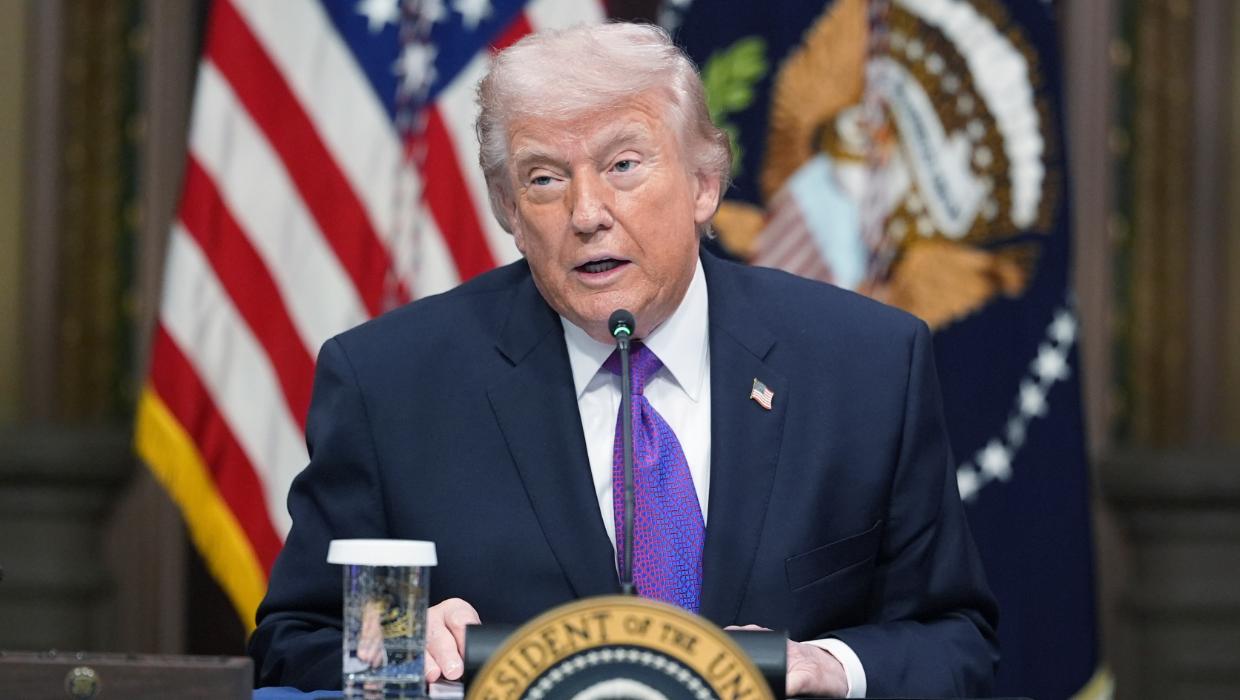
In a recent video address, President Donald Trump outlined several justifications for the joint military strikes conducted by the United States and Israel against Iran. This announcement, made over the weekend, marks a significant escalation in tensions within the Middle East. While Trump presented a range of reasons for the attack, one critical factor was notably absent from his discourse.
During the video, Trump cited the need to protect regional allies and curb Iran’s influence in the area. He emphasized the threat posed by Iran’s nuclear ambitions, stating that the strikes were essential to prevent the Islamic Republic from developing nuclear weapons that could destabilize the region further. The President highlighted Iran’s support for militant groups and its role in various conflicts as further justification for the military action.
Despite these points, analysts have pointed out that Trump did not address the potential consequences of such military engagement. The absence of a clear strategy for managing the aftermath of the strikes raises questions among both policymakers and military experts. Critics argue that without a comprehensive plan, the actions could lead to prolonged conflict and increased instability in an already volatile region.
The situation escalated following a series of provocations between Iran and its neighboring countries, with both sides exchanging threats. The strikes are part of a broader strategy aimed at reasserting US military presence in the Middle East, which has been perceived as declining in recent years. The US has long maintained a policy of countering Iranian influence, and this latest move is seen as a direct response to what the administration views as aggressive actions by Tehran.
Supporters of Trump’s decision argue that immediate military action was necessary to deter further Iranian aggression. They contend that a strong response is essential to reassure US allies in the region, particularly Israel, which has expressed deep concerns over Iran’s military capabilities.
As the international community watches closely, the ramifications of these strikes extend far beyond the immediate military objectives. The potential for escalation into a larger conflict remains a significant concern. Experts are urging the administration to engage in diplomatic efforts alongside military actions to ensure long-term stability in the region.
This latest development comes amid ongoing debates within the US about the effectiveness and morality of military interventions abroad. Many lawmakers are calling for a reassessment of US foreign policy in the Middle East, advocating for a balance between military readiness and diplomatic engagement.
In summary, while President Trump articulated several reasons for the strikes on Iran, the lack of a detailed plan for the future raises critical questions about the US’s strategy in the region. As tensions mount, the world awaits the next steps from Washington and Tehran, hoping for a resolution that prioritizes peace and stability.













New $25 Million Funding Boosts Hospital Capacity Ahead of Winter

Discover Sleep Space’s Affordable Bach Bed Packages Today

Jury Dismissed in Sexual Assault Trial Over Misguided Questions

Wellington’s New Gallery Unveils Community-Driven Art Exhibition

All Whites Face Challenges as Injuries Strike Before World Cup

Heroic Bystander Rescues Swimmers from Dangerous Surf in Napier

Nina Oyama Returns to Crime Comedy in Deadloch Season 2

China Southern Airlines Offers Reliable Journey from Auckland to Vietnam

Nina Oyama Returns to Deadloch for Anticipated Season 2

Community Mourns Teens Lost in Mount Maunganui Landslide

Tributes Pour In for Lachlan Rofe, Reality Star, Dead at 47

Private Funeral Held for Dean Field and His Three Children

Funeral Planned for Field Siblings After Tragic House Fire

Netball New Zealand Stands Down Dame Noeline Taurua for Series

Al Waha Motors Opens Flagship Jetour Showroom in Al Khor

Julian Dennison Ties the Knot with Christian Baledrokadroka in New Zealand

Auckland’s Average Rent Surpasses $700 for Three-Bedroom Homes

New Research Reveals Simple Path to Enhanced Happiness
-
 Top Stories7 months ago
Community Mourns Teens Lost in Mount Maunganui Landslide
-
 Entertainment11 months ago
Tributes Pour In for Lachlan Rofe, Reality Star, Dead at 47
-
 World9 months ago
Private Funeral Held for Dean Field and His Three Children
-
 Top Stories9 months ago
Funeral Planned for Field Siblings After Tragic House Fire
-
 Sports11 months ago
Netball New Zealand Stands Down Dame Noeline Taurua for Series
-
 Health7 months ago
Al Waha Motors Opens Flagship Jetour Showroom in Al Khor
-
 Entertainment7 months ago
Julian Dennison Ties the Knot with Christian Baledrokadroka in New Zealand
-
 Business7 months ago
Auckland’s Average Rent Surpasses $700 for Three-Bedroom Homes
-
 Science10 months ago
New Research Reveals Simple Path to Enhanced Happiness
-

 Entertainment10 months ago
New ‘Maverick’ Chaser Joins Beat the Chasers Season Finale
-

 Lifestyle10 months ago
Maia Wilson Faces Backlash Following Taurua’s Suspension
-

 Sports10 months ago
All Blacks Star Damian McKenzie and Partner Announce Baby News